
Humanity is merely one species out of millions living on Earth, but we have a disproportionate impact on the rest of the biosphere. Recent transformations have accelerated that impact, but in fact it stretches back to the earliest days in human history. In his new book The Last Animal: Human History and the Fate of Life on Earth from the Ice Age to the Sixth Extinction, historian Kyle Harper traces how humans have impacted the rest of the planet, from extinction events to much more subtle changes.
Listen or watch Rolex Planet Visionaries wherever you get your podcasts. #ad
Got to https://scribe.how/mindscape and mention Mindscape for you first month of Scribe Capture free on select plans. #ad
Stop piecing your software together. Go to https://odoo.com/mindscape to learn more. #ad
Upgrade your everyday with Quince and get free shipping and 365-day returns at https://quince.com/MINDSCAPE. #ad
Support Mindscape on Patreon.
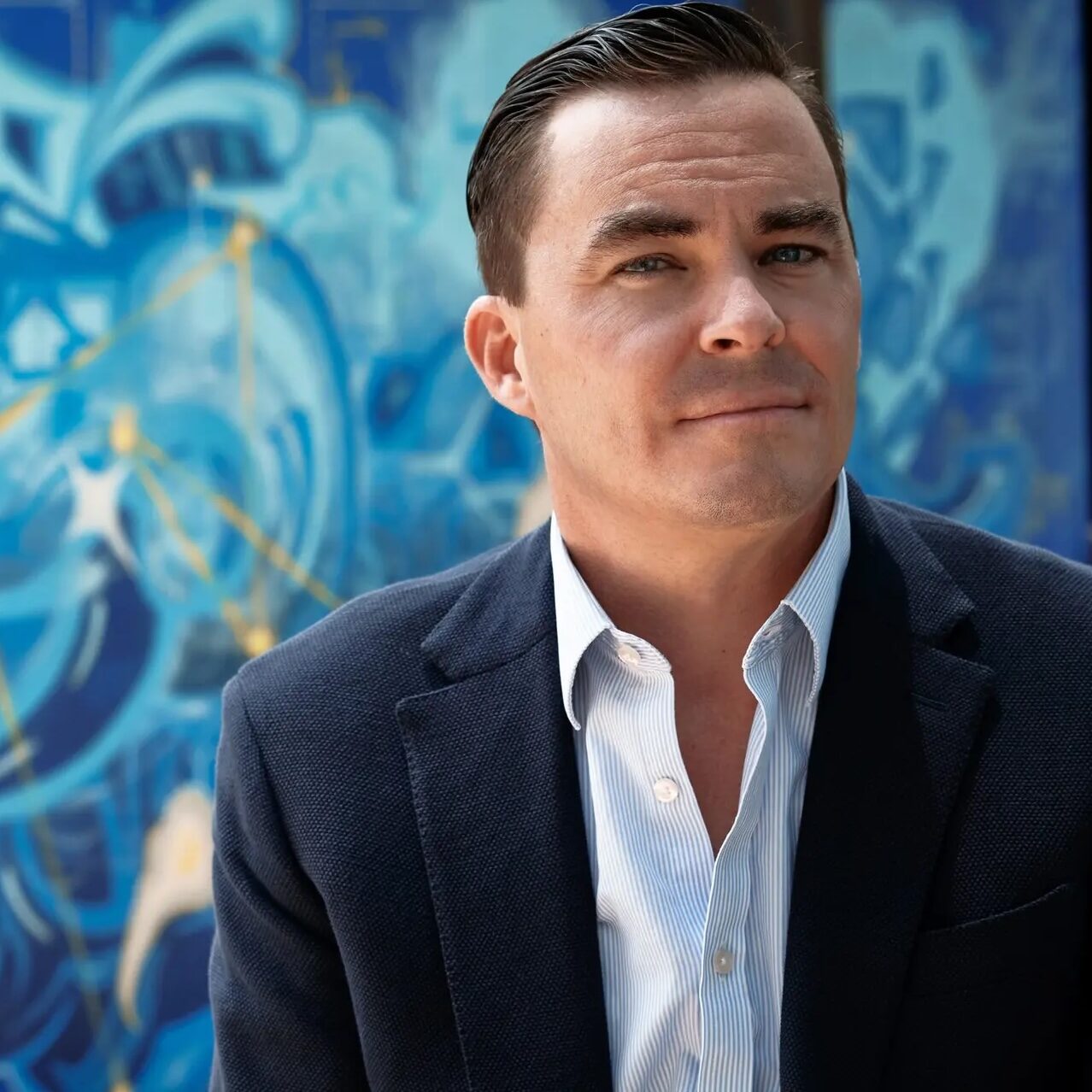
Kyle Harper received a Ph.D. in history from Harvard University. He is currently the G.T. and Libby Blankenship Chair in the History of Liberty, Professor of Classics and Letters, Senior Advisor to the President, and Provost Emeritus at the University of Oklahoma, and an external faculty member at the Santa Fe Institute. Among his honors are the Award for Excellence in Historical Studies from the American Academy of Religion and the PROSE winner for best book in the history of science, technology, and medicine.
Click to Show Episode Transcript
0:00:00.4 Sean Carroll: Hello, everyone. Welcome to the Mindscape Podcast. I'm your host, Sean Carroll. You may have heard that species of life forms here on Earth are dying out at an unusually high rate. Sometimes this is called the sixth extinction, or the Holocene extinction, or the Anthropocene extinction, just compared to the rate at which species go extinct, which, of course, always happens, right? There's never any moment where no species go extinct for an extended period because life is dynamic and things happen. But the rate can change over time. There have been a series of catastrophic extinctions in past history, millions of years ago, but right now, species are dying out at a greater than usual rate, noticeably. And we know why, it's because of us. Because of human beings changing the planet in different ways. But the precise extent to which what's going on right now is best described as a new massive extinction event is slightly controversial. And longtime Mindscape listeners will not be surprised to learn the situation is somewhat complicated in various ways. So it's not that species are not going extinct. That's absolutely true. But is that the right way to think about what is happening? In general, human beings are causing all sorts of changes to the Earth, to the biosphere, to the ecosystem, and species going extinct is part of that. But is it the most important part? Is it the special part? What else is going on and what can we possibly do about it if we think that there is a cause to stop what is going on right now?
0:01:44.2 SC: So today's guest, Kyle Harper, is actually a historian, but he's a historian who has long felt that science, natural history, the understanding the physics and biology of the Earth on which human beings live should be an important part of history. And the way that the environment shapes human history has been well studied. And what climate change is right now doing to the environment has been well studied. But the whole sort of history of how human beings have affected their environments and the world in which we live is a little bit less studied. So, Kyle's new book is called 'The Last Animal: Human History and the Fate of Life on Earth from the Ice Age to the Sixth Extinction.' And he takes a historian's view, and he starts from when human beings were first starting agriculture and domestication of other species and so forth, how that changed the different kinds of species that are around. And it's not just the number of species that are dying, but it's which ones and how that affects not just the numerical quantity of species, but the complex web with which they interact with each other. And he takes it right up to the present day, where indeed, climate change and other things are having an important impact. So we tried at the end of the podcast to end on an optimistic note, because that's what we like to do here at Mindscape. But to be optimistic means to first be realistic, to look at the world and what's happening, get your facts straight, understand what is going on, and that's what this particular episode is all about. What we as a species choose to do about it, that's gonna be up to us. So, let's go.
[music]
0:03:51.6 SC: Kyle Harper, welcome to the Mindscape Podcast.
0:03:53.1 Kyle Harper: Hi, Sean. I'm a big fan of the show. Thanks for having me.
0:03:56.8 SC: Oh, very good. We love those kinds of guests. I know that we're talking about... There's very big issues that came up in your new book about humanity and extinctions and the biosphere and things like that. But I'm a little bit curious about the trajectory. You started writing books about ancient Rome, and that's what historians are supposed to do. We understand that. That's history, ancient Rome. And then somehow now you're talking about biodiversity and things like that. Tell us a little bit about how you get from A to B.
0:04:31.0 KH: Right. Well, I'm a historian who would love to see a world where that doesn't seem quite as weird or unusual as it might. And to tell it in personal terms, I, as a student, as an undergraduate, loved both the humanities and the sciences. And when you go to graduate school, you have to pick for good reasons, but also with some negative consequences. But I was very fortunate to go to a PhD program in history where I was really encouraged to cultivate my interest in the natural sciences. And it also turned out to be good timing because people who work in history right now benefit from all kinds of different ways that what you might consider natural science fields are helping us understand the human past. And that includes things like paleoclimatology. Obviously, there's a very urgent need to understand how the climate system works, but that inevitably means you have to understand how it's worked in the past and under different conditions. And so there's been a lot of great research and a lot of funding for research in paleoclimatology, reconstructing the past dynamics and states of the Earth system. And so for those of us who are, say, in Roman history, this wasn't funded with the goal or intention to benefit us, but it does benefit us if all of a sudden we now have high-resolution paleoclimate proxy records that tell us what the climate was doing in the human past. We can then start to ask new questions and we have new data. So as a historian, I've really not only just have a kind of natural inclination for the sciences, but have benefited from the fact that there's all kinds of cool new data. And DNA is probably the big one. Just the advances, leaps and bounds in the ability to sequence DNA, both DNA taken from recent samples, living people, but also from ancient DNA, archaeological DNA taken from dead people, that tell us about the evolution of humanity, but also the evolution of animals, the evolution of microbes. And so as a historian, that was sort of my pathway into environmental history, a kind of history that tries to understand our place in the natural world, that is partly humanistic, but it's partly scientific.
0:06:51.9 SC: I think you have mistakenly piqued my interest here. How much ancient DNA do we have? Like, how many ancient Romans have we sequenced their DNA?
0:07:01.3 KH: Yeah, so I can tell you ten years ago that number was zero. And today, the number of published complete human genomes sequenced from the Roman period would be on the order of a couple of thousand.
0:07:19.4 SC: Wow.
0:07:20.0 KH: So it's still new, still new. There have been maybe five papers on populations from Italy. Then I was part of a team that published 150-something genomes from the Roman Danube, Serbia. We've got a paper that's about to come out on Roman Spain. So the number is quickly, quickly growing. And that means more samples doesn't just sort of expand the picture, it lets you ask deeper and deeper questions. You have higher power, you can ask all sorts of crazy questions that the challenge now is almost inventing the questions fast enough to keep up with the amazing data.
0:07:56.3 SC: Is there anything in particular that we've learned that has surprised you a little bit?
0:08:00.4 KH: Oh, there have been tons of surprise... I mean, really, true surprises where in some cases ancient DNA can answer questions that you just didn't have the ability to answer before. I mean, one of the big ones is sort of what pathogen caused the Black Death, where we thought we knew, but there were lots of questions. What pathogen caused the plague of Justinian? So sometimes it answers questions that you know you should be asking, and then sometimes it causes you to answer questions you didn't know you should be asking. So, like, the paper I mentioned from Roman Serbia, which is a really important region for the Roman Empire, all the late Roman emperors come from here, like Constantine, Diocletian, this is a really important province that we think of as deeply, deeply Romanized. It becomes a Latin-speaking province. And we have in the historical written sources all kinds of evidence that the Roman legions come and they are colonizing, building cities. And so we assume that there's a huge number of people from Italy flowing in and taking over this region. And of course, the picture will continue to evolve as we get more and more genomes, but 150 is a pretty good starting sample from highly Romanized contexts of this Danubian provincial capital. There's nobody from Italy. We can't find traces of the genomes, even in subsequent generations you'd expect, because a lot of these people are from second, third, fourth century. And so surely they had kids and grandkids and great-grandkids. And so at least in this region, it starts to make you ask, "Wait, what did colonization mean if it didn't actually mean the movement of people into colonies?" This is a kind of Romanization without Romans. That's just one example.
0:09:44.0 SC: Yeah.
0:09:44.1 KH: There are so many people from the East Mediterranean in the Roman Empire everywhere, in Italy, in Serbia, in Spain. And we don't understand this now. The slave system is probably capturing people, we know the Romans have lots of slaves, but we don't actually really have a good understanding right now of how so many people from Anatolia and Syria end up everywhere in the Roman Empire. And so that's kind of a hot question that really we weren't asking before. So, yeah, there's lots of cool new knowledge that we're grappling with.
0:10:17.7 SC: Well, it gets into another question I wanted to ask, because already in your early work on Rome, you were also talking about the natural world with plagues and things like that, right? But then there's this whole separate thread of ideas and how they affect history. And you talk about the early effect of Christianity and how it really did change people in some ways. And are you saying that in the Serbian Romans, the colonization was more in the mind than in the body? [chuckle]
0:10:51.2 KH: Well, yeah, and of course, like I say, we'll find out with more genomes too, but I think that absolutely has to be a big part of the answer. And really, I'll go back to the point I made that it's hard to explain. All of the... The people who ruled the Roman Empire for the last three centuries all come from a tiny area about the size of Scotland that's right there on the Danube in Serbia today. They all come from there, all of these Roman emperors, and they claim to restore the Roman Empire, and they're sort of more Roman than the Romans. And now we have to think of this story as one where it's a cultural, ideological change, but it's deep enough that they change their language, they worship the Roman gods. It's a deep, deep transformation.
0:11:39.7 SC: And I guess there's probably some temptation, if you're a professional historian, to... I'm gonna be unfair here, so you can put the nuance in where it belongs, but people have like a lens, a point of view, right? I mean, some people are going to think that the ideas are the most important thing. Other people are going to think that government and military is the most important thing. Some people might think that geography and ecology are the most important thing, but they're all there, and you have to balance them somehow.
0:12:07.2 KH: Well, the good news is that's gonna keep historians employed for the foreseeable future. Human societies are complex, and we all have our pet theories, and it usually goes back to whatever you wrote your dissertation on. [chuckle]
0:12:21.4 SC: Yeah.
0:12:22.2 KH: But that's the good thing about human societies is that they are the most complex thing we know of, and so many important dimensions, from geography to the gods that they worship, that are actually important for questions that you might really want to ask.
0:12:39.0 SC: And so what is it that particularly made you think, I have to understand how humans are affecting the biosphere?
0:12:48.8 KH: Yeah, I mean, it was... I think, in part, it's just pure presentism. People sometimes get anxious about this, and obviously we don't want to judge the past by our standards, we don't want to distort the past to make it fit into our view of the world. But historians are normal people, and we're interested in the problems and challenges we face in our lives, collectively and individually, and you bring that with you when you go and you read a text. And so it's no accident that it was historians in the '70s who started taking gender seriously. They lived in a world of the second-wave feminism, and sexual revolution, and so they went and they read the same texts, and all of a sudden they were seeing different things. And so partly we live in a world where some of the most profound challenges we face are our relationship with the natural world, environment, climate change, biodiversity. And so when you read an ancient text, you're sort of sensitized to see things that maybe weren't leaping off the page in the same way for previous generations. Partly it's that... As I said before, we're learning new things, and as a historian, you always kind of want to make the biggest contribution that you can. And sometimes that comes from writing the thousandth dissertation on Tacitus or whatever, but then when you know we're getting DNA sequence that tells you truly surprising new information, that's just sort of irresistible, and it's kind of magnetic. You're drawn to it.
0:14:27.1 SC: Okay. So the effect.. I mean, there's been a bunch written about how the environment or geography or whatever affects human history, and in some sense we're now sort of flipping it on its head and saying, how have we affected the environment and the world around us? Everyone knows we're doing that now, but part of your new book is we've been doing that for a very long time.
0:14:51.7 KH: Right. And we've been doing it for a very, very long time. And it was marine ecologists who came up with the term shifting baseline syndrome, which is the kind of natural, both human and scientific tendency. You want to measure something, so you need something that you can measure, and we live and therefore tend to think on human timescales. And so when we measure something like how humans have changed ecosystems, there are a lot of inbuilt sort of prejudices towards trying to establish a baseline that we can lay down, make firm, measure since that time. But if you want to ask, where does human impact on the biosphere start? Or even... This isn't my... I don't want to get us off too much on this, but it's actually a really interesting question and open question: when do humans start to influence the climate system?
0:15:53.2 SC: Yeah.
0:15:54.0 KH: Because there are serious arguments in the field that in some ways the origins of agriculture, deforestation, rice farming contribute to human alteration of the global planetary climate dynamics very, very early, thousands of years ago, 8000-10,000 years ago. So that's sort of still contested in the field. But I think the human impact on biodiversity is actually less ambiguous. I mean, we have been influencing the nature and diversity of the world around us for, really for hundreds of thousands of years, but particularly for tens of thousands of years in really, really dramatic ways. And so the shifting baseline is a really hard problem because you want to be able to grab onto something and start counting things, but we always have to be sort of critical and aware that that's liable to be a kind of arbitrary decision or to leave out things that might be interesting. And so the story of how we've impacted biodiversity goes back easily to the Pleistocene.
0:17:00.4 SC: Well, let me ask one of those questions that sounds super simple to ask but is endlessly complicated to answer. When did humanity begin? Forget about humanity's effect on the environment, but when do you say, okay, it's humans doing this work now?
0:17:15.9 KH: Yeah, I mean, it's a great question and my colleagues in anthropology will probably fact-check me. But there's an analogy that Richard Wrangham uses in his book 'Catching Fire,' the Harvard primatologist, anthropologist, that I use with my students when I'm teaching kind of a big history course or sort of moving through the first few million years of human history, that in some sense australopithecines are apes that we would sort of think of as not human, but members of the genus Homo are human in a way that's somehow very profound and sort of difficult to put your finger on. But the analogy he uses is australopithecines you would probably put in a zoo and say they're amazing the way that chimps are, and members of the genus Homo you would probably invite to dinner and try and have a conversation, and you would give legal rights without too much question. And so that means that we're looking at 2.6 million years or something. Or if you want to say that really somewhere along the evolutionary path of our lineage, Homo erectus maybe is making tools, controls fire, has symbolic language, and really you would feel like this is a human. And so sometimes anthropologists will talk about archaic humans to refer to these species that are us, but not fully us, not Homo sapiens, but are human. You would use the word human and you would say that that's a very defensible thing. They have symbolic language. They're probably fairly altruistic, cooperative, creative beings. And the more we learn about our sort of sister species and later so-called archaic humans, like Neanderthals, the more like us they seem. So the human history is probably more than 2 million years old, and Homo sapiens, our species, looks to be more like 300,000 years old. So yeah, when we say human, it's less easy and less transparent than we might automatically expect.
0:19:26.6 SC: But my impression is that, and my impression is completely ill-educated here, so tell me the truth, there weren't that many humans, by comparison to some other animal species, for a long time. Is that accurate?
0:19:41.9 KH: Yeah, I mean, yes, in fundamental terms that's accurate. And of course it's hard because, as somebody who's spent a little bit of time worrying about how many humans were there in the Roman Empire, which is like yesterday, we still debate about that really fundamentally, and people disagree about it. When you go back before there are census records and things, it gets harder and harder. But geneticists have methods to try and estimate the size of a population that's reproducing. That gives us some insights. And of course, archaeologically, you can sort of trace how many human settlements there are and what that says about the likely population. But we estimate that... People debate about how many humans there are at the Pleistocene-Holocene transition, a little over 11,000 years ago, but it's probably on the order of 5 to 10 million Homo sapiens. By that time, there's only us. The Neanderthals have gone away, whether or not we're to blame. But we're the only humans still in the game, and there's probably only 5 to 10 million of us. So, that's barely more than the population of my beloved Oklahoma across the whole globe. So we know that all humans until 10,000 years ago are fundamentally foragers. They hunt and gather, so they're dependent on wild sources of food, and that keeps their numbers low. And so there aren't ever a huge number of humans until the last 5,000 to 10,000 years.
0:21:18.1 SC: And your book opens more or less with the interactions between some of those humans circa 10,000 years ago and the megafauna that were, I don't know if common is the right word, but certainly there were plenty of them bouncing around here on Earth.
0:21:35.8 KH: Right. I mean, I do open this... Well, actually, I go back to the origins of life and try and put our evolution in the very deep perspective of the long history of biodiversity and then move forward to the Pleistocene. I mean, we emerge in this highly variable ice age of a climate epoch, and we spread out of Africa fairly early, at least by 100,000 years people are emigrating and exploring. And then over the last phases of the Pleistocene, we spread and we multiply, we colonize new environments. We're all still hunter-gatherers, and our populations grow. When humans move out into the world, they are moving into a world where terrestrial biomes, so we're on land, the ecosystems are dominated by big animals. And that's not just sort of an aesthetic point. It's not like, "Cool, it's a safari." These are systems, so they're food webs where there's energy flowing through them. And critical to their structure and function is the fact that animals, mostly mammals, have attained enormous sizes. And it's very easy for us to kind of forget that. I mean, we probably have seen mammoths...
0:23:02.8 SC: Mammoths, yeah.
0:23:03.2 KH: And mastodons at the museum, but it was really, in a way, it was their world. It's not like one or two species here and there. The whole landed environment where there's life is dominated by large mammals, both herbivores and the predators who chase them. And so our ancestors move out into this very, very different... It's very unfamiliar to us. Even in the parts of the world, like parts of Africa, where you do still have significant numbers of surviving big animals, megafauna, you only get like a little glimpse really of what a different world it is. And it's easy for us to forget that, but the Pleistocene is dominated by ecosystems where big animals rule.
0:23:48.7 SC: And you sort of touched on it there, but one of the big things I got from your book, like the important take-home lessons, is when there is an extinction, when a species goes away, I don't want to say... I don't want to be unfair, but not all species are created equal. You shouldn't sort of think about the impact that we have by counting species. Like these megafauna really were key, even though there actually weren't that many species that have gone away.
0:24:19.3 KH: Yeah. And I think it's important to try and come to grips with that from a few different perspectives because in one sense, I think the point you're making kind of makes us reflect about how we measure human impact. Extinction is one of the really important ways we can measure human impact. And I think it's sort of been amplified by the attention that's given to the question of the sixth extinction, which is a really interesting idea. Maybe we can talk a little bit about it, but it sort of captures the imagination scientifically, popularly, and it focuses on human impact measured in terms of extinctions. But it's absolutely the case that not all extinctions have the same kind of effect on an ecosystem. That's not a value judgment. It's just an observation about the role that certain organisms play in ecosystems. And we do tend to underestimate the sheer systematic nature of the extinction of megafauna. Again, it's not just one or two species. It's dozens of species in every continent that have dominated for millions of years that disappear in an evolutionary instant. And these are... So, it's not a huge number of species relative to the total number of mammals or even total number of animals that exist. In fact, it's a rounding error in terms of the number of animal species on the planet. But it's of huge significance because of the roles that these organisms play in their ecosystems. And we... Even then, it's hard for us to kind of measure because of the depth and breadth of our impact. But we can say, think about the role that bison play in prairies. They're not just sort of a species on the landscape. They are the integral cog in the ecosystem. They provide habitat and shelter and food. They move nutrients around. This is one of the most important and underrated sort of roles that big animals play. They move nutrients that limit life around. And so that's true of whales that are eating lots of food and then pooping it out. It's true of elephants that are massively important in things like moving around seeds. Bison eat nutrient-rich grasses in sort of river valleys and so on, and then move those nutrients around the dry and nutrient-starved prairie. So when you take out big animals, it sort of affects everything else. And we systematically took out the biggest animals virtually everywhere on the planet.
0:27:21.8 SC: Tell me more about the specifics of that mechanism. Is it simply a matter that we hunted them to death, or are there more complicated stories?
0:27:30.7 KH: Yeah, it's complicated. And there's a huge... I mean, there's a debate that's been going on for hundreds of years. I mean, in my book, I quote the sort of the father of geology, Charles Lyell, who comes to America, actually visits America a couple of times, and on a second tour, he visits this place in Georgia where they'd been digging a canal and they'd turned up this huge fossil bed of late Pleistocene animals, giant bison and mammoths. And even then, he's visiting in the 1830s and he's talking about how remarkable it is that so many enormous animals lived so recently. And he really, as a geologist, grasped how recent this was. And he says, "We really wonder, but can't say, was this climate change or human hunting?" And people have been arguing about it...
0:28:32.1 SC: Wow. Yeah.
0:28:32.5 KH: For almost 200 years. And it's still... Sometimes it's a quite bitter and sharp debate. And not to be sort of boring about it, but it is obviously it's some of both. I mean, every organism faces environmental challenges when the environment changes, vegetation bands shift, the food source shifts. So, climate change is inevitably part of the story. But the thing that is new in the late Pleistocene is the spread of bands of humans who rely on hunting for food and who are very, very weird predators. Humans are very strange predators from a natural perspective because one, we're social predators, which we're not the only ones. Wolves are the most obvious parallel. And that's kind of an interesting parallel. I'll come back to it. But wolves are social predators, and what this lets them do is it lets them kill big animals. Usually, solitary predators kill juveniles or species that are smaller than they are. And wolves are a good example because a pack of wolves can take on a moose, and that's always a pretty fair fight. The moose usually win. But wolves are kind of weird already because they cooperate, and so it's sort of the size of the group that is predating on big prey. Humans do that, and we do it unbelievably well. We're just the most effective social predators that's ever existed. And then because we're toolmakers, we overcome some of our natural deficiencies and build weapons that are very good at killing at a distance. Projectile weapons, spears, especially with spear throwers, atlatls, and then eventually bow and arrow. And so we're extremely capable, cooperative predators who have tools to kill big animals. And a lot of these animals that go extinct are not used to being hunted, and they're certainly not used to being hunted as adults. Nothing hunts an adult mammoth. And then we do, and they're not used to it. Big animals tend to reproduce very slowly. They tend to have smaller populations, and so they're kind of vulnerable to the shock that is represented by the introduction of human hunting. So we're social, tool-making predators. And then we also control fire. I suspect this is kind of underrated because it's archaeologically very hard to get at. But humans use fire in hunting. We know that we do this today. We do this in more recent centuries, using fire to drive big animals into traps or into bogs or into ravines or over cliffs. And it lets us cooperate to hunt really big animals and to kill en masse, to kill large numbers of individuals simultaneously.
0:31:38.7 KH: And then if all that wasn't enough, we do something really weird. Maybe 20,000 years ago-ish, we form a symbiotic partnership with the second most successful hunter on the planet, the gray wolf, and we domesticate dogs. And this is like the New York Yankees and Boston Red Sox, or I should say Los Angeles Dodgers now, I'm a Red Sox fan, but this would be like if the Yankees and Dodgers were like, "Let's team up," and just form one super team. And it's very hard to say because, again, the archaeology doesn't provide direct evidence exactly how important dogs were. But I think it's an amazing, just from an evolutionary perspective, it's a strange, extremely odd, very unlikely partnership. I mean, what a weird thing to partner with your biggest rival, who is a natural born killer. Wolves were not the most obvious friends, but they become our best friends, literally, man's best friend. And that seems to sort of be a part, at least, of the hunting prowess of early humans.
0:32:54.5 SC: It's Kevin Durant to the Warriors, right?
[laughter]
0:32:57.0 KH: Oh, you had to do that. Come on, that hurts. We will never forget or forgive.
0:33:02.4 SC: You're dancing around that, I know, Oklahoma City fans. That's okay. You turned out okay in the long run.
0:33:06.5 KH: Yeah, worked out.
0:33:07.4 SC: But I love that point because I think that when people think about humanity's effect on the biosphere, et cetera, they think of machines and the Industrial Revolution, burning coal and what have you. But just our ability to socially cooperate gave us this leverage far beyond our muscular ability early on.
0:33:28.9 KH: Yeah, it did. And fire is already an almost unbelievably powerful tool because we can alter entire landscapes with fire. I love talking about fire as a historian because it's so weird, people take it for granted. As far as we know, Earth is the only planet in our solar system that we know of that has fire. Fire is really weird. You have to have a combustible gas and material that you can use as fuel, and that seems to require something like life or something like plants, even, that put oxygen in the air. And we're the only species that's ever controlled fire. It's been called a species monopoly for humans, and it already gives us leverage over nature. And then the watershed after that really is domestication. So it's not just wolves becoming dogs, but then we enter into this strange multispecies alliance with ibexes that become goats, mouflon become sheep, aurochs become cattle, boar become pigs. It's a very strange, from an evolutionary perspective, it's a very weird symbiosis that gives us, that amplifies our leverage further and further and lets us transform landscapes. And it's the reason why human impact grows over time, but for a very long time. And so, yes, the Industrial Revolution is a breakthrough, but we'll miss an important part of our impact if we don't have that deeper perspective. And that perspective matters for the world around us. But the megafaunal extinction at the end of the Ice Age, in evolutionary time, is still contemporaneous.
0:35:16.2 SC: Sure.
0:35:16.9 KH: And that's literally just inseparable in evolutionary time. And the world is still responding to that in some ways. And then we intervene in that world, but we intervene ever faster and faster.
0:35:33.0 SC: Do we know when human beings started using fire?
0:35:37.4 KH: No. Anthropologists debate it. And the challenge, again, is archaeological because it's hard to say if an ash pile... First of all, they're hard to find, and then it's hard to say whether this represents controlled fire or is this just lightning that started a fire. And so it's debated by anthropologists who study Homo erectus. I mean, I think the consensus is going to be sometime around a million to 500,000 years ago, maybe closer to a million. It gets into questions, too, about human evolution because the ability to cook obviously depends on fire. And then the ability to cook seems to change our physiology. We have... It changes our physiology. We have very weak digestive systems. Our mouths are pretty pathetic. I mean, for a predator...
0:36:28.6 SC: Oh, yeah.
0:36:29.4 KH: For a carnivore, we have pathetic dental equipment. And so there's debate about what's the role of fire. What does that tell us? Because we can actually follow easier in the fossil record human evolution changes to the cranium and the shape of the body, and that lets us infer that maybe fire was around, but it's indirect evidence. So it's a very good question. It's an open question. It's debated. It's probably something like a million years or so, give or take a few hundred thousand.
0:37:05.8 SC: Okay, good. So let's go back to the domestication because I don't think that we're done there. I learned a new word from your book. Commensal, commensal?
0:37:16.8 KH: Commensal, yeah, commensal.
0:37:17.8 SC: When you haven't quite domesticated, you're just sharing a food ecosystem with the local species, and that might lead to bigger things down the road.
0:37:27.1 KH: Yeah, I think it's one of the... Well, first of all, a commensal species is a term that is used in ecology to mean a species that... The etymology is sharing a table. That's what commensal means in Latin. And it means ecologically a species that isn't quite a symbiont and isn't quite a parasite. It's somewhere in between, and it's taking advantage of the ecological effects of another organism. It's sort of riding the tails of another organism. And it's a pretty loose term because it's an ecological term that's kind of got to capture a number of different relationships. But it's extremely useful because it's easy to say... Well, it's pretty complicated, but it's possible to say we domesticated these animals and they're in this symbiotic, weird but symbiotic relationship with us. Cattle, we feed them, we protect them, and then we eat them. That's our domesticate. But we would really underestimate our impact if we don't recognize that a lot of animals are not domesticates, but their evolutionary and ecological history is inseparable from our success. They ride our coattails. And this is true of a really shocking range of organisms. And one that I love thinking about is the housefly.
0:38:52.3 SC: Wow.
0:38:52.9 KH: In some ways, its story sort of captures the human story. Musca domestica, the common housefly. Of the, I forget how many thousand species of flies on Earth... Flies do very well. Flies are a very successful lineage. They are crushing it. And there are thousands of... It's a very, very diverse group. And which one of all the offspring of this lineage, which one is the most successful in the only metric that evolution cares about, your genetic replication? It is the housefly, the Musca domestica. What is it about the housefly? Well, 10,000 years ago, from what we can tell, and the history of the fly is patchy, but we can say some things, it's nothing. It's just a little another member of one of thousands of nameless fly species. And it does its thing. It fights for carbohydrates out there in the world. It lays its eggs in dung. This seems to be sort of its life strategy is lay lots of eggs, find some warm, putrefying material, it can be dead body, but there's lots of poop on the ground, and they are incredible at finding it. They're incredible at finding it. And they're out there struggling, fighting the same evolutionary game as every other fly. And then we don't actually know exactly where. It's an Old World species. Maybe it's from Egypt, maybe it's from South Asia or West Asia. But somewhere very early on, it starts playing a slightly different game in that it starts following us around, it starts replicating in our habitats, and it's sort of by dumb luck pre-adapted to be very good at the kinds of environments that we create. And particularly after we domesticate other animals, we've got lots of cattle and goats and sheep around, there's lots of poop on the ground.
0:40:55.2 SC: Yeah.
0:40:55.8 KH: We pile it up, and in fact, we pile it up on purpose to use it as fertilizer. And this is just like a bonanza for them. And so they, by dumb luck, are pre-adapted to live well with us. And then they eat our food, they eat any sugar we leave around, any carbohydrate, and they take off. And they go everywhere we go. They're not a domesticated animal, they're not exactly a parasite, although they can carry diseases and they're super annoying. It's incredibly easy for us to underestimate how common they were until 100, 150 years ago, when there's just a massive campaign to conquer the housefly. They're still incredibly successful and prevalent, but that's after a lot of effort to get rid of them. And their story, think about the effects on global biodiversity. There's one fly that is the most numerically successful fly on the planet, and it's because of our history. And you can replicate that and think of all kinds of animals across all size ranges. From the squirrel in your yard, the Eastern squirrel, gray squirrel is doing really well in this world because it's very good at living in suburban backyards.
0:42:08.9 SC: We feed the squirrels. Yeah, we're helping along that path.
0:42:13.6 KH: They are commensals. They're eating at our table or in our backyard anyway. And almost every sort of taxon you can imagine, somewhere there's a species that has really taken advantage of human success. And so in these ways that are kind of unintentional, we're shaping biodiversity.
0:42:33.6 SC: Well, I think this is... We don't need to go in order. So let's skip ahead to one of the other big lessons here. When one species like humanity becomes so dominant, the overall system kind of simplifies, right? It's not a world where there's a billion different niches. It's sort of how well you interact with the dominant one that defines how well you do to a certain extent. And maybe that's, again, a better way of thinking about the problem than just counting the number of species or something like that. But the overall simplification of the environment is an issue.
0:43:12.4 KH: Right. And I like to say that we can argue about whether or not humans could or might trigger the sixth extinction, and that would be really scary. But to me, it's even scarier to think about the first great homogenization in the history of life. Anytime you say in 600 million years of animal evolution something has never happened, you ought to pay attention and say, "What?" Because everything happens over and over. But never before has one species acquired global ecological dominance to the extent that we have and to the extent that one species is capable of creating extremely homogenous ecosystems worldwide. And this includes ways that are obvious, like our food production system. And so there are billions of cattle, there are billions of pigs. There's something... And trust me, I've tried to run to ground and worried about the FAO estimates, but just taking the FAO estimates, there's something like 32 billion chickens on Earth. So it is the most numerous bird on the planet by a factor of 10. It's the dominant bird on planet Earth. And in millions and millions of years, when some future, whatever, maybe AI paleontologist is looking through the strata of Earth history and they hit our layer, they're gonna say, "Oh my gosh, this weird symbiosis of a primate along with the broiler chickens took over the planet."
0:45:01.5 SC: So many chickens.
0:45:02.7 KH: There's so many chickens. It's incredible. And you think of the thousands and thousands of species cataloged and really unknown of birds that have gone extinct. Diversity declines, both through extinction and through once common species becoming extremely rare. And humans and the food that they eat, the animals that we eat, become extremely, extremely common. And so that's a kind of obvious and intentional way. But then there are maybe less obvious ways, because humans are, we love connectivity. We're social animals. We like to trade and travel and migrate. And we've been doing so from the very beginning. And very often intentionally and unintentionally, this drives homogeneity in the biosphere. And the big victim has been island biodiversity. Islands are an important kind of cradle of diversity. They create little pockets where evolution can test out different pathways. And ecologists created, I think, a powerful metaphor that humans have created a new Pangea, the supercontinent that existed in the geological past. In a way, we've sort of made the entire Earth one supercontinent, which has many, many good advantages, but also we should remember what are the unintended consequences for biodiversity. And island biodiversity's taken probably the biggest toll as humans have spread.
0:46:39.1 SC: Well, and in the realm of domestication, we sort of talked about animals, but plants and even fungi, like, these are things that the species balance have been wildly affected by the forces of human interest.
0:46:54.0 KH: Yeah. And this book is about animals. I wrote the book before this was a kind of global history of humans and microbes. It's really about pathogenic microbes. It's a big history of infectious disease. So I wrote a book with Princeton on microbes. I've now published this one, or it's about to come out, on animals. And there is a third piece of what will be a trilogy on humans and plants.
0:47:17.9 SC: Nice.
0:47:18.9 KH: So I leave plants out of this book. I have a lot of ideas about what that book will look like. It's absolutely integral to the story. And of course, it's all connected. I mean, a major, probably the single most important way in which humans have negatively impacted animal biodiversity is through land use change, which means deforestation, the loss of wetlands, usually because of damming or flood control, and the transition from wild prairie to cultivated or sown agriculture. And so plant... That means that we're swapping out the plants. We're swapping out trees for fields where we can plant wheat. We're swapping out wetlands for dry land or, stable land where we can plant crops. And it means getting rid of wild grasslands for cultivated grasslands. But that's the third volume.
0:48:15.4 SC: Okay, good. We're gonna look out for that. But again, just to drive home, this is long before the Industrial Revolution, right? This is not a sort of modern technology thing. This is just humans inventing agriculture and dramatically changing our ecosystem thereby.
0:48:31.7 KH: Right. And I mean, in case it needs saying, the storyline isn't just humans are evil or bad. I think there are ways in which we're both.
0:48:42.1 SC: Some of my favorite people are humans. Yeah.
0:48:45.9 KH: Yeah, many of mine. But we need to reckon with it. And I think it gives us true perspective to realize that humans have been altering the face of the planet in very profound ways for thousands and thousands of years. And then we can take that perspective and figure out what we want to do with it. But you have to start with sort of reality and true facts. And the reality is that already our abilities as hunters, our partnership with other domesticated plants and animals, gave us tremendous leverage over nature that's only then been amplified by industrialization and sort of modern technologies, including things like chemistry and so on.
0:49:28.5 SC: Well, yeah, let's sort of creep up on the modern age. I guess, is the invention of cities the next big phase transition that we have to think about?
0:49:39.2 KH: Yeah, I mean, cities are kind of... I try to emphasize that cities are distinct from agriculture. And so agriculture sort of starts roughly 10,000 years ago and spreads slowly, but it's a long time before you have enough humans and you have all the sort of technologies that you need to have cities. Cities usually go with a different technological package. There's variability, but you often have metallurgy, like bronze. You usually have writing, and sometimes it's cities that invent writing. But writing is... I mean, I would say writing is one of the two or three most important technologies that humans ever invent. We invent it four times independently, and it's sort of a core technology of city life or civilization. You need it to coordinate, to govern, to trade. And so writing, metallurgy, the domestication of new transport animals like horses, you don't have to have horses to have cities and big states and empires, but it helps quite a lot. And this package comes together 5,000 to 6,000 years ago, and then you start to get cities. So cities are very distinct from agriculture. It's a different technological package. It's a different social organization, and they're much, much more powerful. They sort of... Yes, they're a phase transition in human capacity to control nature. They let us do things that are not just sort of a kind of incremental increase over the early farmers. They're really, really a transformation.
0:51:21.6 SC: Okay, I can't let the statement that we invented writing four times independently just go unremarked. What four times were those? Who did that?
0:51:30.9 KH: Let's see. Okay. One is the South Asian script. One is in the Near East, like cuneiform, and then eventually becomes the alphabet. Let's see. One is East Asia, the sort of ancestor of what becomes Chinese scripts. And then one is in the New World, I think, the Mayan hieroglyphics.
0:51:52.4 SC: Yeah, okay, that make sense. Pretty good.
0:51:53.1 KH: I think I got that right. Come on, I haven't...
0:51:55.5 SC: We're not gonna fact check you. Don't worry.
0:51:55.9 KH: I have lecture notes for this, Sean.
[laughter]
0:51:59.5 SC: You come on the podcast, you gotta be ready. We're gonna ask all the questions.
0:52:01.9 KH: I gotta be ready. I gotta be ready. Fair. It's fair. I brought it up. But I think that's the current thinking, is that it emerges four times independently, which I think is really cool. I mean, that's actually, I think, one of these points that's deep once you start to think about it, because this is crazy technology. Language is already our superpower. It's what... That's the great evolutionary transition of humanity, symbolic language and cumulative cultural evolution. And then writing is like cumulative cultural evolution on steroids. It lets you transmit and store information across time. And it doesn't seem to have been... I mean, I would say that the lesson of the fact that it emerges four times independently says that it's not extremely contingent. It keeps happening over and over. Humans want to store information and they're gonna find ways to do it, and it was sort of this convergent evolution.
0:53:02.8 SC: Yeah. Okay, good. And then that helps us get cities. And what effect do the cities have on our ecosystem and all the life forms around us?
0:53:13.0 KH: I think it's as we were saying earlier, that land use transformation is the single biggest driver. And that means transforming forests into agricultural fields, wild grasslands into farmed land, and wetlands into farmland. And it's really cities that supercharge this, or civilization. It's the kind of higher-level social organization and the technologies that go with it that dial that up exponentially. And I think it's hard for us to even sort of understand intuitively how vast this change is. So like old-growth forests, I point out in the book, they're very hard to get rid of. It takes a ton of labor to get rid of a forest full of oak trees that are hundreds of years old. And yet we managed to almost completely get rid of them at temperate latitudes. And so like Europe had vast old-growth forests that are mostly gone by the time of the Industrial Revolution. Even by Roman times, they're long gone in the Roman world. In the book, I have a scene where... When Julius Caesar and the Roman legions are conquering Gaul, which is France more or less, and they sort of come up to the Rhine frontier, they're really struck by what we would recognize as a kind of ecological frontier between Gaul, which is highly urbanized and civilized, kind of technologically advanced, and beyond, Germany, which is still characterized by smaller-scale societies. And ecologically, the old-growth forests were in some cases still there. And they're struck by that, and they're struck by these animals. I mean, he talks about reindeer and aurochs. This is now extinct, the wild ancestor of the cattle is gone, but it was still there until 400 years ago. And certainly when Julius Caesar goes there, he looks at an old-growth ancient forest where you still have animals like these huge wild cattle that is completely gone. And it's essentially gone because of deforestation. And so if we think of civilization from an ecological perspective, what it does is it empowers our ability to conduct wholesale land use change. And it does go with the technology. If you've gotta cut down a tree, bronze is better than stone, but iron is better than bronze. And it's social organization. These are collective enterprises. The same is true of the way we transform wetlands through irrigation. This is a scaling up of human social complexity that lies behind our ability to sort of implement irrigation technologies on landscape scales. So it's just sort of an exponential dialing up of our power over nature.
0:56:43.4 SC: There might be a little bit of irony here in that the kind of unlocking of new modes of social complexity is responsible for damaging the complexity of the natural world around us.
0:56:56.2 KH: Right. I mean, there's certainly a correlation. It doesn't necessarily have to be that way. And I think for our future, we don't want to think of it too deterministically. But yes, you can argue that cultural complexity and diversification in some ways is fueled by literally metabolizing natural systems.
0:57:18.3 SC: Yeah. And you already mentioned the sort of reconstruction of Pangea, the fact that we trade and move and shuttle different species back and forth. And there's a whole idea of invasive species which maybe you can help me get feelings about. Part of me wants to say the notion of an invasive species is sort of an antiquated one based on the idea that what happened before we came into a region is how it always was and how it always should be. Whereas in reality, nature is dynamical and species are always doing different kinds of things. But of course, you don't want to oversimplify so that the whole world has exactly the same set of animals in every place.
0:58:04.4 KH: Right. And it is tricky, and I think everybody recognizes that it's tricky. The people in the invasion biology community and conservation biology community wrestle with this. They worry, does the language even of invasion sort of prime us to think xenophobically about organisms that don't belong? And there's some very legitimate questions there. But it's a very scientifically tricky question because there's such an obvious risk of importing arbitrary norms of what does and doesn't belong in a given ecosystem. And exactly as you say, ecosystems, even without humans, are dynamic and changing. Migration, territorial expansion are just part of the way evolution works. And so we should recognize all of those things and be cautious, but at the same time recognize that we want to pay a different kind of attention if humans are agents of territorial expansion. Doesn't make it bad. It just says, okay, we're interested.
0:59:17.0 SC: Interesting. Yeah.
0:59:17.8 KH: That's a different cause. And then two, that if it has negative implications for current species diversity, then again, it doesn't necessarily make it bad, but it certainly sort of dials up our level of interest and attention to another level. And it's important because biological invasions are one of the three or four leading causes of extinction on the planet today. I mean, it's up there with all of the biggies, land use change, so deforestation, pesticides and chemicals, global warming. Biological invasion is recognized by the IPBES, which is sort of like the global consortium of sort of government-recognized international cooperation on biodiversity issues, recognizes biological invasion as one of the top five drivers of biodiversity loss. So we do... Obviously we have to, with all of the complexity of it, have to pay attention because it's such a major driver. And it has been, again, for a very long time. Take for instance, what's the most famous extinction of all time? It's probably the dodo. It's a bird. It's a weird, beautiful ground pigeon basically that exists on Mauritius, so in the Mascarene Islands, sort of east of Madagascar in the Indian Ocean. The Portuguese and then the Dutch show up in the 16th and 17th century, and the dodo is there. The dodo is doing fine. It's a real pity that we sort of say "go the way of the dodo" and we mean to sort of go extinct because you were obsolete. The dodo was doing perfectly fine. Evolution is very creative.
1:01:26.6 SC: It was adapted to its niche.
1:01:28.7 KH: It's adapted to its niche. Those islands are way out there. There's not many mammals. There's really no mammals except some bats. And so evolution made a mammal out of a bird. The dodo is basically a bird that lives like a kind of mammal lifestyle and is doing perfectly fine until we show up. And the dodo, I bring up this case because it experiences all of the mechanisms by which humans impact biodiversity. We're killing and eating it, we're changing its habitat. But my hunch would be that it's mainly a victim of invasive species, because when the Portuguese and Dutch show up, what comes with them? Well, other animals that we bring, and this means black rats, which are a nasty commensal rodent that love to eat bird eggs. We bring certain kinds of monkeys, crab-eating macaques. We bring cats. Some of these are intentional, some of these are unintentional. But we introduce goats, we introduce monkeys, we introduce cats, we introduce rats, those four alone... And pigs. Sorry, I should have included pigs, because pigs are nasty animals. They're omnivores. They do very well on their own. The feral pigs in Oklahoma are unbelievable. And they eat everything. They eat bird eggs. And probably what happens to the dodo is invasive species. It's all of these things. But the most famous species extinction in history, if you grant the dodo that status, is because of invasive species. And it's just a reminder of how powerful it is when you introduce animals to ecosystems, it changes things, it affects things in ways that are predictable and unpredictable. And it's one of the most important ways in which we impact the biosphere. And we do it so rapidly, so pervasively, because we're such a mobile species. We love to move, we like to take things with us. So very often, we import exotic plants and animals.
1:03:39.5 SC: Right.
1:03:40.2 KH: People have dumped pigs and goats on islands as long as we've had pigs and goats, because they do really well and because we want to eat them. And they usually spell a lot of trouble for endemic animals. So invasive species are all around us in ways that we forget how weird the distribution... Animals that we now take to be normal are really very often the result of human introductions, which, again, aren't necessarily always bad, but we'd judge them by their consequences.
1:04:14.9 SC: I used to live in Los Angeles and there are palm trees everywhere. And I was shocked to learn that palm trees are not from around that area.
[laughter]
1:04:23.4 KH: Yeah. Yeah. No, we've been moving plants around just as much, for sure.
1:04:28.4 SC: And so that's very helpful, because I would have said the usual elementary school story that human beings came and shot all the dodos. But it's more like it's not individual humans with their guns, but the whole idea of humanity and all of the retinue of humanity that ended up with that extinction happening.
1:04:49.3 KH: Exactly. It's the retinue. I like that.
1:04:51.5 SC: And okay, so... And then now we do get to real climate change, right? I mean, the kind of climate change that accompanies the Industrial Revolution, et cetera. I have the feeling, again, not as a super expert, that the talk of the sixth extinction, about how human beings are causing so many species to go extinct, is largely tied with some combination of pollution and climate change.
1:05:17.0 KH: Well, yes, although I would say, again, it's all of it. And in some ways, the Industrial Revolution is the most important revolution, the most important transformation in human life since agriculture. And in ways you can think the shift from foraging to farming and from farming to industry are really the two revolutions in the way we relate to nature. And the Industrial Revolution is, in some ways, it's a product of the Enlightenment, the Scientific Revolution and the Enlightenment. We start to discover how nature works faster and faster, and then we apply this knowledge to technologies that use resources like coal and then eventually hydrocarbons that give us new sources of energy that we harness to machines to do work. And this supercharges sort of every mechanism through which we impact the biosphere. It supercharges land use change, because now we have more powerful tools to cut down trees and to convert landscapes over to farming. It rapidly increases the problem of invasive species because now we don't have to rely on wind power to move us across oceans. We have steam power, we have railroads to move us across land. And so as we move more and as we move faster, we're moving other animals around faster and faster as well.
1:06:53.4 KH: So in many ways it supercharges the kind of ancient, long-standing mechanisms by which we affect biodiversity, but then it creates new ones. And one is climate change, which the biggest effects of climate change, anthropogenic climate change on the biosphere, are unfortunately still ahead of us. It's starting to matter, but for the most part, the worst is yet to come. And it's important to underscore that even though the Earth's climate changes all the time, climate change is natural, anthropogenic climate change, one, is anomalously rapid, and two, for the purposes of this story, is very different from natural climate change and its impacts on biodiversity through the past in that now we're here and all of these other challenges are out there and climate change lays on top of that. Normally, if the climate shifts, it does so fairly slowly and organisms can adapt, they can move, they can migrate. There's nowhere to go. They're against a wall. And when you then start changing the Earth's climate, it's a greater threat than it's ever been. So climate change is a novel threat on top of all of the ancient ones.
1:08:21.2 KH: And then separate from that, and I think one that I think we don't think about historically, I don't think we think about it right, this is kind of one of my pet themes as a historian, twe don't realize how weird the power of synthetic chemistry is from an ecological and evolutionary perspective. It's very recent, it's only about a century old, we've really had the power, particularly for organic synthetic chemistry, to build molecules that do things biologically. And it's really... From an evolutionary perspective, it's a very, very weird set of powers. And it changes the material environment. We're all probably familiar with sort of the environmental impacts of plastics and plastic waste. It's very rapid. From a historical perspective, I think what you gain is a sense of how unbelievably fast and novel it is. And then the ability to synthesize reactive nitrogen that we can use in ammonia for fertilizer is unbelievably important for our ability to impact the biosphere. And then our ability to manufacture pesticides is unbelievably important in its impact on nature, on biodiversity. And that's, from a historical perspective, very, very new.
1:09:52.2 KH: And so historians like John McNeill, who's an environmental historian, he's a very good historian, used the term "the Great Acceleration." And if you look sort of at long-run historical change, the inflection point is the middle of the 20th century where you have all of a sudden massive global population growth, explosive global population growth, combined with the ability to change the material environment, to synthesize plastics and fertilizer and pesticides that have looked like the hockey stick graph, where the last two or three generations represent a startling advance in our leverage over the rest of the natural world. So, as important as the deep story is, one of the reasons why it's valuable is because it does help us recognize how the kind of power that we've obtained is only a few generations old. We're still sort of living instantaneously in the moment of its creation. We don't know what its ramifications will be, but it gives us a sense of... Hopefully, a kind of sense of perspective that encourages us to be very cautious and to think how radical in the history of life it is for one species to have this kind of power.
1:11:23.2 SC: It does remind me, the discussion of climate change and biodiversity and extinction, we should say something about the oceans because I think there's a lot of action going on there that is maybe hard for us to see. Is there some truth to the idea that hidden from our everyday view, there's a lot of biodiversity being damaged because of the oceans heating up or just changing in different ways?
1:11:48.2 KH: Yes, yes. And it is part of the story that we've been talking about. It is maybe not quite as ancient as some of the other areas of human impact. It's not 10,000 years old, even though our ancestors were very eager to adapt to and exploit aquatic resources. Humans have always sort of exploited the riches of aquatic environments, both freshwater and marine. And yet we were kind of limited. I mean, we're a terrestrial species. Our technologies weren't good enough to make a huge difference. But somewhere in the last millennium, that changes. And there's no one particular moment. I talk in my book about the history of whaling because it's kind of a microcosm and it's one that you can trace the history of because whaling's amazing and anytime we've engaged in it, it's sort of been romanticized and mythicized. But the history of whaling is kind of a microcosm of this story. Humans have opportunistically exploited dead whales or nearshore whales for a very, very long time. But somewhere around 500 years ago, commercial whaling really starts to ramp up. And it's off the west coast of Europe where you have a kind of feedback loop between markets that want whale oil, so they're mostly killed not for meat, but for oil, in a world where they just want to read at night. They want light like any of us, and other kinds of tallow and olive oil and so on are rare and expensive. And whales have lots of blubber that you can render into oil and turn into light.
1:13:47.8 KH: And so markets incentivize ever larger operations to kill whales. And the whaling industry ramps up hundreds of years ago. And really by the time you get to Moby Dick, it's sort of the end of this world in some ways of sort of primitive whaling. And it has huge impacts on ocean, on marine ecosystems. And it's telling too, because our impact on the oceans is not really measured by extinctions. I mean, actually humans have driven very, very few marine species to extinction that we know of. But we have nonetheless had massive impacts on marine biodiversity through our exploitation of marine resources. And it starts with whales as well as herring and cod, which become commercial industries where hundreds of years ago, we start scaling up our extraction of marine resources in ways that start to reverberate throughout food webs that leave simpler, impoverished food webs. We fish large fish, predatory fish out of ecosystems all over the world over the last few hundred years. And then in the 20th century, there's absolutely a great acceleration of fishing. Once you get steam-driven then diesel-driven fishing boats with massive trawlers and huge, huge nets, industrial fishing is truly capable. While we don't drive many, if any, fish species to extinction, we radically impoverish marine ecosystems.
1:15:43.0 SC: Yeah.
1:15:43.9 KH: And then again, these impacts lay upon one another. Now human-driven climate change is starting to impact ocean ecosystems. In some ways, that's where some of the most important frontiers are, partly because the oceans absorb heat, partly because of the way that so many of the ocean ecosystems are tied to coral reefs, which are sort of like the tropical rainforests of marine ecology. They're like this supporting, they're animals, but they're this supporting undergirding of so much ocean life, and they're particularly affected by climate change. So marine ecosystems are absolutely a huge part of this story. I think it's one that doesn't go back thousands of years in the same way that some of the parts of human impact do, but goes back further than people think and should be extremely concerning because it's easy for us to underestimate how much the Earth system, how much our economies and human well-being depends on diverse, functional, flourishing marine ecosystems.
1:16:49.7 SC: The story about whale oil does remind me that there is another thing I wanted to mention before we wrap up, which is there's sort of a physics-centric version of this story where we talk about energy and how it's stored and how it's transferred from place to place and how this is the backbone of all of these transformations we're talking about. Using animals, domestic animals to plow our fields or have different ways of storing caloric energy in food.
1:17:22.2 KH: Yes, yeah. I mean, energy and information are the fundamental ingredients of human history too. We learn, we store information, we pass it on, we accumulate knowledge of the natural world, and this empowers us. And then we're always limited by energy, and we find new ways of harnessing, extracting, exploiting it. The whale story, though, I think is a good one for cautionary reasons too, because humans then in the 19th century, we figure out much more efficient ways than whale oil. Kerosene lamps and then incandescent light bulbs replace any need we have for whale oil. But it's a cautionary tale because do we stop hunting whales? No. In fact, we invent the grenade harpoon and get better and better at hunting whales. And we keep finding, as we learn how to build new things, new technologies, we keep finding new reasons why we need whales. You can turn whale oil into soap. And in fact, the byproduct of making soap is glycerin, which we figure out how to turn into nitroglycerin, and we make whales into bombs, into dynamite. We make whale oil, makes very good margarine. And so a huge number of whales are killed and turned into a butter substitute for humans who just want animal fat. And then it turns out that whale oil is extremely good because it's temperature stable at both high and low temperatures. And so it's perfect for keeping your automatic transmission, your transmission fluid running. And so it's one of the main ingredients in transmission fluid until the Endangered Species Act in 1973.
1:19:11.7 KH: So we advance, we find new and better ways, we find new ways of extracting and using energy more efficiently. But if you don't value biodiversity, if you don't value animals, then there's often new temptations, new reasons why we might exploit it. So the whales are a cautionary tale there. And the only reason we stop killing whales is because we decide to. We pass the Endangered Species Act, we develop international conventions to agree to stop mostly killing whales. And most species of whales would have been in much greater danger of extinction if we didn't just say, "We value this, we value them for their own sake. We're gonna decide not to do this." So there's kind of a little positive, somewhat positive ending to that story where it's not that we stop needing to kill whales to make money, we just decide collectively that we want to value them and we change course in the nick of time.
1:20:06.1 SC: I think that is maybe a good final place to go. We start with human beings dramatically changing their environments because they can cooperate, right? They can socially overcome animals much bigger than them, from mastodons to whales for that matter. But there's the prospect that we could agree to be better stewards of the planet that we are living on, or at least figure out what it would mean to live on the planet in a less damaging way. So what do you think? What are the prospects for us trying to do a little bit better? I mean, how high priority is it?
1:20:44.3 KH: Well, this is the point where I like to say I'm a historian...
1:20:47.8 SC: I know.
[laughter]
1:20:48.2 KH: Not a futurist. But the past is... You can find examples that are very depressing, but also examples that are inspiring and remind us that we do have the capacity to solve problems collectively and that it is up to us. In some ways, I think as a historian, I do think we're gonna continue to grow as a species, we're gonna advance in our knowledge of nature, and we're gonna build new technologies, and we're gonna need energy. And so I wouldn't feel too optimistic about human consumption or energy use going down in any foreseeable future. But what we choose to value matters, and I think that's the positive lesson from whales and otherwise, is that it's a matter of whether or not we decide to value biodiversity, both for our own sake, for our own well-being, we have every good selfish reason to want the Earth to be full of really rich, diverse food webs, but then just even beyond selfish reasons, to say we want to live in a world where the Earth's natural systems are allowed to flourish in their places, for the same reason we want to have big national parks where you can admire a world that's different from the ones that we construct. In some way, that's just sort of irreducible, it's valuable for its own sake. And so that to me is the key. That's what motivated me to write the book, is to kind of evoke some of the lost worlds that aren't in some ways irreversible, and some of it's not coming back. And it's not written to judge or condemn people who were hungry, people who were very often poor, people who didn't understand the consequences of what they were doing. But we can't say the same. We live in a world where we can be very aware of the consequences of what we're doing, and that creates different responsibilities. But history can evoke some of the lost worlds and can help us appreciate how profound our change is, but I don't think that has to be sort of paralyzing or demoralizing. It can just inspire us to be honest about where we are and what we've done and affect the way we choose to shape the world as we go forward.
1:22:59.9 SC: Well, I do, when possible, like to end the podcast on an optimistic note. So, I mean, is there any connection to your earlier work on early Christianity vis-à-vis the Roman Empire and how a different moral, ethical system really can change how people live? Not to say that I think that there's one on the horizon, but in principle, we could decide that this is much more important to us than we have been treating it so far.
1:23:30.4 KH: No, absolutely. I mean, the power of moral systems, of progress, I think history gives inspiring examples where one of the stories of Christianization is that the Roman world was very bleak and dark in that it chose not to recognize some people as human beings created by God, and Christianity helped to change that. I'm a big believer in the Enlightenment. And we may not sort of change as a species individually in our inheritance, but as collectively we progress, we learn to respect others, to respect the natural world. And so there is hope that... It may not feel hopeful right at this exact moment in 2026, but I like to say I'm a pessimist in the short term but an optimist in the long term. Usually we have to learn lessons the hard way, but I am optimistic that in the long run, we'll wake up and change course in some ways.
1:24:41.9 SC: Being a pessimist in the short term and optimist in the long term is much better than the other way around.
1:24:46.3 KH: That's right. It's good.
1:24:49.3 SC: That makes me... I'm gonna count that as an optimistic ending. So, Kyle Harper, thanks very much for being on the Mindscape podcast.
1:24:54.9 KH: Thanks so much, Sean.
[music]