
When we think of computers, we think of machines running on some kind of silicon chips. But the idea is more general: at heart, a computer is any object that takes in input, processes information, and produces output. Taking inspiration from biology, it is interesting to imagine building computers out of DNA -- a molecule that can store and process information, and is even programmable. Erik Winfree is one of the leading scientists who are using DNA to build tiny computers and even robots that can perform a number of tasks, with important implications for future biology and medicine.
Listen or watch Rolex Planet Visionaries wherever you get your podcasts. #ad
Preserve your online privacy at Incogni and get 60% off an annual plan at https://incogni.com/MINDSCAPE. #ad
Get 30% off your first year of the Base44 Builder plan at https://Base44.com/mindscape. #ad
Support Mindscape on Patreon.
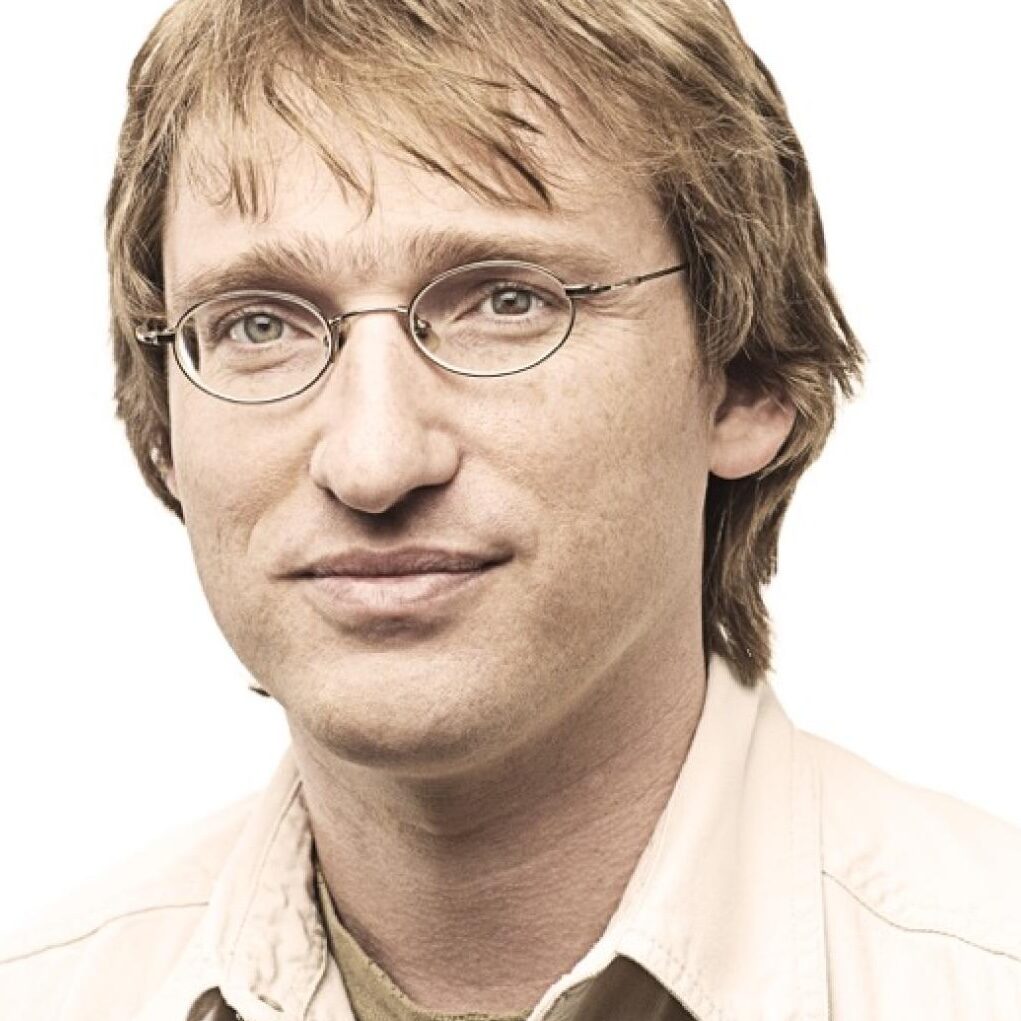
Erik Winfree received his Ph.D. in computation and neural science from the California Institute of Technology. He is currently Professor of Computer Science, Computation and Neural Systems, and Bioengineering at Caltech. Among his awards are the Tulip Prize in DNA Computing, the Feynman Prize for nanotechnology, the MacArthur Fellowship, and fellowship in the American Association for the Advancement of Science.
Click to Show Episode Transcript
0:00:00.2 Sean Carroll: Hello, everyone. Welcome to the Mindscape podcast. I'm your host, Sean Carroll. I think we all know in the history of intellectual development of the human race, et cetera, it took us a long time to invent the concept of the number zero, right? We could count, there were people who did accounting back in Mesopotamia or whatever, and you had to figure out how much stuff you had. Once you invented agriculture, the need for accounting became very important. But there's a level of abstraction that you get to when you say there's a number that is not a counting number, the number zero, right? It doesn't represent a quantity of anything. It represents an absence of a quantity. Negative numbers, imaginary numbers, all these things are levels of abstraction that we reach. And maybe the biggest, not the biggest level of abstraction ever, but sort of the most fundamental in this game is the idea of computation, right? The idea of manipulating information in a certain way as instantiated in matter, right? So not just in the realm of ideas or whatever, but a machine that moves things around that you can interpret at the end of the day as having done a computation, having solved a problem, having answered a question or whatever, having performed a task. And for various reasons, it's not 100 percent obvious that it's the only way to do it, but we have an especially effective kind of computation as embodied in the electronic computers that I'm looking at right now as I record this message, and many of you are probably listening from right now. Pushing around electrons in silicon turns out to be a super efficient way of doing computation in a very, very flexible and powerful framework.
0:01:51.4 SC: But it's not the only way, right? We've had the abacus. We have other ways of taking abstract notions of computation and embodying them or realizing them in physical matter. Indeed, our biology does this, right? We're not made of silicon. This is not Star Trek. We're made of hydrocarbons and other sort of organic kinds of things. And we have information stored in our bodies. We have information stored in the DNA in our nuclei of our cells, for example, and that gets shared with RNA. And we've been talking about this in various episodes of the podcast. So the fact that you can store information... Why are you storing information in the cells of your nuclei of your body? Well, because you want to put it to use. You want to do things with it. You want to make a protein, and then that protein is gonna go out there and serve a function. It's an example of a computation in some very broad sense. This information processing is happening in our bodies long before human beings invented the number zero or the theory of computation or anything like that. So could you imagine taking advantage of that? Could you imagine building computers that were not necessarily faster or more practical than electronic computers, but just were very tiny? Tiny enough to be DNA-sized or even involving DNA themselves? That's what we're talking about today with Erik Winfree, who's a professor at Caltech and one of the world's leaders in this area that is literally called DNA computation. The idea is you have a DNA molecule. Maybe you have it available because they're very useful for biology and genetics and things like that, but who cares? You forget that it has anything to do with biology. You think of a DNA molecule as a way of storing and manipulating information. And then you ask yourself, can I compute with it? Can I design it? Can I build exactly the chain of nucleotides that will, on its own accord, just naturally sort of self-assemble into the form of a computation? And can I do interesting things with that? Can I build little robots with it? The answer is yes to all of these questions.
0:04:08.8 SC: And the idea goes back decades, but Erik and his collaborators are at the forefront of actually making it work. And I don't know about you, but to me, this is just mind-blowing stuff, the idea that we can build little machines. And basically, since I'm a physicist and I know about atoms, these are kind of the smallest machines you can ever even imagine building, at this level of complexity. You can't build a machine smaller than an atom. You can't fit that much information into it. So we're there at the limits of what is possible. And it's still... It's hard, right? You cannot, piece by piece, assemble a single strand of DNA to do exactly what you want. You can synthesize them by the test tube full, I suppose I should say, but it's still kind of crude compared to what we can do with a silicon chip in a computer. But then you can put them in cells, or you can ask them to do things biologically that a silicon computer just isn't any good for. Then you can ask yourself, have you learned anything about the origin of life or the nature of computation in biology? And the answers to all these things are, well, we're learning. It's all very much work in progress and things that we're discovering right now. So that's life at the forefront where we want to be here at the Mindscape podcast. So I'm glad that we were able to make this happen.
0:05:32.1 SC: Occasional reminder that we have a Patreon for Mindscape. You could become a Patreon supporter. Just go to patreon.com/seanmcarroll. And one of the benefits of that is that you get ad-free versions of the podcast, as well as being able to ask questions at the monthly Ask Me Anything episodes. So we encourage anyone who is so inclined to send a few dollars to the Mindscape podcast and benefit enormously thereby. And with that, let's go.
[music]
0:06:17.4 SC: Erik Winfree, welcome to the Mindscape podcast.
0:06:19.9 Erik Winfree: Well, thank you very much.
0:06:21.6 SC: So I want to ask a question which, since I'm just a poor physicist, when you say you're working with DNA, we know we're gonna be talking a lot about DNA, using it for computers, robots, all this fun stuff. Why DNA? I think of DNA as something to do with carrying genetic information, but I suspect that is not why you're especially interested in it.
0:06:46.4 EW: Right. I'm generally interested in information-based chemistry.
0:06:51.2 SC: Okay.
0:06:51.9 EW: We could talk about why information-based chemistry is interesting, but if one wants to study it sort of from the ground up, one wants the simplest example of that phenomenon to study. And DNA not only encodes information, but it also acts on information. And so it's a wonderful playground for exploring principles.
0:07:19.4 SC: You know, I gotta tell the audience that Erik warned me ahead of time that he likes to get philosophical about these things, and I explained to him that this is the place to get philosophical. So right away, I'm gonna ask one of these big picture questions. We human beings draw a distinction between hardware and software when we design computers, but maybe the DNA doesn't. I don't know. Tell me.
0:07:45.7 EW: Yeah, I think of hardware and software as mental categories by which we understand things and not aspects of the thing itself. So both of those are sort of ways of looking at computation. And so for someone like myself who was, shall we say, trained as a theoretical computer scientist, the thing that's really of interest is what is computation and where do we see it in the world? And so that's also getting back to why I'm interested in DNA, is that it's sort of a wonderful example to explore the principles of computation outside of the standard technological mainstream of hardware and software and silicon and electrons and so forth.
0:08:39.0 SC: But basically the reason why DNA is useful to you is because it can store information in the sequence of nucleotides and act on it. And that's completely... I mean, that's maybe why we use it to carry genetic information, but the genetic information aspect is not something you're taking advantage of.
0:08:56.8 EW: Not at all.
0:08:57.7 SC: Yeah.
0:08:58.6 EW: It's more a sort of chemist point of view of if we're gonna look around for some molecules that we can put information into and we can have that information direct the behavior of those chemical systems and we can design molecular machines, what's the simplest thing to use? Proteins are pretty complicated. Carbohydrates don't do that much. Well, we could argue about that, but... [chuckle] But nucleic acids, RNA and DNA, are sort of simultaneously easy to understand in terms of their basic behavioral building blocks, their information-storing building blocks, and have a very rich behavioral repertoire. And so that makes it sort of the ideal place to look at computational principles, given that computation is sort of the science of understanding how information directs behavior in machines. Yeah.
0:09:58.2 SC: So I can kind of imagine, if we were just, like you said, being chemists interested in information processing and so forth, going through and thinking of all the different possible chemical compounds that would help us do this, and we hit on the best one and it's DNA. And we realize, "Oh, our bodies also use that." Is that because we lack imagination and our bodies gave us a hint, or is that because biology is just that good at optimizing?
0:10:27.1 EW: It could be biology is just that good. I wouldn't make the argument that DNA is the best one. I would make the point that it is at this time in humanity the easiest one to get your hands on and play around with. And that's because biology used it, right? So there are synthetic methods. There's whole technologies for how do we synthesize an arbitrary sequence of DNA from the chemical foundations. You can send an email to a company, they'll send you back a tube containing DNA with exactly the sequence you asked for. Right? This is very convenient. And that's, I think, the main reason it was chosen is the tools exist for playing with it and not worrying about the chemistry, but getting into the computation, shall we say.
0:11:14.8 SC: When did it become the case that I could send an email to a company and get a DNA strand back?
0:11:20.5 EW: Aha.
0:11:22.8 SC: About, approximately.
0:11:25.5 EW: I would say when I first got into this field in 1994 after Len Adleman's first DNA computing paper, it was probably already well-established and probably email was the mechanism. I can't remember exactly. You ordered things back then too in different ways, but yeah, it's been 40 years, almost 50 years that it's been a sort of off-the-shelf chemistry.
0:11:58.0 SC: But actually that's an interesting bigger picture fact that you being in grad school coincides with that sort of shift in how things are done. I get this all the time with podcast guests that they become the world's expert at something because it was just the right moment when they were right in grad school.
0:12:16.3 EW: Exactly, exactly. Ride the wave.
0:12:18.6 SC: Exactly. And then would something like RNA also be useful, or is DNA definitely the best?
0:12:26.3 EW: RNA and DNA are sort of the standard go-tos in our field. They're both fantastic. If you want a little bit more chemical versatility, RNA might be your choice. It's also sometimes a little bit more confusing because it reacts in ways that you don't expect. That can be a problem.
0:12:45.4 SC: Oh, okay.
0:12:46.4 EW: But they're both much easier to work with than proteins. They're both used a fair bit. If you think about the why, why did biology come up with DNA or RNA? I'm sure you've heard on a lot of podcasts, there's a hypothesis out there that shortly after the origin of life, or maybe at the origin of life, RNA was the dominant molecule. It's now in the ribosome and things like this. And so if there was an RNA world near earlier days before proteins shall we say took over, it almost suggests that sort of all the functions for a living cell or a living entity or a living whatever it is, an evolving whatever it is, could have been supported by RNA. And if you look at it sort of from a mathematician's point of view, what is RNA? It's a string of ATC... Well, AUCG, very similar to DNA's ATCG. One might argue that DNA also, if it has the same kinds of capabilities, is sufficiently rich in its behavioral repertoire to support all the things that life needs without the proteins, without the RNA, and so forth.
0:14:14.8 SC: And I know that there are four nucleotides that play the role in DNA. You've already mentioned them, GCTA. But aren't there other nucleotides we could imagine? Like, since you're doing it synthetically, since you're not trying to store genetic information, can you go out there and use others? Or is this a matter of the email won't respond if you ask for other nucleotides?
[laughter]
0:14:36.6 EW: So first, yes, there's a whole business of people inventing new nucleotides that expand the code, expand the repertoire, and that's very promising chemistry. But the emails either bounce back if you ask to get it off the shelf, you have to become a chemist to do it, or it's just really expensive. So sticking with just the basic four, from a practical point of view, if you want to go into the lab and do experiments, is definitely the advantage. There's another advantage that I think is the primary reason I like sticking with just the four. It's sort of like, well, you know back in the '90s to 2000s, there was a big fight in the computer industry between RISC architectures and CISC architectures, the reduced instruction set versus the complex instruction set. Which way are you going to do things to make the computers faster and cheaper? And I've always found the RISC architectures on the computer science side much more elegant. You have a small number of building blocks, you figure out the tricks that you can play the game in a uniform way rather than lots of idiosyncratic things. Now, in the chemistry world, you might think of DNA or maybe even RNA as reduced instruction sets for programming molecular machines to do interesting things. You might think of proteins as the complex instruction set. It can do more, maybe it can do it better if you really optimize it, but you have to work on that a lot harder to get everything tuned up just right and you need a lot of special purpose rules. It's harder to do things systematically.
0:16:22.1 SC: Okay, that actually makes perfect sense. I just learned something. So let's get into how you want it to actually work. So, I mean, again, my exposure to DNA is it's in the nuclei of my cells, it's storing genetic information, occasionally an RNA comes along and reads it, but yours are more active. So what is the actual dynamics of computation going on?
0:16:46.2 EW: I guess I would push back on my systems being more active. DNA and RNA play very active sort of roles in biology as well. Biology is never to be underestimated.
0:17:00.4 SC: Fair enough.
0:17:00.9 EW: It's an incredible machine or set of machines, however you want to look at it. And our systems throw all of that out. What we're interested in is what is the minimal set of building blocks out of which you can build arbitrarily complex things. And so when we do experiments, typically we'll have DNA in a test tube, we'll have some salt in the test tube, and that's about it.
[chuckle]
0:17:32.7 SC: Okay.
0:17:33.7 EW: So the DNA will have some information. And so we're not taking advantage most of the time of complex evolved enzymes that do complex things. We're just looking at how the information in DNA dictates those behaviors. But what are the behaviors? Our building blocks are things like two pieces of DNA will stick to each other. That's a self-assembly process. So the first thing you need to know here is that when it's chemically synthesized, what comes back after we send our email out, what comes back by FedEx is a little tube of white powder. We put some water into it and dissolve it up. It's clear. And what's in there is many... How many? Probably 10 to the 16 strands of the sequence that we asked for, where a strand is just the single-stranded chain. It's a very floppy thing. It's a sequence of AT whatever. It's not even a double helix yet.
0:18:32.8 SC: I was just gonna say. So it's just a single strand.
0:18:36.0 EW: It's just a... It's called single-stranded DNA because it's not yet double-stranded DNA. That's what you chemically synthesize. And to get the double-stranded DNA, to have it wrap up into the sort of typical double helix form that you're familiar thinking about, that only happens if you order two test tubes that have exactly complementary sequences. So if one of the molecules has an A, the other one in the same position will have a T, C with G, and so forth. And so if you get exactly these complementary sequences, when they bump into each other in the test tube, maybe they'll start by bumping into each other wrong and it won't match and they'll fall apart again. But when they align themselves right by chance, they'll zip up into the double helix and that will be fairly stable.
0:19:22.1 SC: So this is one aspect of this that, again, I think is probably second nature to you, but not obvious to everyone. When you're building a DNA computer, you don't take a single DNA molecule with tweezers and manipulate it. You have, like you said, 10 to the 16 strands right there in your little test tube.
0:19:44.4 EW: Yeah, exactly. And so the interesting thing about molecules, what fascinates me most about them, is that they're autonomous. They're Brownian and they're autonomous.
0:19:55.1 SC: Yeah.
0:19:55.4 EW: They're just bouncing around stochastically doing their thing. But what thing do they do? Well, chemistry tells us that, but if we can find clear ways of thinking about them, then we can get them to do tricks for us. So I talked about forming a double helix. That, in fact, could be thought of in a computational way as an operation. If I have two molecules and you ask, "Who should you stick to?" Maybe I have 10 molecules. Who should you stick to? They bump into each other, they test all sorts of possibilities. If they find one that matches partially, they'll stick a little bit. If they find one that matches perfectly, they will stick very well. And so this is a search process.
0:20:47.3 SC: And I think this is something that, again, people don't appreciate. Life at the nanoscale is very noisy and very random, and you're not precisely controlling things like you do in the laptop that I'm looking at right now.
0:21:00.8 EW: Exactly, exactly. Though, of course, you're not controlling things in the laptop either.
0:21:06.7 SC: Fair enough.
0:21:07.3 EW: It's very autonomous. The electrons are moving where they want to go. In fact, they're diffusing. It's just a lot faster than the atoms diffuse.
0:21:19.8 SC: So, to do a computation or to do self-assembly or whatever, are we changing the nucleotides in the DNA strand or are we... What are they... Are they nudging around some other raw materials?
0:21:34.0 EW: There are many ways that you can think about molecules as doing computation. Of course, I guess we're sort of... A stumbling block many times when people hear about DNA computing for the first time is, what do we mean by computation? So to do computation, what does that mean? The field started with Len Adleman's paper in 1984 with this, shall we say, really mind-blowing concept that the parallelism of chemistry, if thought of as performing a computation, can store information in parallel, can act on that in parallel, because everything's doing some kind of action by itself. And so you have this enormously parallel information processing system, and maybe you can compete with silicon computers to compute some useful problem faster, solve a combinatorial NP-complete problem.
0:22:36.0 SC: Right.
0:22:36.5 EW: And it took us at least five years to give up on that. [chuckle] It's not happening. We're not competing with silicon. And so the option is either, "Okay, well, that was fun. Let's move on to some real science," or to say, "That was an example of shooting for the moon and landing in the stars." We found something more interesting. And that more interesting thing is a way of thinking about, the way I'm putting it now is information-based chemistry. How do you program molecular systems to carry out interesting behaviors? And so my view of computation isn't solving hard problems that we want to solve with silicon computers. My view of computation, sort of the most remarkable thing about the theory of computation is that it gave us an intellectual framework for precisely specifying behaviors, target behaviors, and figuring out how to make machines that implement the specified behavior. So it's a theory of behaviors more than it's a theory of working with numbers or solving problems. And so that gives us a different perspective of what's exciting about molecular programming. It's a way of... A concrete way of asking, can we specify the desired behaviors of molecular systems and achieve those behaviors in a systematic way? That's what programming is.
0:24:18.0 SC: So that's... I was gonna actually ask in my questions I had in mind, what is computation really? Because if we think like everything's obeying the laws of physics, right? Every system has the properties that if I know its initial conditions and the laws, I can tell you where it's gonna go. But you're really thinking you're sort of abstracting away to the input-output relationship in some way.
0:24:40.9 EW: Yeah, I would even say input-output is a particular kind of behavior. And computer science doesn't study just input-output functions. That's a building block for computations, but if you're a computer scientist, you might... Well, what we're using right now, might program up a web streaming system in a web browser and so forth. These are computations. They're programmable systems, but they're interactive behaviors. They're just continually running and running and doing the thing that you ask them to do. It would be hard to talk about the whole thing as just input and output and we're done.
0:25:21.1 SC: Right.
0:25:21.2 EW: It just runs and runs and runs and runs and runs. Parts of it can be understood in terms of input and output, but that's only when you're breaking the system down into the tiny little pieces. Input-output is sort of like a spring in physics. It's what you build things out of.
[laughter]
0:25:35.2 SC: Yes, good. Fair enough. Which, I guess, is the other place I wanted to go. In traditional computer science, let's call it that, we have these ideas of gates and the circuits and logic and algorithms. And so is the goal to sort of reproduce all that in DNA? Are you gonna make a NOT gate or the equivalent thereof?
0:25:58.2 EW: We certainly have, but I wouldn't call that the goal.
0:26:00.9 SC: Okay.
0:26:03.6 EW: I would say a more interesting goal is... Well, think about the history of computing. Babbage built these gears and levers and these machines for computing out of mechanical devices. And then we got to electronic devices and vacuum tubes. And there were all these sort of components that people were trying to build systems out of. And at some point they realized, and Claude Shannon contributed enormously to this, they realized that, ah, thinking about these in terms of Boolean logic is a good abstraction. It fits the materials that we have, it fits the components we have, and we can think about computation at the Boolean level and then build computers out of AND gates and OR gates and memory units and so forth. And so the larger question for molecular systems, if we think about them as information-based chemistry, is: what are the natural building blocks for behaviors at the molecular scale? I've already talked about one, searching for a binding partner.
0:27:14.3 SC: Yeah.
0:27:15.9 EW: Right. So sticking, self-assembly that is directed by the information carried by the molecule. DNA with sequence one binds to DNA with sequence complement of one as soon as they find each other. That's a building block. And so if you follow the computer science trajectory, once you have your building blocks, you look at the smallest subset of building blocks that you can handle at the moment and you ask, what can those building blocks achieve? And that's a very interesting question. It's known in computer science, for example, if you have an AND gate, you can build circuits out of it, but they're all pretty boring because all you've got is AND gates.
0:28:01.0 SC: Right.
0:28:01.3 EW: So you need to toss in maybe... Well, if you have AND gates and OR gates, you can also do more. Turns out that's still boring. You need to add in a NOT gate, and now you've got sort of the full set of circuits that you'd like to build.
0:28:17.8 SC: So rather than just reproducing the gates story that we have from classical computation, you're taking a step back and saying, "Look, we're doing something very different here. Maybe the natural building blocks are different."
0:28:30.3 EW: Exactly, exactly. And so we may be... I would say the last 30 years of my career has been sort of trying out different ideas here and seeing how far they go. And so we've explored some kinds of things, programmable self-assembly dictated by DNA sequences that bind to each other. That's your building block. How can you put that building block together? And by putting it together in different ways, like building different circuits out of AND, OR, NOT gates, can you get different behaviors on the molecular side?
0:29:02.2 SC: Good. That...
0:29:02.5 EW: Self-assembly, piece one, but then there's some other ones. There's like polymers can fold. So polymer folding is maybe another building block. And then you can have chemical reactions. A plus B goes to C. Is that another kind of building block? And we could continue sort of looking for building blocks until we think, "Ah, this is getting really too crazy. Let's smooth it down and find the smallest set of building blocks that really account for the kinds of systems that would be interesting to understand, the kinds of behaviors at the molecular level that would be interesting to understand."
0:29:38.7 SC: So okay, I think I'm getting closer to my original question. I want to understand the physical stuff being pushed around. So you have some DNA strands and you're not changing the order of the nucleotides, I believe, but you are letting the strands attach to each other or attach to themselves if they want to fold. And do they grab onto other things in the environment, or is it just each other they're interacting with?
0:30:09.9 EW: So if you talk about the field at large, many people are using DNA, programmable DNA. The field's sometimes called DNA nanotechnology, if we want to use that kind of jargon. But people use DNA nanotechnology to interface with other chemistry. Because if you can program the DNA nanotechnology, if you can program machines that behave in a certain way, then when they're contacting other sort of more specialized chemistry, well, they can get it to do something neat. And so from that perspective, another analogy is if you're building a robot, your robot has some sensors, some cameras, some microphones, some other kinds of sensors. And it has some actuators, you know, legs, muscles, things that it can do to move. And then it has a CPU in the middle that reads the sensors, does some compute, processes some information, makes a decision, and then controls the actions that the robot is going to take. And so one view, it's a metaphor, is that one way that DNA nanotechnology is used is that it's that CPU, that programmable subsystem that is more easily programmable than the sort of interfacing with the rest of the physical world, the sensors and the actuators. But you have other kinds of chemistries that can... Actuators could be catalytic reactions that get turned on or off or interfacing with binding to certain proteins or other things.
0:31:55.2 SC: Okay.
0:31:55.9 EW: And then sensors, again, on the chemical side.
0:31:59.1 SC: And just because I'm not at all a chemist and I want to sort of understand a little bit of the nitty-gritty, how long are your DNA sequences in the little test tube?
0:32:11.1 EW: That's a fair question. Right now, when you send your email to the company, the cheapest thing to get is gonna be these single-stranded DNA pieces that are shorter than 200 nucleotides.
0:32:25.7 SC: Okay.
0:32:26.3 EW: So, that's... Well, what's one word in many computers? 64 bits, maybe on advanced computers, 128 bits, that's comparable to the size of the individual molecules that we get. So one memory element of a modern computer roughly corresponds to the size of molecule we make. But we can order many of them. So we'll often design systems. I shouldn't say often because these are the sort of the frontiers of our field, is you design 1,000, maybe even 20,000 different molecules and they interact together in a system way to either self-assemble a structure, carry out an information processing cascade, or do some other neat thing in the test tube. So that's the most common one. Then there's a little asterisk, which is that every now and again we borrow from biology. One area in DNA nanotechnology is called DNA origami. And with DNA origami, one starts with about a 7-kilobase molecule of DNA and then cause it to fold or undergo different kinds of transformations.
0:33:53.4 SC: So if one were a grad student in your lab, would one be coming up with a sequence of nucleotides to email the company to and then get them back and pour them in the test tube?
0:34:07.4 EW: That's what one does. Yes. So, one has an idea, one translates that into sort of a specific objective and then one writes some code to design the sequence. There's some off-the-shelf ways of designing sequences. You just download the software and do it and you get some of the software outputs in email that you can send to the company. Often if you're doing something more frontier, you're writing your own sequence design software for your specific challenge.
0:34:41.0 SC: And then I'm sure we're gonna be skipping over a lot of steps that are very important in the life of that graduate student. But then we take our different test tubes and we mix them together and we measure. Now we have to be chemists, right? We have to figure out what came out of all that.
0:34:54.7 EW: Yeah. The two kinds of experiments that are most common... I'll give three. One is atomic force microscopy. This is sort of where I cut my teeth, shall we say. And that's great for looking at structures. If you can assemble a structure that's more or less flat but has an interesting shape, then you can prove that it assembled properly by looking at it. And atomic force microscopy is sort of special because you can get sometimes down to almost a nanometer resolution to see individual molecules. It does that because it's not an optical-based microscopy technique. It's actually more like a little needle that scrapes along a surface, feeling the bumps. And so your molecules are bumps. And if you... One of the famous examples is DNA origami that folds a piece of DNA into a smiley face. When the atomic force microscope scrapes its needle across the surface and it sees a pattern of bumps that looks like a smiley face, okay, great. That didn't happen by accident.
0:36:09.3 SC: Right. [chuckle] I mean, that's very useful knowledge because I think a lot of people see the images that in when a news press release comes out of the smiley face or whatever, or IBM written in different things, and they think that someone took a picture of that with their camera. But it's a very different technique.
0:36:28.8 EW: Yeah. I mean, red light is what? Wavelength 500 nanometers. The smiley face was about 80 nanometers.
0:36:34.9 SC: Yeah.
0:36:35.5 EW: So it's smaller than a photon.
0:36:38.5 SC: Right. Good. Okay. And let's think about what we're gonna do with these things. When you have an algorithm in your DNA computer, is it more likely to be add two plus three and get five, or is it something like take input X and Y and add X and Y? Is that something we can do?
0:37:00.3 EW: Right. So in some sense, okay, what are some programs that you can write? Many people, maybe fewer people these days, but back in the good old days, the first program they wrote was print "Hello, world."
0:37:08.0 SC: I did that.
0:37:15.6 EW: Not a very exciting program. But what does it do? It outputs... Shall we say, it outputs some photons on your display that are arranged geometrically such that your eyeball reads them as "Hello, world." Right? It moves not exactly matter, but certainly electric charge and photons around and arranges them in the real world. So that's the output of a program. So this DNA origami is maybe an example of a program and an output. The output is like computer graphics. It's the picture of a smiley face. Okay, what kinds of program makes that? It's sort of a print "Hello, world" type of program at the molecular level where the program was, here's a long seven-kilobase strand of DNA and here's about 200, 300 other short strands of DNA that bind to it and stick to it and pull different parts of it together until it folds up into a smiley face. That's the program running. So that's a different view than doing some arithmetic.
0:38:34.0 SC: But could you do arithmetic, or is it a matter of matching the tools to the task? And who would ever make a DNA robot to do arithmetic? That's a waste of time.
0:38:43.3 EW: Well, we did. We did. We wasted our time that way. But the point wasn't to do arithmetic. The point was that's, just like we don't really want smiley faces that are 80 nanometers in size, right, it's a demonstration of a capability. We think we've put our fingers on some way of programming molecules to do what we want structurally. Okay, we'll prove that by making a smiley face. In this case, DNA origami was invented by Paul Rothemund, so I don't want to say "we" as in my group.
0:39:18.3 SC: No, no, sure.
0:39:20.5 EW: But as a field. And we have also done arithmetic. One of my group's... This is work Lulu Qian and I did, was to design some molecules that compute the discrete square root of a four-bit number. Okay, that's an odd choice, but it demonstrated the capabilities that we wanted to demonstrate. If you ask other people, "Is this something DNA strands can do?" They would probably say, "Huh?" And so you need a concrete example.
0:39:56.3 SC: Right.
0:39:56.6 EW: And then they say, "Okay, well, this expands our way of looking at things. Maybe not interesting, but at least it's different."
0:40:03.0 SC: Yeah. And I remember when I was an undergraduate, so the 1980s, and personal computers were still new and there was not a lot of sophisticated stuff going on, so I took a whole course learning assembly language. And today the kids don't do that anymore. So what about that kind of hierarchy that we have in the ordinary computation world of assembly to higher-level languages to apps? Like, today many people don't even know about languages, right? They just use their apps. Are you doing that in the DNA world?
0:40:37.2 EW: I'm glad you brought that up. It's, I would say, one of the motivating reasons for me doing research is to ask exactly whether that kind of process works in chemistry. I would say when I was first getting interested in the molecular world and I talked to chemists, this is as a graduate student, they would largely say the things that computer science does, having an abstraction for what you're trying to do and compiling it down to a set of molecules that do exactly what you want, that way of approaching things is ridiculous. What you need to do is have a next experiment and then you'll find out something you didn't know and then you'll do a next experiment and then you'll get somewhere interesting. Whereas computer science has sort of staked its whole claim back in the '50s on the idea that we can set up a bunch of rules for the game. And now you just play with those rules, we'll worry about the physics.
0:41:44.9 SC: Yeah.
0:41:45.7 EW: Our electronic machine has the physics that manipulates things, but you can just worry about either your AND gates or worry about your assembly language, things like move the memory in location 200 to location 400. That's an example of an assembly language command.
0:42:05.5 SC: Right.
0:42:06.2 EW: Right? And so you have this whole hierarchy that you're describing, from essentially from a high-level language like Python or C back in the day, down to assembly... Actually an intermediate language that's a little bit more flexible, then that down to assembly language, and then that compiles down onto your actual physical hardware depending upon what chip you have. And so we'd like to do the same thing with molecules. So we've actually prototyped that sort of flow for several different kinds of systems, what we call tile self-assembly systems, what we call strand displacement cascades, and DNA origami is also sort of like that, although it's more like CAD actually. But we have a series of abstractions for sort of going from the most abstract notion of what self-assembly is down to more concrete notions of what self-assembly is, down to more detailed ones, down to DNA sequences, then down to the laboratory, and showing that that hierarchy is an effective way of making molecular systems that actually work, I would say that's one of the things I'm proudest of.
0:43:27.4 SC: It's worth pausing here to reflect that you have a lab and you have test tubes and you're doing chemistry, but not just the idea of computation, but real heavyweight ideas from the theory of computation are very much involved here. Like, what counts as a computation? What kind of system can do a computation? These all become very practical questions in this field.
0:43:52.8 EW: Practical in a very impractical way. I mean, all of our experiments sort of show, "Look, molecules can do this. Who would have thought?" They're not, "Look, molecules can do this thing that's useful for industry."
0:44:06.3 SC: Well, that's where I was gonna go somewhere.
0:44:08.8 EW: No, please don't. [laughter] Let's stick to the philosophy.
0:44:13.2 SC: The philosophy will keep coming back, but you've already... Go ahead.
0:44:17.2 EW: So let me just give an example of some of those things you're talking about, sort of the ideas from theoretical computer science and mathematics that are somehow underlying some of these things. So one of the kinds of molecular systems we design are DNA molecules that essentially crystallize. But as they crystallize, that's a form of self-assembly, they don't form periodic structures, but they form patterned structures. If I were to give my DNA molecules colors, they're not colored, but if I had a red one and a blue one and a green one, as they self-assemble, the brown ones stick to the red ones, the red ones stick to the yellow ones if it's next to a black one, and you have these sort of rules for how they come together. And then what ends up forming is this, in our hands, often a two-dimensional tapestry that has a very specific layout of the different colors. And so this is a tiling. It's a mathematical object that has been studied for a long time. And it turns out that tilings have very deep connections to computer science. So there are questions, are all valid infinite tilings periodic? No, some of them aren't. There's aperiodic structures, Penrose tilings, but also square ones. Hao Wang developed with his students some of the first really interesting aperiodic square tilings and noticed that, in fact, you can design sets of tiles that just stick to each other when the colors match that exactly simulate the behavior of certain kinds of computers like Turing machines, similarly, cellular automata. So these kinds of theoretical ideas are sort of implicit in the kinds of experiments we do in the laboratory where we try to show that algorithmic self-assembly, following the ideas of mathematical tilings, are physically possible as a way that matter self-organizes.
0:46:27.9 SC: You mentioned very quickly there cellular automata, but the story you're telling just reminds me very much of discovering that computation can be done in these simple two-dimensional cellular automata.
0:46:39.4 EW: Yes, yes. Like the Game of Life.
0:46:41.6 SC: The Game of Life, yeah, and all those things. But now it's physical matter rather than other things, which is very cool. So, okay, but you have told us that you're not competing with silicon on speed. Right? You're not gonna make a DNA data center to do anything like that. But maybe you can compete on size or flexibility. I mean, it's DNA. You could put it in a cell and let it go crazy.
0:47:11.8 EW: Yeah, so one of the original motivations for the DNA computing field was you can store information in a very small space. One DNA base pair is about a cubic nanometer. So if that was packed very tightly, biology knows how to pack it very tightly, you have an incredible information density. So there's now a field of DNA data storage that I would say is still trying to see whether that's economically viable. That's not my personal interest. I would say... If you ask, what is the grand challenge? The grand challenge, the thing that electronic computers can't do, is interface directly with chemistry. Right?
0:48:03.1 SC: Right, okay. Yeah.
0:48:04.2 EW: This is what biology... I would say this is the most important thing in biology, is that there's information that directs the behavior. What proteins should I make? When should I make different proteins? That controls everything inside the cell. And so you have, the cell is an information-based molecular system that, as we can see, controlling chemistry with logic and rules, which is what biochemistry does, is incredibly powerful at making diverse physical objects, i.e., organisms. And it's also the starting point for evolution. If you can store information, you can change that information, you can explore the space of possible organisms. And so biology, one way of understanding biology is to understand where evolution went, what was available to it. You sort of have to understand the design space of all possible organisms. Hard thing to do, but computer science has given us this prototype of what is the space of all possible behaviors given these building blocks. That's what we said a programming language gives you. It's a way of representing the design space of all the possibilities.
0:49:27.2 SC: Yeah.
0:49:27.6 EW: Now you as the programmer write specific programs and explore that design space. And so it gives us a sort of a one-shot, finite description of what that design space is, despite the fact that it's infinite. And so if we can take that concept and import it into the molecular world, maybe we can't understand biology 'cause all of chemistry and physics are available to biology, but we can understand a smaller space, the reduced instruction set of programmable DNA systems, and try to understand the design space that way.
0:50:05.3 SC: And is there any task you would like to accomplish inside a cell that you can do very well this way? Is there like some medical thing or...
0:50:15.6 EW: Well, I wouldn't want to do it inside a cell.
0:50:17.3 SC: Okay.
0:50:19.1 EW: My personal preference. I think biology is a wonderful proof of concept that information-based chemistry is rich, but the space of things that biology has explored is a tiny subset of everything that's possible. And so I'm much more interested in sort of exploring the sort of matter-to... I wouldn't say matter-to-life, but matter-to-as-complicated-as-life spectrum of molecular machines from the ground up. So a grand challenge for my field might be, if one were to take it, is to build a cell from scratch using only DNA.
0:51:05.8 SC: Wow.
0:51:06.4 EW: Okay, that wouldn't be a cell. It wouldn't be a biological cell, but it would be something like a cell. So maybe as a metaphor, Boston Dynamics ten years ago built a dog from scratch using silicon and plastic.
0:51:23.4 SC: Right.
0:51:24.0 EW: And that wasn't a dog, and it doesn't reproduce, but it could walk through a forest. And we're slowly making robots more and more competent, but in a very systematic way where we can program them to do different things. So when I say it would be a grand challenge to make a cell, what I mean is, could we make something about a micron in size that has many components, can sense its environment, can actuate.
0:51:56.8 SC: Right, yeah.
0:51:57.3 EW: Can take energy from its environment to stay out of equilibrium and do interesting things, maybe even self-reproduce? That would be a neat thing. And I think it's less ridiculous than it sounds.
0:52:14.5 SC: No, it sounds just the right amount of ridiculous. [laughter] Although, let me push back on why do you want to make it all out of DNA? I mean, the actual cells in our bodies have DNA to store the info, et cetera, but they have other kinds of things to do other kinds of tasks.
0:52:35.8 EW: This question also came up in computer science, historically. Why make things just out of silicon? Why not gallium arsenide? Why not add various chemistries to the fabrication process to make it better? And the early history of VLSI was, if you make all your transistors exactly the same and just arrange them differently into different circuits, you can do things systematically, you can scale, you can understand what you're doing. If you try to use all sorts of complex electronic devices, a weird kind of capacitor over here, a weird kind of resistor here that fits into the fabrication process, you get confused and that technology grows a little bit slower, even if maybe ultimately it would have been, had faster switching times and various other advantages. So there's a practical scaling advantage, a managing complexity advantage to keeping your building blocks as few as possible and then understanding that design space because it's interesting enough.
0:53:37.8 SC: Yeah. It's very similar, maybe it's exactly the same as the complexity-complication distinction. I don't know if you're familiar with that one, but a car is complicated because it's made of all these parts, but the parts are all doing something very purpose-built for just to do that thing. Whereas a complex emergent system has all these parts that are kind of multipurpose and they organize into some kind of hierarchy that can do lots of different things.
0:54:03.9 EW: Right. Right. Or even very simple, like you mentioned the cellular automaton, the Game of Life. The parts there are almost trivial and yet the complexity is enormous.
0:54:14.0 SC: Good. Okay. That actually makes a lot of sense. And something I don't want to let slip by is that we've been talking about computers and computation and you've done that. You've also done DNA robots, which I guess is a little bit different. What is the difference? Because you talked about real robots, but these are tiny little robots.
0:54:33.4 EW: Yeah. So this is also work with Lulu Qian. This was sort of exploring how small can a robot be? What is the smallest, shall we say, sensing, thinking, activating... Or instead of thinking, you could say decision-making, decisions can be very small and elementary.
0:54:59.0 SC: That's true.
0:54:59.7 EW: How small can that be? And our example was that can just be a single molecule, a single strand of DNA that has domains that are responsible for moving around on a surface, again due to this Watson-Crick interactions that you can program, picking up a cargo, dropping off a cargo at the right designation, all controlled by these DNA informational barcodes. That was a fun thing to do.
0:55:37.1 SC: But, I mean, beyond fun, I can imagine... Maybe because I don't understand the constraints, but if you can make a little nanoscale thing that will pick up one molecule and carry it somewhere else and put it down, that sounds like there's an infinite number of applications for that. I don't know.
0:55:55.4 EW: Yes, potentially. So one of the bottlenecks that sort of the early development of DNA nanotechnology has been facing is that almost all our experimental systems have been, put some DNA molecules in a test tube and then watch what they do.
0:56:13.9 SC: Yeah.
0:56:14.6 EW: And what they do, of course, is settle as fast as they can towards equilibrium. Maybe they'll get stuck along the way, but they're one and done. And I'll mention my wife again, Lulu Qian, one of the exciting things she did last year is found a very clean way of powering DNA systems for sustained non-equilibrium behavior. And this is just by heating them up. And if you're clever, your molecules can capture energy from the heat into a metastable state, which then when they're cool they can release in a very programmed way. And so the problem with the DNA robot that we demonstrated, I don't know, almost 10 years ago now, was that it was entirely unpowered.
0:57:06.1 SC: Right.
0:57:06.6 EW: So it would do a random walk which was diffusion, no direction to it, it would drop things off because that was a downhill energy step. And we couldn't even think about really exploring them to do very programmed ways that are continually driving them forward towards a specific goal. Now maybe we're in a place to start thinking about that.
0:57:32.3 SC: I'm very glad that you said that because I wasn't really aware of it, but I'm an entropy guy. I think that increasing entropy, or if you like, using up free energy, is the driving force behind all biology, all thinking, all metabolism, et cetera, the development of complexity in the universe. So it's an obvious place to go. And maybe that will eventually, I'm hypothesizing here, and you can slap me down if you want, provide a motivation for hooking up your DNA information processing systems into some dumber systems that are more cell-like that sort of are more about eating and consuming and moving around, and the DNA is driving from the driver's seat.
0:58:19.1 EW: I won't slap you down.
[laughter]
0:58:26.1 SC: But I mean that... Yeah, okay. We can...
0:58:26.9 EW: I think that there are fascinating questions when you get to entropy, enthalpy, the physics of computation. That was actually one of my, shall we say, motivating reasons to get excited about DNA computing was that prior to that I had been reading Charles Bennett and Margolus and Toffoli and the thermodynamics of computation. Not quantum, but just the sort of Brownian version thereof. How much energy does it take to compute?
0:59:02.9 SC: Right.
0:59:03.5 EW: And I thought that those were fascinating ideas to the extent that I understood them. But I think with DNA systems, there are a lot of very concrete ways of looking at those questions. So, for example, the tiling self-assembly. We have these little DNA units that sort of start assembling into a two-dimensional crystal. During that crystal growth, if you're running it, you're working at a temperature and concentrations that are right next to the melting temperature of the crystal, which is where you get the lowest error rates. At this point, molecules are assembling, disassembling, coming on, coming off, but they're overall doing a computation. They're creating that tapestry that's an algorithmic patterned tapestry. But they're doing it for as close to zero energy as you want. The closer you run to the melting temperature of the crystal, the less free energy difference there is when a piece comes in versus a piece falls out. And so the system is sort of naturally, exactly exploring this regime that Charles Bennett was talking about.
1:00:13.7 SC: It is... Yeah, that is very exciting. But it reminds me of a very practical question that I thought I should ask. John Preskill, who is your Caltech colleague and also a former Mindscape guest, I remember when he sort of switched from being a quantum field theorist to doing quantum information theory and became the world's expert in quantum error correction. And I just thought, oh well, it's too bad that the useful side of his career is over now. That just sounds so boring, quantum error correction. And now I realize that I was just being dumb and it's one of the most important things out there. But presumably you have good old classical errors in these DNA computers. It is a wet, noisy environment that they're all suspended in.
1:00:55.8 EW: Yeah, very much.
1:00:57.2 SC: What do you do about that?
1:00:59.5 EW: Yeah. So I also spent some time reading about von Neumann's classical error correction mechanism for digital circuits and asking, can some of these ideas be incorporated into the design of molecular systems? And so, of course, yes. And it takes different forms depending upon the kind of system you're thinking about. In the self-assembly systems, it turned out to be a little bit funny that the way to get the lowest error rates was to introduce a form of proofreading. Not like John Hopfield's kinetic proofreading that sort of burns energy to do so, but a form of self-assembly proofreading that's based on cooperative interactions.
1:01:58.0 SC: Okay.
1:01:58.4 EW: So the growth process can't go forward unless two things come together sort of at the same time. And if one of them misassembles, then the other one won't fit and self-assembly stalls out. But you can prove some interesting theorems about the kinetics and error rate tradeoff based on the cooperativity, the type of self-assembled pattern.
1:02:25.9 SC: I think this is an important lesson for the people out there listening, because sometimes it's not always obvious why professors, academics, whatever, are spending their valuable IQ points doing these fun-sounding things rather than improving the world, making a smiley face at the nanometer scale or whatever. But so often just showing and figuring out how you can do something specific in the real world teaches you a hugely valuable lesson you didn't even know you were wondering about.
1:03:00.0 EW: Absolutely. Absolutely.
1:03:01.2 SC: And so therefore it sort of leads into the last big bucket of questions that I have. Have we learned anything about life from doing all these things? You keep talking about self-assembly, information processing. These are all words that appear when we talk about the origin of life.
1:03:22.9 EW: So, I think there are a fair number of people who think that the central thing in life is the fact that it's based on information. Right? Darwinian evolution can't happen without that.
1:03:35.9 SC: Yeah.
1:03:36.3 EW: And so while I think there are plenty of biologists who think that making smiley faces or cellular automata patterns in DNA arrays has absolutely nothing to do with the life that they care about, to me, looking at how information expresses itself in molecular systems is the central question of understanding life. At least the one that's centralest to my heart. I won't go further than that. But I think maybe there's another thing just in terms of the role that different academic disciplines can play and how they can interact with each other. So one thing that... Here you're gonna have to correct me if I get this wrong, but one historical anecdote that made quite an impression on me was that a lot of the key concepts in thermodynamics came from the study of the latest, greatest at the time industrial technology, the steam engine. Right? So how do we understand steam engines and what they can do and what they can't do?
1:04:53.5 SC: 100% correct. Yeah.
1:04:55.1 EW: Yeah. Carnot studied their efficiency and that process led to the development of notions of entropy. Well, you're an entropy guy, so you really know this. [laughter] And free energy and so forth. And now you go to biology, and can you talk about protein folding without the notion of free energy and entropy? You can't. Right? This concept went from the theory of the steam engine to the theory of all these equilibrium systems, which is just everywhere pervasive throughout science. And okay, it took a few hundred years to sort of distill which parts of that theory were the theory of the steam engine and which parts were the theory of everything.
1:05:43.1 SC: Yes.
1:05:45.1 EW: And so now, 75 years ago or so, depends on where you pin your pin, there was a new technology, right? The beginning not of the industrial revolution, but the beginning of the information revolution. People started building these devices that could compute. And we have the theory of the electronic computer that has been studied and developed, and concepts come into play. What is an algorithm? What is decidable? What is recursion? What is modularity? What is information? This whole spectrum of ideas around the, well, the theory of the electronic computer. And so there has been leakage into other sciences where you say, okay, that concept, like the concept of entropy and free energy, maybe the part that doesn't have to do with the electronic computer is the theory of behavior. How do you specify behaviors? How do you analyze behaviors? These are now not equilibrium behaviors, but kinetic behaviors, the response, sort of rule-based behaviors. And I think that's what we've seen. We've seen sort of more of these concepts being applied, first in neuroscience to the brain, and in biochemistry and in other areas. But it's going to take some time to really figure out which parts of the theory are as universally sort of a theory of everything for behavior and which parts are just the theory of electronic computers.
1:07:30.1 SC: So I love that answer. I mean, it's at my happy level of abstraction and grandiosity, which is very good.
1:07:38.5 EW: Oops. [laughter]
1:07:39.0 SC: But if I were an origin of life person, I guess I would be pressing on, there's a fundamental issue in, like, okay, when did the universe start processing information in this way? Was it because an RNA molecule happened along and interacted in a certain way? And I guess, of course, this is a big question and we can argue about it, but have we learned anything or has your work suggested anything to us about that kind of question?
1:08:12.3 EW: Yeah, I love that move. When I was in high school and college, one of the things that I was really influenced by was the early artificial life works coming out of the Santa Fe Institute. And what they were exploring, people like Chris Langton, was the idea that maybe some of the things that we associate with life, self-replication, evolution, are principles of computer programs, things that computer programs can do. And so we can simulate them on a computer and we can watch an artificial evolutionary process proceed. And the first sort of point there is that once you have a programming language, let's say assembly language, then writing a program that copies itself is dead easy. Right?
1:09:13.1 SC: Yeah. [chuckle]
1:09:13.7 EW: You just have a few lines that say, go back, copy this memory, put it there, go back, copy that memory, put it there, and pretty soon you've copied yourself. And so self-replication is a program from the artificial life point of view. Now, if we come back to spending a lot of time thinking about molecular interactions with DNA as an example as being programming languages, then it ought to be, if we found the right building blocks, that self-replication is a program in our molecular programming language. We don't maybe need to design the full Boston Dynamics micron-scale artificial cell. Maybe we just need to write one little program that self-replicates and then have artificial life in an actual test tube undergoing some kind of evolutionary process. So you were talking about sort of real origin of life with all the chemistry and how much oxygen was present at this point in time and what was the pH and things that matter if we want to understand how it worked on Earth. But if we ask just generically, how can non-living systems kickstart and kickstart the evolutionary process, how do you get your first self-replicator? Maybe the cleanest theoretical way of exploring that is to start with something like a programming language, but not a complex thing running on silicon, but a subset of physics and chemistry that is a programming language.
1:10:55.5 SC: Right.
[chuckle]
1:10:58.0 EW: And then ask how in a simple programming language can self-replicators spontaneously organize and start evolving? So I was... Excuse me for going on and on here. I was, what should I say, my thinking on this was reinvigorated two years ago when a fellow, Blaise Agüera y Arcas, wrote a very compelling paper on computational life where he showed a very simple programming language where he just took two programs and ran them against each other. One program used the other program as data and did that for a long time, and they started getting more complex despite there being no explicit goal, and then self-replicators arose.
1:11:48.2 SC: We had him on the podcast. It was one of the best conversations we had. I was absolutely thinking of that while you were talking, so I'm glad you already know about it. Yeah.
1:11:56.9 EW: It's fantastic. Very inspiring to us. And so that paper made me think, okay, now's the time that we've got tools in DNA nanotechnology to start asking, can we do that same experiment in the laboratory? I think of this as a different way of thinking about the origin of life. There's the RNA-first approach, there's the metabolism-first approach, there's the blah, blah, blah-first approach. I would say Blaise is... I don't think he uses these words, but advocating for a programming language-first approach.
1:12:40.4 SC: Right. Right. And in some sense, what your work is suggesting is that the gap between his computer program, literal computer simulation of that, and embodying it in real physical matter might be smaller than you might worry.
1:12:57.1 EW: Exactly. Though I'm not sure why you use the word worry.
[laughter]
1:13:05.3 SC: I'm trying to put myself in the mindset of someone who thinks the origin of life is a hard problem, we'll never figure it out, et cetera, et cetera. But then you sort of come at it from these weird angles and you realize, oh, okay, that sheds light on something we've been struggling with for a long time.
1:13:21.5 EW: Right.
1:13:21.6 SC: And okay, so then the last question is, what is the future? You've given us a great grand challenge with the building little cells thing, and I love the idea of little robots moving things around in our bodies or shaping chemistry. Sounds like the sky's the limit, but you should say what you think.
1:13:43.4 EW: So there are two things that I'm excited about doing research on sort of going forward. The first I already mentioned being how can we power these DNA nanotechnology systems to keep going for a long time? If we wanted to do something like Blaise does and look at self-organization and kickstart some kind of evolutionary process, having power in the system somehow is necessary. And so what's the simplest way? And so I'm very excited about Lulu Qian's heat-powered system. This is an old idea in the origin of life community that hot-cold, day-night cycles...
1:14:32.4 SC: Gradients, yeah.
1:14:33.7 EW: Or gradients or cycles near hydrothermal vents might be an energy source for complex chemistry getting powered. But in our DNA nanotechnology systems, it's sort of, to me at least, even more surprising because there's no chemistry going on. There's just hydrogen bonds, DNA strands sticking to each other and not... There's no formation of new molecules. And so if that's enough, that would be really exciting.
1:15:04.9 SC: Yeah.
1:15:06.5 EW: The other thing that sort of plays into that is thinking about the kinds of building blocks that are programmable building blocks that we can explore with DNA, but they come in different types. So I talked about self-assembly, which is sort of crystals. That's, if you wish, solid state. We also have molecules that bounce into each other and carry out reactions. A plus B goes to C. These kinds of reactions are, you might even call them gas phase. They're in a liquid, but the elements we care about are usually in isolation except every now and again they bounce into another active molecule and do something and then go their separate ways. So that's like a bunch of billiard balls bouncing around but changing colors. So that's gas phase. And most recently, we've been looking at how to think about programmable behaviors and information processing in dense liquids, condensates. Molecules, in this case, again, DNA molecules in our concrete example, that are constantly in contact with each other but with very low kT interactions so that they're constantly rearranging. Liquid phase. So my intuition is that if you look at what's needed to make a cell-like thing, you're gonna need some solid phase components, you're gonna need some sort of gas phase or dilute chemistry components, you're gonna need some liquid phase components. And understanding how those sort of come together into a programming language at the molecular level so that we can think of them not just in terms of idiosyncratic chemistry of each type, but in some uniform way of specifying the behavior of a system and programming it, it would be exciting to me to have more clarity on that kind of molecular program.
1:17:01.9 SC: Always glad to be informed that we don't know all the answers yet and there's still good things [chuckle] remaining to be done. So, Erik Winfree, thanks very much for being on the Mindscape podcast.
1:17:12.3 EW: Thank you. It was a pleasure.
[music]