Author: Sean Carroll

  • Charity Update

    It’s been a while, and I’ve been meaning to provide an update on our little charity suggestion bleg. If you’ll recall, I wanted to take my ill-gotten gains from the 3 Quarks Daily Prize and send them to a worthy charity, but rather than just defaulting to my usual favorites I sought from new wisdom from the collective intelligence out there.

    The bad news — in some sense — is that there are far too many truly worthy causes. Apparently we have a way to go before achieving a utopian condition throughout all the countries of Earth. Who knew?

    Nevertheless I was happy to learn about GiveWell, an organization whose purpose it to figure out what kinds of charitable donations actually have the greatest impact. (It was advocated by Ian, Edgar, and Rationalist.) It’s obvious that different types of giving can have disparate impacts, but it’s very hard to figure out what approach is most effective, and having an organization dedicated to doing the hard work of figuring that out is invaluable.

    Just to get an idea of what we’re talking about: to rate the relative effectiveness of different programs, GiveWell uses a metric called Disability-Adjusted Life Years (DALY). It’s a well-known (in these circles) number, also used by the World Health Organization and others. The idea is to make some attempt — as hard as this may be from a rigorous philosophical perspective — to boil different kinds of good deeds to a single number. Maybe you actually increase someone’s lifespan, or maybe you prevent blindness — DALY boils it all down to one quantity.

    And what you then find is — an extraordinary range of different values for different forms of charity. At the extreme end, consider supporting improved water sanitation to prevent diarrhea, which certainly sounds like a good idea to me. That gets you $4,185/DALY, so it takes about four grand to do the equivalent of giving someone an extra year of life. Compare this to deworming programs, which come in at $3/DALY. In this metric, in other words, deworming is about a thousand times more cost-effective than water sanitation. Obviously this is a crude measure, but it gives some idea of the range of possible outcomes.

    When it comes to messy human problems, I don’t actually valorize “metrics” and “data” above all else; sometimes things work but it’s hard to quantify how much good they are actually doing. Nevertheless, in a situation of relative ignorance it’s really wonderful to have an organization trying to work out these numbers the best they can. My favorite part of the GiveWell website was the page labeled Shortcomings — not other people’s shortcomings, but their own shortcomings. They want to be as upfront and transparent as possible about their mistakes, and strive to do better. Yay!

    After all that, I didn’t actually give the donation to GiveWell itself. Rather, I just followed their advice and gave to their highest-ranked charity: Village Reach, an organization that works to improve access to healthcare in remote and underserved areas in Africa and elsewhere. (Immunization programs, in general, are extremely cost-effective ways of improving health in poor communities.) It’s a relatively new, still quite small program, but with impressive effectiveness. I was very happy to donate, and certainly will continue to do so.

    Which doesn’t mean that there still aren’t many other great choices. Thanks to everyone for chipping in with suggestions.

  • APS Prize For Young Particle Theorists

    The Division of Particles and Fields of the American Physical Society, wisely realizing that the future belongs to the young, has instituted a new prize for the best Ph.D. dissertation in theoretical particle physics. It’s brand new, so we’re helping to spread the word. Official notice below.

    Note that this is not because particle theorists are especially prizeworthy; this new award joins a host of other dissertation prizes in other subfields of physics. Advisors everywhere, take note!

    Message to members of the American Physical Society’s DPF, Authorized by Alice Bean, Secretary/Treasurer of DPF
    *********************************************************
    Dissertation Award in Theoretical Particle Physics

    Starting this year, the Division of Particles and Fields has established a Dissertation Award in Theoretical Particle Physics. The Award recognizes exceptional young scientists who have performed original doctoral thesis work of outstanding scientific quality and achievement in the area of theoretical particle physics. The annual Award consists of $1,500, a certificate citing the accomplishments of the recipient, and an allowance of up to $1,000 for travel to attend a meeting of the DPF or APS, where the Award will be presented.

    Nominations will be accepted for any doctoral student studying at a college or university in the United States or in an education abroad program of a college or university in the United States for dissertation research carried out in the field of theoretical particle physics. The work to be considered must have been completed as part of the requirements for a doctoral degree. Nominees for the 2012 Award must have passed their thesis defense between September 16, 2010 and September 15, 2011.

    The deadline for submission of nominations for the 2012 prize is October 1, 2011. For detailed guidelines and to submit a nomination, see

    http://www.aps.org/programs/honors/dissertation/particle.cfm

  • NASA Astrophysics: It Really Is This Bad

    Shorter House of Representatives: NASA shouldn’t do astrophysics anymore. Via the Tracker, an article by Eric Hand in Nature News that puts the fiasco in helpful graphical form.

    Misleading graphic alert! The vertical scale starts at $0.5 billion, not at $0. But taking that into account merely changes the situation from “complete annihilation” to “devastating harm.” We’re talking about a 40% cut, which won’t leave room to do much more than keep the lights on for existing programs.

    The 2011 numbers are the President’s budget request; the 2012 numbers are from the bill that passed the House. This isn’t yet law, so there’s still time; the Senate and the White House will (thankfully) be involved in the final compromise.

    Times are tough, and not everything is worth doing. But there are few things more important to the long-term flourishing of a country than investment in basic science. Sad to see the future sacrificed for bizarre political reasons.

  • Five Books on Relativity and Cosmology

    A website called The Browser has been doing a fun collection of interviews, where they ask experts in different fields to recommend five books, either starting points for non-experts or books that they were influenced by themselves. Read Randall Grahm on wine, Jim Shepard on short stories, Deborah Blum on science and society, or Qiu Xiaolong on classical Chinese poetry.

    They asked me about relativity and cosmology, and I decided it would be more helpful to pick recent books that would bring people up to date rather than go for the classics I was reading back in the 70’s. Some of these books aren’t light reading, but it’s a matter of dedication rather than preparation; I think an interested and intelligent person who didn’t know anything about relativity or cosmology could read these and come away with some deep insights.

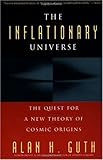
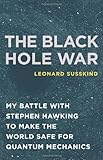
    Image of The Fabric of the Cosmos: Space, Time, and the Texture of Reality Image of The Inflationary Universe Image of Einstein's Telescope: The Hunt for Dark Matter and Dark Energy in the Universe Image of Black Holes and Time Warps: Einstein's Outrageous Legacy (Commonwealth Fund Book Program) Image of The Black Hole War: My Battle with Stephen Hawking to Make the World Safe for Quantum Mechanics

    For more thoughts, check out the full interview.

    Update: for obvious reasons, it wouldn’t be considered quite kosher to recommend one’s own books in an interview like this. This has led to the misimpression that I think my books are less than the very best. Not so!

  • The Force that Through the Green Fuse Drives the Flower

    By Dylan Thomas. I was led there by a quote from Annie Dillard, which in turn I found in a book about thermodynamics.

    The force that through the green fuse drives the flower
    Drives my green age; that blasts the roots of trees
    Is my destroyer.
    And I am dumb to tell the crooked rose
    My youth is bent by the same wintry fever.

    The force that drives the water through the rocks
    Drives my red blood; that dries the mouthing streams
    Turns mine to wax.
    And I am dumb to mouth unto my veins
    How at the mountain spring the same mouth sucks.

    The hand that whirls the water in the pool
    Stirs the quicksand; that ropes the blowing wind
    Hauls my shroud sail.
    And I am dumb to tell the hanging man
    How of my clay is made the hangman’s lime.

    The lips of time leech to the fountain head;
    Love drips and gathers, but the fallen blood
    Shall calm her sores.
    And I am dumb to tell a weather’s wind
    How time has ticked a heaven round the stars.

    And I am dumb to tell the lover’s tomb
    How at my sheet goes the same crooked worm.

  • The Effective Field Theory of Everyday Life, Revisited

    For some reason Nature News was inspired to tweet about my old blog post on Seriously, The Laws of Physics Underlying Everyday Life Are Completely Understood. Which I mentioned on Facebook, which led to an interesting comment, which I then mentioned on Google+… but now it’s substantive enough that I feel like I am neglecting our loyal blog readers! So here is a copy of my G+ comment, and a lament that I suck at proper use of the internet.

    Not sure what brought this back to life. Like the Lord of the Rings, this is part of a trilogy; don’t miss the first installment, or the exciting conclusion.

    As Michael Salem points out on an alternative social-media site (rhymes with “lacebook”), some of the resistance to this really quite unobjectionable claim comes from a lack of familiarity with the idea of a “range of validity” for a theory. We tend to think of scientific theories as “right” or “wrong,” which is hardly surprising. But not correct! Theories can be “right” within a certain regime, and useless outside that regime. Newtonian gravity is perfectly good if you want to fly a rocket to the Moon. But you need to toss it out and use general relativity (which has a wider range of validity) if you want to talk about black holes. And you have to toss out GR and use quantum gravity if you want to talk about the birth of the universe.

    Just because there is something we don’t understand about some phenomenon (superconductivity, cancer, consciousness) does not imply that everything we think we know might be wrong. Sometimes we can say with confidence that certain things are known, even when other things are not.

    Not only do theories have ranges of validity, but in some cases (as with the Standard Model of particle physics) we know what the range is. Or at least, we know where we have tested the theory and where we can be confident it is valid. The Standard Model is valid for all the particles and interactions that constitute our everyday existence.

    Today we think of ourselves and the stuff we see around us as made of electrons, protons, and neutrons, interacting through gravity, electromagnetism, and the nuclear forces. A thousand years from now, we will still think precisely that. Unless we destroy the planet, or are uploaded into computers and decide that the laws of physics outside the Matrix aren’t that interesting any more.

  • Free Will Is as Real as Baseball

    A handful of musings about free will have been popping up in my blog reader of late. Jerry Coyne has been discussing the issue with Eric MacDonald in a series of posts (further links therein). Russell Blackford writes a long post that he promises isn’t the post he will eventually write, David Eagleman has an article in the Atlantic, and Zach Weiner also chimes in. So we have a biologist studying theology, an ex-Anglican priest turned agnostic, a philosopher and neuroscientist both of whom write science fiction, and a webcartoonist studying physics. That constitutes a reasonable spectrum of opinion. Still, what discussion of reality is complete without a cosmologist chiming in?

    In some ways, asking whether free will exists is a lot like asking whether time really exists. In both cases, it’s different from asking “do unicorns exist?” or “does dark matter exist?” In these examples, we are pretty clear on what the concepts are supposed to denote, and what it would mean for them to actually exist; what’s left is a matter of collecting evidence and judging its value. I take it that this is not what we mean when we ask about the existence of free will.

    It’s possible to deny the existence of something while using it all the time. Julian Barbour doesn’t believe time is real, but he is perfectly capable of showing up to a meeting on time. Likewise, people who question the existence of free will don’t have any trouble making choices. (John Searle has joked that people who deny free will, when ordering at a restaurant, should say “just bring me whatever the laws of nature have determined I will get.”) Whatever it is we are asking, it’s not simply a matter of evidence.

    When people make use of a concept and simultaneously deny its existence, what they typically mean is that the concept in question is nowhere to be found in some “fundamental” description of reality. Julian Barbour thinks that if we just understood the laws of physics better, “time” would disappear from our vocabulary. Likewise, discussions about the existence of free will often center on whether we really need to include such freedom as an irreducible component of reality, without which our understanding would be fundamentally incomplete.

    There are people who do believe in free will in this sense; that we need to invoke a notion of free will as an essential ingredient in reality, over and above the conventional laws of nature. These are libertarians, in the metaphysical sense rather than the political-philosophy sense. They may explicitly believe that conscious creatures are governed by a blob of spirit energy that transcends materialist categories, or they can be more vague about how the free will actually manifests itself. But in either event, they believe that our freedom of choice cannot be reduced to our constituent particles evolving according to the laws of physics.

    This version of free will, as anyone who reads the blog will recognize, I don’t buy at all. Within the regime of everyday life, the underlying laws of physics are completely understood. There’s a lot we don’t understand about consciousness, but none of the problems we face rise to the level that we should be tempted to distrust our basic understanding of how the atoms and forces inside our brains work. Note that it’s not really a matter of “determinism”; it’s simply a question of whether there are impersonal laws of nature at all. The fact that quantum mechanics introduces a stochastic component into physical predictions doesn’t open the door for true libertarian free will.

    But I also don’t think that “playing a necessary role in every effective description of the world” is a very good way of defining “existence” or “reality.” (more…)

  • The Atheism/Religion Turing Test

    [Update: the “Christian” answers are now available, and voting is open.]

    A few weeks ago, Paul Krugman set off a debate by claiming that liberal economists could do a very good job at explaining what conservative economists think, but the conservatives just don’t understand the liberals. Regardless of the empirical truth of that statement, the idea is an important one: when there is a respectable disagreement (as opposed to one where the other side are just obvious crackpots), and important skill is to be able to put yourself in the mind of those with whom you disagree. Conservative economist Bryan Caplan formalized the notion by invoking the idea of a Turing Test: could a liberal/conservative do such a good job at stating conservative/liberal beliefs that an outsider couldn’t tell they were the real thing? Ilya Somin, a libertarian, actually took up the challenge, and made a good-faith effort to simulate a liberal defending their core beliefs. I actually thought he did okay, but as he himself admitted, his “liberal” sometimes seemed to be more concerned with disputing libertarianism than making a positive case. Playing someone else is hard!

    Obviously it would be fun to do this for religious belief, and Leah Libresco has taken up the challenge. She came up with a list of questions for atheists and Christians to explain their beliefs. She then recruited some actual atheists and Christians (they’re not hard to find) and had them answer both sets of questions. You can find the (purported) atheist answers here — I think the purported Christian answers are still forthcoming.

    Now, of course, the fun begins: vote! Go here to take a short survey to judge whether you think each answer is written by a true atheist, or a Christian just fudging it. At a brief glance, it looks like there are a few answers where the respondent is clearly faking it — but it’s not always so easy. I’ll be curious to see the final results.

  • Decline of America, One in a Continuing Series

    Tidbits of news, depressing enough on their own and adding up to a bigger picture.

    • The James Webb Space Telescope, having gone so far over budget that large swathes of NASA’s science program has been shelved to make room for it, is now in danger of being cancelled.
    • Everyone knows that education is of paramount importance, especially for economically disadvantaged kids. Therefore, communities across the country are — cutting back on school time, especially for economically disadvantaged kids.
    • Transformers: Dark of the Moon — the climactic conclusion to auteur Michael Bay’s explosive trilogy of awesome explodyness — grossed over $116 million over the holiday weekend.

    On the other hand, Google+ was launched. So it’s not all bad.

  • I’m Too Smart To Understand Human Beings

    Jen McCreight blogs about giving a talk at a meeting of Mensa, the “international high-IQ society.” Worth reading in its own right, but I was struck by one anecdote in particular: the color-coded stickers that indicated huggability.

    • Green = Hug me!
    • Yellow = Ask me first
    • Red = Don’t touch me

    You read this correctly. A group of self-selected high-IQ people feels the need to have stickers on their name tags to let strangers know whether it’s okay to come up and hug them. As Jen put it: “I originally didn’t put any stickers on because I had no idea what they meant, but after being hugged out of nowhere by a complete stranger, my badge quickly looked like this:”

    I don’t think the stickers are a bad idea; if they help people figure out appropriate ways to behave, it’s all good. But I can’t help but think that there are many other groups of people who would manage to negotiate this particular social minefield without the help of any stickers at all. There are many different ways to be “intelligent.”