
Understanding Dark Energy
Washington, DC, 18 February 2005
A variety of observations have led cosmologists to conclude that our universe is dominated by a mysterious form of “dark energy” (in addition to the well-established “dark matter”, which now seems prosaic by comparison). We have a complete inventory of the universe: five percent is ordinary matter, twenty-five percent is dark matter, and seventy percent is dark energy. The dark energy component is the most suprising and hardest to understand, and consequently poses the greatest challenges and opportunities to physics and cosmology. Indeed, dark energy may hold the key to the long-sought unification of quantum mechanics and gravity.
Given the high stakes, experimenters and theorists are devoting major resources to the quest to understand dark energy. This symposium will present an overview of the most exciting directions these efforts are taking — the most profound ideas, and the most ambitious experiments. We will demonstrate how cosmologists are observing supernovae, galaxy clusters, large-scale structure, and the cosmic microwave background in a comprehensive attack on the nature and evolution of dark energy. And we will investigate how theorists are proposing dramatic new ideas about space and time in order to answer the deep questions raised by dark energy’s very existence.
The Symposium is scheduled for Friday, 18 February, 1:45 p.m. – 4:45 p.m. This page provides talk titles, speaker biographies, and abstracts.
Here is a symposium summary in pdf format. And here is a link to our press release.
Agenda
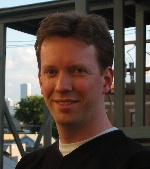 Sean Carroll, University of Chicago
The Mystery of Dark Energy
Abstract
We live in a universe that is mostly dark energy — an invisible and transparent energy source that is smoothly distributed throughout space and time. This dark energy could be vacuum energy (a cosmological constant), a slowly-evolving dynamical field, or a breakdown of Einstein’s theory of gravity. I will give an overview of the existing observational evidence for dark energy, and a glimpse at the theoretical possibilities, highlighting connections between gravitational physics, particle physics, and cosmology.
Readings
- S.M. Carroll, Why is the universe accelerating?
- S.M. Carroll, Dark energy and the preposterous universe
Biography
Sean Carroll is an assistant professor in the Physics Department and Enrico Fermi Institute at the University of Chicago, and head of the Theory Research Component of the Kavli Institute for Cosmological Physics. He did his undergraduate work at Villanova University, and received his Ph.D. from Harvard in 1993. While a postdoc at MIT he won the Graduate Student Council Teaching Award for his course on General Relativity. The lecture notes from this course have been revised and expanded into the textbook Spacetime and Geometry: An Introduction to General Relativity. During a second postdoc at the Institute for Theoretical Physics in Santa Barbara, he worked on theoretical and observational issues related to dark energy and the accelerating universe. Since become a faculty member at Chicago in 1999, he has been awarded fellowships from the Sloan and Packard foundations, as well as the Malmstrom Lectureship at Hamline University and the Resnick Lectureship at Rensselaer Polytechnic Institute. He is active in education and outreach, giving public lectures and appearing on radio and television. His current research interests include models of dark energy in the universe, tests of alternatives to Einstein’s general relativity, the effects of extra dimensions on spacetime dynamics, and the physics of inflationary cosmology.
 Adam Riess, Space Telescope Science Institute
Supernovae at z > 1: Kinematics and Dark Energy
Abstract
Type Ia supernovae (SNe Ia) provide the only direct evidence for an accelerating universe, a result which came as a surprise in 1998 and is widely attributed to dark energy. More recently more distant SNe Ia found with the Hubble Space Telescope have used them to provide the first conclusive evidence for cosmic deceleration that preceded thecurrent epoch of cosmic acceleration. Now that we have measured that basic kinematic history of the Universe, the mystery of dark energy beckons. Many massive supernova surveys are underway to refine our understanding of dark energy and measure its two most fundamental properties: its current strength and its permanence.
Readings
- A.G. Riess et al. (Supernova Search Team), Type Ia supernova discoveries at z>1 from the Hubble Space Telescope: evidence for past deceleration and constraints on dark energy evolution
- A.G. Riess et al. (Supernova Search Team), Identification of Type Ia supernovae at redshift 1.3 and beyond with the Advanced Camera for Surveys on HST
- J.L. Tonry et al. (Supernova Search Team), Cosmological results from high-z supernovae
Biography
Dr. Adam G. Riess is an astronomer at the Space Telescope Science Institute and a Professor at the Johns Hopkins University in Baltimore, MD. Dr. Riess received his B.S. in physics from the Massachusetts Institute of Technology in 1992 where he was inducted into the Phi Beta Kappa Society. He received his Ph.D. from Harvard University in 1996. Between 1996 and 1999 Dr. Riess was a Miller Fellow at the University of California at Berkeley. In 1998, Dr. Riess published the first evidence that the expansion of the Universe was accelerating and was filled with Dark Energy, a result which was called the Breathrough Discovery of the Year by Science Magazine that year. Since then he has been collecting observations of ever more distant supernovae with the Hubble Space Telescope and to better understand the nature of the Dark Energy. He is a recipient of the Robert J. Trumpler Award from the ASP, the Warner Prize from the AAS, the Sackler Prize from Tel Aviv University, the Bok Prize from Harvard University, and the AURA Science Award from STScI. In 2000, Time Magazine named Dr. Riess an “Innovator of the Future” and Esquire Magazine identified him as one of the “Best and Brightest” in 2003. Dr. Riess has presented his work as a participant on the Jim Lehrer News Hour, CNN, NOVA, NPR, and the BBC. Dr. Riess enjoys biking, home improvement, coin collecting and his expanding family.
 Leonard Susskind, Stanford University
String Theory and Vacuum Energy
Abstract
In this talk I make some educated guesses about the landscape of vacuum states in string theory. Based on the recent work of a number of authors, it seems plausible that this landscape is unimaginably large and diverse. Whether we like it or not, this is the kind of behavior that gives credence to the Anthropic Principle — we might be able to explain the observed value of the dark energy as a selection effect in a universe with a myriad of wildly different regions. I discuss the theoretical and conceptual issues that arise in developing a cosmology based on the diversity of environments implicit in string theory.
Readings
- L. Susskind, The Anthropic Landscape of String Theory
- B. Freivogel and L. Susskind, A Framework for the Landscape
Biography
Leonard Susskind was born and attended public school in New York City. He graduated from CCNY and then attended Cornell University where he earned his Phd in physics in 1965. He is the Felix Bloch Professor of Physics at Stanford University. Professor Susskind is a member of the American Academy of Arts and Sciences and the National Academy of Science.
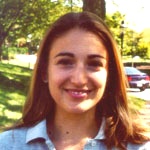 Licia Verde, University of Pennsylvania
Seeing Dark Energy from Galaxy Surveys and the Cosmic Microwave Background
Abstract
The current cosmological model is simple, yet puzzling. The big challenge is to shed some light on the dark energy component, which reveals itself only through the acceleration of the universe. One probe of this acceleration is through its effect on the growth of structure, from early times as reflected in the cosmic microwave background, to galaxies and large-scale structure today. By combining different data sets, such as three-dimensional maps of the galaxy distribution and temperature maps of the cosmic microwave background, we can see how structure has evolved through time. Current and forthcoming experiments will help us use this information to understand the nature of the dark energy.
Readings
- J. Simon, L. Verde, and R. Jimenez, Constraints on the redshift dependence of the dark energy potential
- L. Verde, Comparing and combining Wilkinson Microwave Anisotropy Probe (WMAP) results and large-scale structure
Biography
Licia Verde is an assistant professor at the University of Pennsylvania since 2003. She did her undergraduate studies at the University of Padua (Italy) and received her PhD from University of Edinburgh (UK) in 2000 for work on how to infer properties of the dark matter distribution from observations of the distribution of luminous matter (that is, the distribution of galaxies) and on the statistical properties of the initial conditions for structure formation. She was a postdoc at Princeton for a year, then at Rutgers for a year and then back at Princeton with a Chandra fellowship for a year. She has worked with the Anglo-Australian Two degree field galaxy redshift survey (2dFGRS), showing that 2dFGRS galaxies follow closely the underlying dark matter distribution. For the past 2 and 1/2 years she has been a member of the Wilknison Microwave Anisotropy Probe (MAP) science team, and was involved with the analysis and interpretation of the first year WMAP data. Since 2004 she is also memeber of the Atacama Cosmology Telescope (ACT) team. Her current interests include developing new techniques to measure dark energy properties from present and forthcoming data sets.
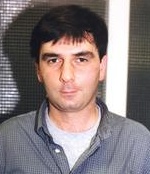 Georgi Dvali, New York University
Extra Dimensions and Modified Gravity
Abstract
In this lecture I address the issue of a possible large distance modification of gravity and its observational consequences. I will focus on a particular brane-world example, in which gravity deviates from ordinary general relativity at a very large “crossover distance.” In such theories the cosmological evolution gets dramatically modified at the crossover scale, usually exhibiting a “self-accelerated” expansion, which can be differentiated from more conventional dark energy scenarios by precision cosmology. However, unlike the latter scenarios, theories of modified-gravity are extremely constrained (and potentially testable) by the precision gravitational measurements at much shorter scales.
Readings
- G. Dvali, Infrared modification of gravity
- G. Dvali and M.S. Turner, Dark energy as a modification of the Friedmann equation
- G. Dvali, A. Gruzinov, and M. Zaldarriaga, The accelerated universe and the Moon
Biography
Georgi Dvali is a professor of physics, and a member of the Center for Cosmology and Particle Physics, at New York University. He holds a Ph.D. in high energy physics and cosmology from Tbilisi State University in Tbilisi, Georgia. Before joining the NYU faculty in 1998, he worked at two renowned international research laboratories: the Abdus Salam International Center for Theoretical Physics in Trieste, Italy, and earlier at the European Center for Nuclear Research (CERN) in Geneva, Switzerland. Dvali’s major research interests are large extra dimensions, quantum gravity, and the very early universe. He has been the recipient of the David and Lucile Packard Foundation’s Packard Fellowship, Alfred P. Sloan foundation fellowship, as well as the New York City’s Mayor’s Award for Excellence in Science and Technology.
 John Carlstrom, University of Chicago
Measuring the Universe with Clusters of Galaxies
Abstract
The Sunyaev-Zel’dovich effect (SZE), scattering of microwave background radiation by hot gas in clusters of galaxies, provides a unique method of mapping the large scale structure of the universe as traced by massive clusters. The SZE is insensitive to the redshift of the galaxy cluster, making it well-suited for studies of clusters at high redshifts, where the cluster abundance is strongly dependent on the underlying cosmology. Upcoming SZE surveys are expected to find hundreds to thousands of new galaxy clusters. This talk will review the new SZE instruments and provide an overview of the cosmology that can be extracted from the survey yields, such as a tight constraint on the evolution of the dark energy.
Readings
- J. Ruhl et al. (SPT Collaboration), The South Pole Telescope
- G.P. Holder, J.J. Mohr, J.E. Carlstrom, A.E. Evrard, and E. Leitch, Expectations for an interferometric Sunyaev-Zel’dovich Effect survey for galaxy clusters
Biography
John Carlstrom is the Subrahmanyan Chandrasekhar Distinguished Service Professor in Astronomy and Astrophysics at the University of Chicago. He received his B.A. in physics with honors from Vassar College in 1981 and his Ph.D. in physics from the University of California, Berkeley, in 1988. He became a member of the astronomy faculty at the California Institute of Technology in 1991 and served in that post until 1995, when he joined the faculty of the University of Chicago. He has been awarded fellowships by the David and Lucile Packard Foundation, the James McDonnell Foundation, and the John D. and Catherine T. MacArthur Foundation. He also recieved NASA’s Medal for Exceptional Scientific Achievement in 1997. His research involves observations of clusters of galaxies and the cosmic microwave background, including the first detection of polarization in the microwave background with the Degree Angular Scale Interferometer (DASI) experiment at the South Pole.
Links: AAAS, 2005 Annual Meeting
Physics at AAAS 2005: Highest-Energy Particle Colliders, Grid Computation, High-Temperature Superconductivity