
The history of science is always fascinating, and the history of medicine surely has some of the best stories. In this episode we talk to writer Lindsey Fitzharris about two of them. First, the story of Scottish surgeon Joseph Bell, who was both a pioneer of forensic pathology and the inspiration for Sherlock Holmes (whose author, Arthur Conan Doyle, took classes with Bell as a medical student). Second, the story of Harold Gillies, the World War II doctor who pioneered reconstructive surgery. Bell is the subject of Fitzharris's new book Sleuth-Hound, while Gillies is the subject of her previous book The Facemaker.
Listen or watch Rolex Planet Visionaries wherever you get your podcasts. #ad
Get 30% off your first year of the Base44 Builder plan at https://Base44.com/mindscape. #ad
Stop piecing your software together. Go to https://odoo.com/mindscape to learn more. #ad
Upgrade your everyday with Quince and get free shipping and 365-day returns at https://quince.com/MINDSCAPE. #ad
Look your best and support men's health at https://www.amazon.com/b?node=223476965011&ref_=MOV26_pod #ad
Support Mindscape on Patreon.
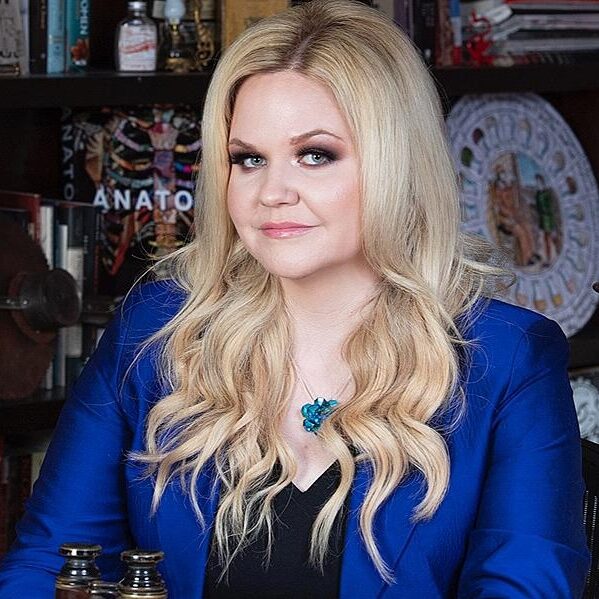
Lindsey Fitzharris received a Ph.D. in the History of Science, Medicine & Technology from the University of Oxford. She is the author of several books, and has contributed to publications such as The Wall Street Journal, The Lancet, the Guardian, and Scientific American. She served as the host of the Smithsonian Channel series The Curious Life and Death of…
Click to Show Episode Transcript
0:00:00.3 Sean Carroll: Hello, everyone, and welcome to the Mindscape Podcast. I'm your host, Sean Carroll. Some of you may remember Liam Kofi Bright, who is a philosopher at the London School of Economics, former Mindscape guest. And among Liam's many talents is he's one of our best social media posters. I remember one of his tweets or skeets back in the day. I'm not gonna get it exactly right because he's better at formulating these than I am. But the point was that two of the best job descriptions out there in the world of TVs and movies and novels are ones that don't exist in real life. And he had in mind in particular, consulting detective and science officer. [laughter] Consulting detectives are all over the place on modern TV and movies. Castle and The Mentalist, Professor T is one that we recently watched from the BBC. And of course, science officer started with Mr. Spock on Star Trek, but has gone all over the place since then. Arguably, the first of the consulting detectives in fiction was Sherlock Holmes, of course. The idea being that you have a job that is not officially associated with law enforcement, but they call you in because you're better than they are and they need your help. So today we're talking to Lindsey Fitzharris, who is a historian of medicine.
0:01:22.8 SC: She writes books about various things that happened in the history of surgery and other medical procedures. And her most recent book is called 'Sleuth-Hound: The Case of the Real Sherlock Holmes'. It turns out that, of course, Arthur Conan Doyle, when he wrote the Sherlock Holmes books, was inspired by various real characters that that's what's gonna happen when you're an author. You use your experience in the real world to help build your fiction. But there was one person in particular who was sort of obviously the inspiration for Sherlock Holmes, and Conan Doyle admitted that he was the inspiration for Sherlock Holmes. His name was Joseph Bell, and he was not a detective by profession. He was a surgeon. And Conan... Arthur Conan Doyle was a medical student who studied with him and picked up Bell's method, as he called it, of deducing facts about people from little tiny clues, from a spot on their shoes or how they were wearing their jacket or whatever it was. And he would build a story around this and he would inevitably be correct. And he would use these deductions as part of a holistic approach to diagnosing diseases.
0:02:33.4 SC: And this struck Arthur Conan Doyle as very clever, and he gave it to Sherlock Holmes as his signature move, really. And fascinatingly, as Lindsey's book reveals, Joseph Bell, or Joe Bell as his friends called him, did, in fact, work as a consulting detective. He did, in fact, get called in by the Edinburgh law enforcement officials to help them try to think about different cases, all the way up to Jack the Ripper, who was not in Edinburgh, but still famous enough that Joe Bell actually looked into it. So it's a fascinating example of the connection between the real way that science, medicine, et cetera, forensic pathology in this case, developed historically and how it found a real compelling home in fiction. And we had a little bit of extra time at the end of the episode, so I couldn't help but ask Lindsey about her previous book, which is somewhat related, again, medical history, called 'The Facemaker: A Visionary Surgeon's Battle to Mend the Disfigured Soldiers of World War I'. And this is about Harold Gillies, who was really, maybe not the first, but someone who pioneered plastic surgery.
0:03:45.5 SC: And plastic surgery originally was used for almost exclusively reconstructive surgery, especially with the many, many thousands of victims that came back from World War I with wounds that were not fatal but were highly disfiguring, et cetera. And again, the history of medicine is both horrifying and fascinating and filled with people who had all sorts of lofty ideals and accomplished amazing things and had to do some weird things along the way. So it's a little bit of a different kind of thing for Mindscape, because we're not talking about a big theory, we're talking about some examples from history. But that's what feeds in to the big theories of life. As we do mention, there's at least the very big background thought of how people think about the morality of different medical procedures and what people should do in the face of something going wrong with them and how to fix it medically versus what the doctors are actually able to accomplish. So normally we talk about theory, but this is talking about data, the data of what actually happened in history. So let's go.
[music]
0:05:08.3 SC: Lindsey Fitzharris, welcome to the Mindscape Podcast.
0:05:10.3 Lindsey Fitzharris: Thanks for having me on the show.
0:05:12.1 SC: I got to say, not even a question, but a comment you can respond to if you want. But medical history is just super fascinating. It should be a bigger deal, I think.
0:05:22.6 LF: I love that you say that. I've been doing this for over 10 years now, kind of banging the drum about medical history. I always tell people, even if you don't like history, you might like medical history. Because everybody knows what it's like to be sick, to be a patient. And I tell you how that experience was like 100, 150, 200 years ago.
0:05:40.9 SC: And I don't like that, but that's okay. [laughter] Well, I'm glad. It makes me happy to be alive now. I guess that's where I really wanted to start substantively. What was it like, let's say 100... I wanted to say 150 years ago, I realize now 175 years ago, the mid-19th century. What was medicine like? Was there surgery? Was there anesthesia being used?
0:06:02.1 LF: Yeah, if you guys are listening and you hear that 1850, you're probably already getting nervous because you know nothing good happens in 1850 when you need a surgeon. Although this is shortly after the birth of anesthesia. I say my superpower is that I can make you feel good about living in 2026.
0:06:22.1 SC: Right. [laughter] That's good.
0:06:22.7 LF: But, yeah, in the mid-19th century. So you have the discovery of ether in 1846. In fact, that's gonna be the subject of my next book called 'Ether Wars'.
0:06:32.7 SC: Oh, nice.
0:06:32.8 LF: Which is about... Yeah, I don't know if you know the story, but ether is discovered by a dentist in Boston, and then he immediately tries to patent it and make money off of it. So, it's the American way. So it's the first attempt at medical capitalism. And then there are some other men who step forward to claim ownership over it. So it's really a story about when something powerful comes by and transforms the world, who gets to benefit, who gets to control it? Which I think is very relevant today.
0:07:00.3 SC: Well, especially if it's something that is a medical benefit. I mean, there's benefits and there's benefits, right? And we kind of simultaneously think that medicine should be there for everyone and charge huge amounts of money for it, at least in where I'm geographically located right now.
0:07:16.5 LF: Yeah. I mean, I've lived in the UK, I have the Chicago accent, but I've lived in the UK for 24 years. We have socialized medicine here, so it's a little bit different. But, yeah, anesthesia comes onto this world stage in 1846. Not everybody is given access to it. There is a debate about whether pain is necessary to keep the patient alive, to keep the blood pumping, to keep the heart pumping. So not everybody is given anesthesia initially, but it does come into existence in the mid-19th century. But actually, surgery becomes a lot more dangerous immediately following this because the surgeon is more willing to pick up the knife.
0:07:52.4 SC: Oh, sure.
0:07:52.5 LF: He's more willing to go deeper into the body, right? And so he's no longer fighting you on that table. So he's more willing to do it, but he still doesn't understand germs. And that is the focus of my first book, 'The Butchering Art', which is about this guy named Joseph Lister, who people sort of know through Listerine, but he didn't create Listerine. It was named for him, but not by him. And it wasn't even used in the 19th century as a mouthwash. It was used to treat gonorrhea. [laughter] Which I don't endorse, by the way. [laughter] Please, please don't throw gonorrhea on it.
0:08:23.0 SC: We've learned.
0:08:23.1 LF: Or don't throw Listerine on gonorrhea. But Lister, I always say, saved more lives than any other person who lived because he applies Louis Pasteur's germ theory to surgical practice and is able to basically explain why we get postoperative infections. And once we solve that, surgery sort of becomes limitless.
0:08:44.7 SC: And when exactly was that?
0:08:47.5 LF: So he starts doing his experiments in the 1860s and publishing on this, but it takes a while. And I always say that the most dangerous thing in medicine isn't necessarily ignorance, it is ego. And so a lot of what Lister has to do is convince these surgeons, and it seems crazy to us because why wouldn't they just wanna wash their hands? People ask me this all the time. But you have to remember, your hands are just gonna get dirty with the next patient. Until you understand germs exist, it doesn't actually make sense. And the other part of it is that he's telling these surgeons there are these invisible creatures, they're killing your patients, I can see them with my microscope, and also that they were inadvertently killing their patients all along. And I think that was a hard pill to swallow. So change takes a while. The discovery is hard, but I do think that the change is even harder. It's sometimes very hard to convince people to change their habits.
0:09:45.0 SC: So the anesthesia comes along and then the disinfectant or whatever you wanna call it, comes along.
0:09:52.4 LF: Yeah, antisepsis.
0:09:52.8 SC: Antiseptic comes along. So by the... How international was it? Were people sharing these discoveries from country to country?
0:10:02.0 LF: Yeah. So when ether is discovered, it's written up in a journal and literally within days, it just kind of spreads like wildfire around the world. And remember, this is a time before you had to go through clinical trials and there was no real safety things in place for a lot of this. So Robert Liston, who was known as the fastest knife in the West End, he was incredibly tall, he was 6'2", he could hold you down with his left arm and he could take off your leg in under 30 seconds, and he was very famous for this. And so really shortly after ether is announced in the medical journals, he does the first operation in Britain in December of 1846. He doesn't think it's gonna work. He calls it the Yankee Dodge. And it does work, and it's a miracle. And what I loved about that scene was that a 17-year-old Joseph Lister was in the audience witnessing this moment. And again, most people think the dawn of anesthesia is when surgery enters that modern era, but actually operations became nothing more than slow-moving executions after that because postoperative infection rose. And so it's really Lister who solves the ultimate medical mystery: what's killing the patients?
0:11:09.4 SC: But we didn't have X-rays or MRIs or so forth. How did people make the decision that a surgery was what was required? For an amputation, I get it, but for more subtle things that are not immediately visible, how do they know?
0:11:22.3 LF: Well, you have... They, surgeons in the earlier periods weren't doing much. They were dealing with the external parts of the body. And in fact, surgeons were closely related to barbers. In the earlier periods, there were things called barber-surgeons, right? And they split with the barber-surgeons in 1745 and they tried to really distance themselves from barbering, but they were men who made money with their hands. Whereas the physician went to university, he used his brain, and he dealt with the internal diseases. So that's where we get the term internal medicine. So the surgeon was really, for a long time, lowly in the medical order. And really, you only went to the surgeon when you really, really needed it, right? So you had a bladder stone, which was a terrible operation you'd have to undergo without anesthesia. And obviously, amputations happened because if you broke your leg and it was a compound fracture, the likelihood was that it was going to get infected, so the safest thing was to take the leg off. But it was horrifying not just from the pain level, but if you think about it, there was no social network. There was no net to catch you. So if you suddenly lost your legs and you couldn't work, that could be a death sentence too. There's no welfare. There's... It's a very difficult time. And so what Lister is able to do is not only save these limbs and save people from a lifetime of disability that perhaps would lead to their own early demise, but he just revolutionizes the entirety of surgery. And so people can start doing things. There was the first... There was a... The removal of a brain tumor in the late 19th century. So you start to get more complicated internal surgeries at that point.
0:13:04.3 SC: And I presume that there's some sort of competitive nature where if one hospital starts using the antiseptic methods and has much better results, others will have to catch on.
0:13:15.6 LF: Well, Lister starts publishing his results. He's very honest, which is kind of unusual as well. A lot of doctors didn't admit when they had failure. And hospital statistics as such were... They came later in the 19th century. So people always ask me, what was the likelihood of surviving an amputation in the mid 19th century? Well, it depended. It depended also on the time of day. If you were the first patient, great. If you were the last patient, remember, the surgeon's not washing his hands or his instruments. He's not washing that table down. So your chances kind of dwindle as that goes on. The operating theaters were theaters in the truest sense. I mean, people bought tickets to witness this. And people will say to me, "Well, that's very morbid." But, hey, The Pitt is really popular today. [laughter] So we still are curious. We still have medical voyeurism today through these shows, and we're kind of endlessly morbid as a human species.
0:14:10.8 SC: I can vouch that The Pitt is a pretty awesome show. Have you been watching it?
0:14:14.0 LF: Yeah. No, I haven't. You know what? I have not started it because I started rewatching ER. I just got... And then I thought I'd get too confused with two Noah Wyle... So I'm almost done. I know I can't hold two Noah Wyle shows in my head, but I am about to start it. And it didn't get to Britain until the last few months, too. You guys had it first and it's finally made its way over here.
0:14:35.8 SC: It is a grittier show than ER, as you might expect from, just from the name. But okay, well...
0:14:42.1 LF: I'm excited, yeah.
0:14:42.8 SC: Good. So this brings us to the first of the surgeons we're really going to talk about in great detail, the subject of your new book. Actually, why don't you tell us the title of your new book?
0:14:51.5 LF: So my new book is called 'Sleuth-Hound: The Case of the Real Sherlock Holmes'. And funny enough, I had a little bit of a debate with my publisher because they originally didn't wanna put Sherlock Holmes in the subtitle.
0:15:03.8 SC: What?
0:15:03.9 LF: Which was so confusing to me. I know, because this is actually a book about the original Sherlock Holmes. So let me set it up for you. Most people think that Sherlock Holmes began at 221B Baker Street with the hat and the pipe and the cocaine, but he actually began somewhere far more obscure, on a hospital ward in Edinburgh where a Scottish surgeon named Joe Bell was teaching medical students how to read a human body like a crime scene. He knew everything about patients before they ever opened their mouths: where they came from, what they did with their hands. And in 1878, Arthur Conan Doyle becomes his medical student. And a lot of people don't realize this: Arthur Conan Doyle was a doctor before he was a writer.
0:15:42.6 SC: And it's... So what... Sorry. What years were these?
0:15:46.7 LF: So he becomes his medical student in 1878.
0:15:50.0 SC: Okay. And... But did he ever practice medicine, Arthur Conan Doyle?
0:15:54.9 LF: Yes, he did. I mean, he never really liked it. So he comes from a very impoverished background, and I think he thought going to medical school was sort of a sure way of making money, but he never really enjoys it. And I have to say that he writes throughout his life. I mean, he's a born storyteller, so he's writing short stories even as a medical student. He's publishing. And eventually he strikes out as a doctor. He does practice for several years, but then decides... He ends up catching a very severe case of the flu. His sister had died of the flu, so it was quite a scary moment. And he realizes after that that he's going to just give up doctoring and he's gonna throw his lot in as a writer. And it seems kind of crazy and unpredictable, but at that moment, he was generating more income as a writer. So he segues into writing. But really that medical training never left him, and you can see the fingerprints of that medical training in not just Sherlock Holmes, but in other things that he writes.
0:16:53.0 SC: And it's an interesting choice that he made because that sounds like a transformative moment in the history of medicine and surgery. It must have been kind of exciting to see what was going on?
0:17:02.3 LF: Yeah, I think it was exciting if you're so minded. There's a story of Hector Berlioz, the composer, who goes into the dead house for the first time, and he's so horrified by the cadavers and the anatomy lessons that he jumps out the window [laughter] and he runs off and just decides, "Nope, that is not for me." There's also James Simpson, who ends up discovering chloroform. He goes into the operating theater as a student, and they did a mastectomy, and it was terrible at the time. They would take what was essentially a large fork and they would stick it into the breast, lift up the tissue and cut it. He was so horrified by the whole thing that he also left and he went to the law school and thought, "I'm gonna change direction." But thank goodness he didn't because he does end up discovering chloroform and he's a brilliant doctor later on. But yeah, I think for people who were so minded, it was a brilliant career. But you also have to remember it was dangerous, right? You have things like smallpox and tuberculosis, and this is before antibiotics, this is before a lot of vaccines. There is a smallpox vaccine that was invented in the 18th century by Edward Jenner, but people caught... Doctors caught illnesses all the time and died. Even Henry Gray of Gray's Anatomy dies prematurely by catching smallpox. So it wasn't an ideal career, but I think if you came from a poor background like Conan Doyle, it was a stable career financially.
0:18:27.7 SC: No, but it makes perfect sense that it's not for everyone. I absolutely get that as someone for whom it is not. So that makes sense. So tell us then about Joseph Bell. Was he notable as a surgeon in addition to being notable for being... Or as a doctor, in addition to being notable for being the inspiration for Sherlock Holmes?
0:18:48.8 LF: Well, I came to this story as a medical historian, which is what I am, and I, at the moment that I sold this book, I had never read the original Holmes tales at that point, which is a little bit of a confession.
0:19:02.4 SC: That's okay.
0:19:02.5 LF: But I also decided then to put off reading them initially because I knew enough about Bell to know that the comparisons later became reductive, and we can talk about the moment that Conan Doyle outs him later. But he did feel quite overshadowed by that later in life, and I really wanted to bring that medical history lens. I always try to tell a small story and a big story. And so the small story is about Bell's relationship with Conan Doyle and his inspiration for this character, but the bigger story is one about the development of forensics at this time. It is the first time that medicine enters the courtroom, and Bell is very much a part of that. So he was certainly more... He also reforms nursing in Edinburgh. He's good friends with Florence Nightingale. He's a proponent of women in medicine. So he is a lot bigger, I would say, than just the inspiration for Sherlock Holmes.
0:19:52.2 SC: Because sometimes your students can become famous even though you have really not done anything other than inspire them, but I think that it sounds like Bell had both. He was actually making contributions to medicine for his own sake and then also was lucky enough to have a really good writer as a student. [laughter]
0:20:09.1 LF: Yeah, I think his legacy was his students, and Conan Doyle happened to be one of them. And once he's outed as this inspiration, there's a real media storm around him. And I think he was flattered at first, but you can imagine, I mean, people even today are still obsessed with Sherlock Holmes. People think of him as a real person. They write letters to 221B Baker Street still. And I think that there was a little bit of concern that perhaps the real Bell was going to get lost in that. And I think he was generally lost in it. And another thing I like to tell people is if you're a Sherlockian, because they call themselves that, if you know everything about Sherlock, you will know about Joe Bell because this wasn't a secret. Conan Doyle, there's one clip of him speaking on camera that still survives, which is extraordinary because he was born in 1859, and he talks about the influence Bell had. That's not a secret.
0:21:02.5 LF: But what wasn't known was everything about him. And so one of the things that helped me solve all this sort of crime that I saw happening about Bell was that his diary was donated to the Royal College of Surgeons of Edinburgh. And before that, it was in private hands, and the Bell family didn't let really people have access to it, probably because they wanted enough time to pass after his death. So I suddenly had access to sort of the inner world of Joe Bell. And what I discovered was that he wasn't just the inspiration for Holmes, he was actually doing what Holmes did in reality. He was working unofficially in the shadows with a police surgeon named Henry Duncan Littlejohn, who's a fascinating pioneer of fingerprinting and courtroom photography, and together they work on some of the highest profile crimes of the 19th century.
0:21:50.0 SC: Yeah, we absolutely have to talk about that, but let's set the stage a little bit first, because when you say a real person is an inspiration for a fictional character, the author is going to blend things. It's not supposed to be a secret biography, right? So what are the aspects of Joseph Bell that inspired aspects of Sherlock Holmes?
0:22:12.7 LF: So I often say that Bell gave Conan Doyle the method, and we'll talk about Littlejohn a little bit later, but he gave... Littlejohn gave Conan Doyle the world, the world of forensics and crime. And so both of those things were very powerful to what ultimately became Sherlock Holmes. But when you start reading 'Sleuth-Hound', you are going to believe that you are reading Sherlock Holmes at first because these stories were incredible. So, for instance, it opens with a patient being ushered in to the operating theater before Bell, and he said to the man, "Well, you were in the army." And the man flatly denies this. And Bell is confused because he's almost always right. And so he has the patient stripped to the waist, and lo and behold, there is a D tattooed on his chest for a deserter.
0:22:56.0 LF: So Joe Bell would be bested by no one, least of all an army deserter. And he just had this Sherlockian quality about him. There was a woman that was brought in. He said to her, "Show me your cutty pipe." And she seemed a little embarrassed because smoking wasn't a very feminine trait. And he asked her again, "I wanna see the pipe." She finally produces the pipe. He has her ushered out of the room and then says to the students, "I knew that she smoked because she had a superficial burn on her cheek and she had a cancerous sore on her lip." So he just had this way of cutting through the petty deceits of his patients. I go on a lot of medical podcasts, by the way, and I always say to doctors, "Are you surprised that the original Sherlock Holmes was a doctor?" Because doctors are still detectives.
0:23:37.8 SC: Yeah.
0:23:38.8 LF: And it's an important part of doctoring.
0:23:42.5 SC: Well, the TV show House, M.D. Was inspired by Sherlock Holmes, and that was absolutely part of the method, right? I mean, he always said the patient lies.
0:23:50.9 LF: Right. And also, I feel like House is almost like the original iteration in a way. I mean, it's a modern show, but it's going back to that medical world. And the other fascinating thing that's happening at this time is forensics is professionalizing. And so Conan Doyle is sort of taking all of this in and then creating this character. But my husband's a caricaturist, and he works for a TV show over here in Britain called Spitting Image. And he always says he can't caricature people he knows too well because caricature is about first impressions. Now, I think Conan Doyle, he knew Bell in the capacity as his professor, but probably didn't know him beyond that. And so he takes the flashiest, most unique thing about Bell and essentially creates a caricature of Bell. But Bell was a lot more complex than the Holmes character, I would argue, at least.
0:24:45.6 SC: And it's interesting because Conan Doyle didn't just take the look or the style or the mannerisms. It was really, like you say, the method that was the most important thing. So my impression is that Bell himself referred to the method that he had. How formalized is the method?
0:25:03.8 LF: I mean, yeah, he called it the method. And he would say to his students, for example, you need to understand disease. You need to be able to recognize specific diseases as you would recognize your best friend in a group of men. All of them are men, all of them are human, they all have similar traits, but you can recognize your best friend immediately. You need to be able to see those unique traits, almost like a caricaturist, right? My husband again, I'll say to him, "Oh, what about Will Smith?" And he'll say, immediately says, "Oh, his eyes are too far apart." And so now that's all I see. A normie doesn't see that. And he always says that caricature is not about making fun of faces, it's about pointing out the thing that makes your face unique. And that's what Bell was doing. He said disease, you had to be very quick, you had to be able to identify that. You also, it wasn't just about observation. You had to take that information in and then you create a narrative, right? He would say to his students, for instance, when you...
0:26:04.6 LF: If you gave your patient a sleeping pill or sleeping medication, when you go to see them, don't say, "Oh, you look so well, you must be sleeping better." Let them first say whether they're taking the medication at all, right? [laughter] Because sometimes we as patients don't always take our medication. And so he was very good at that. There was an older woman in Edinburgh at the time, and she was kind of prone to hysterical outbursts. And one day she calls on him, says that she's lost her eyesight. And so he goes to her house and sits at the bottom of her bed, listens to her for 30 minutes going on about how she woke up suddenly blind. And at the end of it, he puts his thumb on his nose and wiggles his fingers, and she says, "How dare you." [laughter] which obviously proved that she had not lost her sight. So he just was really good at cutting through those petty deceits. I always say that he must have been a really annoying dinner guest. I can't imagine, he just notices everything about you.
0:27:04.2 SC: I've always wondered with the original Sherlock Holmes stories how literary conceit the method is, how repeatable it is. Like once Sherlock explains to us what the clues were that led him to make these deductions, you're like, okay, that's fine. But does everyone have these clues? Aren't some people just looking normal? They don't have the scuff on their shoe that tells you what they do for a living. [laughter]
0:27:27.6 LF: Oh, yeah. They're more... Yeah, exactly. There must be... I mean, but he... But again, it was just such little, the little distinctions, he would call them, the little distinctions, the things that most people ignore. And I don't know anybody today who has that Sherlockian skill, completely has that skill. I mean, sure, there are people out there who could do this, but it is extraordinary. And his students would think that it was a magic trick. They would say, "Well, he must have gotten sight of the notes before the patients came in." But then ultimately there would be a last-minute patient that would be added to the schedule and prove them wrong. So he just had this real eagle-eye way of looking at the world. I think it's incredibly unique even today. But he does... What's interesting about this story is that you have the rise of Sherlock Holmes, but at the same time you have the kind of rise of what they called the bumbling bobby. So the bobbies were the police officers in London, they couldn't solve crimes. You know, you think of Jack the Ripper in 1888, people didn't have a lot of confidence in the police. And then you have Sherlock Holmes who just seems so logical and so capable.
0:28:38.4 LF: And so in a way, the rise of Sherlock Holmes puts pressure on the police to change their ways. And now we think of forensic investigators as taking that analytical approach to a crime scene. And so I say at the end of the book, Bell didn't create a single tool or he didn't create a discipline like my second book, 'The Facemaker'. But he does do something. He changes the way we think. He gifts that to Conan Doyle, who gifts it to Sherlock Holmes, and Sherlock Holmes gifts it to the world. And suddenly it changes how we approach crime scenes. It changes policing. And so these things are kind of connected and it's extraordinary what he's able to do through that character. And also, if you're listening and know nothing about Sherlock Holmes, I didn't know this either, but Conan Doyle hated the character. He hated him almost from the start. He just couldn't stand it. There's a caricature in the book from the 19th century of him, and he's big in the caricature and there's a little tiny Sherlock Holmes shackled to his ankle. And I think he just felt very imprisoned by it. And I told my husband, "You should do that caricature with Bell," because you could probably say that about Joe Bell at the end of his life, that he felt shackled as well to that character. But Conan Doyle, he hated the character. He wanted to be seen as a more serious writer. He could not understand why people loved this character so much.
0:30:00.0 SC: You know, I hear things like that. Like Agatha Christie didn't like Hercule Poirot, right? And I'm just thinking, man, this character you made up is making you a lot of cash. Maybe you should...
0:30:11.1 LF: Right.
0:30:11.2 SC: You're always allowed to stop writing about it if you want to. No one's forcing you, but you want the cash, so.
0:30:15.9 LF: I mean, here's the thing. He does kill off Sherlock Holmes.
0:30:20.3 SC: He tries.
0:30:21.4 LF: He tries, right? And at that moment, right around that time, he also outs Bell. And so all of it, it's sort of like, Sherlock Holmes is dead, long live Sherlock Holmes. All this media attention shifts to Edinburgh and to Joe Bell. At that point, this huge murder case falls into his lap. It involves a country mansion, a murder dressed up like an accident, and, honest to God, a ballistics expert named Dr. Watson. [laughter] Like, I can't even make this stuff up. I held a letter by Bell that said, "My dear Watson." And I thought, "This book just writes itself." But yeah, he tried. He did try. And... But he just, he got pulled back into it because people were really angry with him when he killed off Holmes. I mean, there were obituaries, people wore mourning bands, some lady allegedly tried to beat him up on the street with her handbag. Like, people were really quite angry about this. And so I don't know if it was just a hard cash decision to bring him back. I think there was just so much pressure because he was... Because Sherlock Holmes was such a beloved character.
0:31:19.5 SC: And they didn't even have social media back then. You can only imagine what it would be like.
0:31:24.8 LF: Yeah, he was like the first viral character. And also he's the most adapted character in TV and films. You know, we have Young Sherlock now on Amazon Prime, and there's just... It's a constant reinvention, like you said, House, M.D. And so it's everywhere. And he doesn't just change detective fiction, which didn't really exist as a genre. You have Poe, you have a few authors kind of doing a little bit, but it's really Conan Doyle who kind of transforms it into a genre. But he also transforms the serialization. So before he comes along, if you think of Dickens, he did serializations, but it was the same story told over different editions of a magazine. So if you pick up the magazine four editions in, you're gonna be a little bit lost because you haven't read the original start of the story. Now, what he does with Sherlock Holmes is he basically, each serialization is a story in and of itself. The repeat is the characters. And so if you pick up Holmes five issues into The Strand where it was published, you wouldn't be lost. You could go back and read the earlier ones and delight in it. You didn't necessarily need to read them in order. So he does kind of transform the serialization as well.
0:32:42.9 SC: And just to be clear, when Bell is writing a letter that says, "My dear Watson..." that's long after Sherlock Holmes is already famous. That was not the inspiration for Watson.
0:32:51.3 LF: No, but Watson, Patrick Heron Watson, who's the ballistics expert who appears in 'Sleuth-Hound', he could potentially have been... That's where Conan Doyle maybe had gotten the name, because, again, he was a professor in Edinburgh at the time. But there is another Watson that Conan Doyle works with. And so there's a big debate about where did he get that name? But certainly, again, the thing is, Conan Doyle obviously deserves full credit for creating Sherlock Holmes. And there's so many other aspects, like the addiction probably comes from his father. His father was an alcoholic, and he comes really from this broken home because of his father's alcoholism. So those aspects are very much, come from within his personhood. But yeah, I think he absorbed the characters, like any good writer, the characters around him in Edinburgh, and just it all became sort of inspiration and fodder for Sherlock Holmes eventually.
0:33:50.0 SC: And just to understand Bell's influence on medicine. One of them is sort of the founding or pioneering of forensic pathology, for sure. But it seems from your descriptions that another one is just thinking a little less reductionistically, right, thinking that how someone smokes or walks or dresses might have something to do with their ailments in a way that maybe we're even today not very good at accepting.
0:34:15.3 LF: Yeah, I mean, we lie to our doctors still today, don't we? [laughter] Or we don't tell them everything we should. I just went on to Dr. Mike and we were talking about this because literally a lot of patients don't even realize that, for instance, maybe you should disclose how many vitamins you're taking because sometimes you can actually overdose on vitamins and things like that. So we don't tell a full story even when we have good intentions. And so doctors still are very much part of that today. But yes, it's a way of seeing, it's a way of storytelling and connecting all of the dots. And like I said, I think ultimately he sort of revolutionizes the approach that forensic science takes. And like I said, he was working unofficially with Edinburgh's police surgeon, Henry Duncan Littlejohn, and he was bringing that method to crime solving in the 19th century. And together they both helped convict some serious criminals in the past.
0:35:09.7 SC: Let's talk about, more about that crime solving aspect because I think that, I don't know, I don't think it was Sherlock Holmes's invention, but maybe it was Conan Doyle's invention, the idea of the consulting detective, right? The idea that there's someone who's not actually employed by the police department but brought in to help solve cases. This is on every TV show, every police show right now, but it seems a little bit fictional. But for him it wasn't. He really was exactly that.
0:35:35.3 LF: Yeah, he was working in the shadows, which actually made it very difficult to write at times. So there's an early case I talk about involving a man named Eugène Chantrelle. He's this French tutor up in Edinburgh. He's very charming and respectable but kind of sinister on the inside. And one day his wife takes very ill and later she dies at the hospital. And they believe that initially it was a gas leak, which is something that was common in the Victorian period. But Littlejohn's called to the scene, he becomes instantly suspicious. He knows that Chantrelle is a violent man, and so I believe that he brings Bell onto the case. Now, I could find no evidence about Bell being involved in this case, but there is an intriguing clue because when Chantrelle was executed for murdering his wife, he goes up onto the scaffold, he scans the audience, he locks eyes with the police surgeon and he says, "Give my regards to Joe Bell. He did a good job putting the noose around my neck." And it just felt like such a Sherlockian moment. [applause] Like, how did he know? And then the other intriguing thing about Chantrelle, this charming man who was sinister on the inside, was that he was drinking buddies with Robert Louis Stevenson, and he became one of the inspirations for Dr. Jekyll and Mr. Hyde. But I have no actual evidence that Bell was involved, but Chantrelle allegedly says this on the scaffold. So it had to go in because it's one of those intriguing Sherlockian mysteries and it did, like I said, it felt so Sherlockian when he calls out to Littlejohn on the scaffold.
0:37:02.3 SC: So did they have a semi-formal or at least a regular relationship? Would Littlejohn call in Bell on a regular basis?
0:37:09.6 LF: So Littlejohn is a bit older than Bell. He actually taught Bell, and so Bell was his former student, and he must have recognized this quality in him. And so he starts calling on Bell to be sort of second eyes on a lot of his cases. And you could imagine that was very useful. Sometimes what they would do is they would go their separate ways and investigate on their own, and then they would come back and compare notes. And they were often in agreement about where this investigation was heading. But they work on really fascinating cases. There's another one involving a baby farmer. Now, do you know what a baby farmer is?
0:37:44.8 SC: I don't think I do. [laughter]
0:37:46.7 LF: Okay. And probably people are listening. Every time I say baby farmer, people kind of pause and look curious about that. So in the 19th century, there was no birth control and there was no legal route for adoption. So women were having babies, tons of babies. And if you were poor, that became a huge problem. You couldn't necessarily feed all your children. So you would approach the baby farmer, you would pay the baby farmer a fee to farm the child out to a family who could take care of the baby. And so there was this case involving this woman named Jessie King, who's a baby farmer. And it begins in 'Sleuth-Hound' with these little boys finding this bundle of rags and using it as a football, football in the British sense. They're kicking this thing around, and after an hour, they get curious, they open the rags, and lo and behold, are the decomposing remains of an infant. And so begins the investigation into Jessie King, one of the first baby farmers to be caught and convicted in the 19th century. I don't wanna say it was common, but there are other baby farmers who are brought up for murder charges. And it's always this big scandal because it involves infants, it usually involves a female killer, and she basically just cuts out the middleman. She takes the baby, she takes the fee, and she dispatches these infants. And it was a terrible case. I believe that her lover was involved in this, but he ends up testifying against her and he is never punished for the crimes. [laughter] So there's a bit of that in the story, but it is a fascinating case that they work on.
0:39:20.3 SC: And what was Bell's role in that one?
0:39:22.8 LF: So Bell's brought on by Littlejohn. So originally, when the first child is found, Littlejohn brings his son on because his son also becomes a forensic investigator. And they do the first postmortem. But then when they go to check out Jessie King's flat, they find another child. At that point, he decides, "I better bring Bell into the case." So Bell performs the second postmortem with Littlejohn and they testify in the case as well. And I always think of the O.J. Simpson trial because do you remember how much evidence on DNA there was? It was like days of evidence, right? And it kind of backfired on the prosecution. It was technical, it was boring, and everybody got bogged down in the DNA evidence. I think of it because Littlejohn and Bell, forensic science was brand new. So a lot of the jury, they didn't have any base knowledge of forensics at this time, so they had to be incredibly good at conveying sort of technical information to them. And one of the ways that Littlejohn did it was through photography.
0:40:27.8 LF: He started taking photographs in the postmortem. He felt that the photographs would be more powerful and illustrative of what he was trying to say. But they were both incredibly good at just explaining the medical evidence. And I think that that's to their credit because, again, the jurymen... So in Scotland in the 19th century, you would have had 15 jurymen, and there were three options, which was guilty, not guilty, and not proven, which came with an acquittal. But it was... I always, I think we should bring not proven back because I feel like... Actually, Scotland just got rid of it in the last two years. They did actually have it up until recently. But again, to go back to O.J. Simpson, I feel like not proven would have landed better than not guilty, perhaps. I mean, it's still an acquittal, but perhaps the onus would be more on the judgment of the prosecution doing a poor job or whatever we think of that case. But yeah, I love that third option, not proven.
0:41:23.3 SC: And I think that Bell even had a tangential relationship to Jack the Ripper.
0:41:29.4 LF: Yes. I mean, you can't write a book about murder in the 19th century without Jack the Ripper, right? I mean, Ripper's important for a lot of reasons. Like I said, 1888, he begins killing. The police can't catch him. So it just feeds the public's view, the poor view of the police at this time. Now, I will say in defense of the police, they're professionalizing. They have a lot of challenges. They don't have DNA, and there's a lot of things that they don't have access to. So it was a difficult job. But that kind of idea starts to emerge that they're useless. The other thing about Ripper is that in 1888, you have rising literacy rates and you have all of this cheap printing. So you have the media printing all of these articles about Ripper. And people were just as obsessed with true crime back then as we are today. I mean, I have a real problem. Netflix knows it too. They will email me the moment that they drop some kind of true crime and I am on it within hours. I'm like, okay, I got to watch that.
0:42:29.8 LF: So we all have a true crime obsession today, but I would say that they had it in the 19th century, too. They were consuming it through these cheap newspapers. So that's feeding that morbid curiosity. And then you have Sherlock Holmes being born into that kind of society and feeding again that curiosity that we want to see a peek behind the curtain. So Ripper's interesting in that sense. He gives us context for why maybe Sherlock Holmes became popular. But also, as you say, he does make a real appearance because Joe Bell, in an interview later in life, claims to have done an investigation himself with a good friend who was undoubtedly Littlejohn. And they went their separate ways, as they often did. And when they came back, they exchanged envelopes, and in the envelopes, they had written down the same name. Now, what's frustrating is, [laughter] they never told us.
0:43:20.9 SC: They don't tell us the name? Come on.
0:43:22.5 LF: They don't tell us, which also, again, does feel a little bit... Like a little bit of mystery built into 'Sleuth-Hound'. But the other thing that happens is that there is a man named Henry... Sorry. William Henry Bury. And he was in Whitechapel at the time of the murders. He was married to a brothel madam. He was a violent man. He would disappear at times at night. So he certainly had the opportunity to kill at that time. He disappears shortly after the murders stop. He goes up to Dundee, Scotland, with his wife. And one morning, he says that he wakes up and she's dead on the floor. And he feels compelled to chop her up into pieces and put her in a box. [laughter] I mean, we've all been there, right? Like we wake up, our partner's dead...
[overlapping conversation]
0:44:07.2 SC: I just get these compulsions. Yeah.
0:44:08.9 LF: Yeah, you just wanna chop up that dead body. So he does. He puts her in a box, and then he goes to the police and he confesses. He says, "She was dead when I found her." And he says something about Jack the Ripper. He says he worries that people will think I'm Jack the Ripper, which of course then everybody thinks he's Jack the Ripper. And again, he did have perhaps the motive and opportunity to do these crimes. I don't think a lot of Ripperologists take him seriously, but there is one Ripperologist who writes a brilliant book about William Henry Bury. But my interest in him is that Littlejohn is brought onto the case. So I always say that Conan Doyle, Ripper, these people only appear in as much as their stories intersect with Bell and Littlejohn. And so Littlejohn helps to convict Bury. And now, take this with a grain of salt, the executioner claimed later that Bury had confessed to being Ripper. And so he would tell people that he had hanged Jack the Ripper. I'm sure it was a great pub story. I don't know if it was true. [laughter]
0:45:07.8 SC: Fair enough. Yes, that's very interesting. But he's not one of the prime candidates from the Ripperologists?
0:45:14.9 LF: No, I think, like I said, there is one book about him that... It makes an intriguing case. And when the police went to his flat in Dundee, there was old graffiti at the back of the house that said, Ripper lives here. And obviously he was a weirdo, and kids must have thought he was a weirdo and put that at the back of his house, painted it on. And certainly he was a violent man. We know that from a lot of reports. But was he Ripper? I don't know. I think there's probably stronger candidates, and we're never gonna ultimately know. But it is a fascinating, intriguing mystery that endures.
0:45:50.2 SC: So by the end, what did Joseph Bell think about the fact that he was known as the inspiration for Sherlock Holmes?
0:45:57.1 LF: So in 1892, Conan Doyle does an interview, and the journalist says something to the effect of, all of this came from your imagination. And he says, "Well, no, not all of it. I had this professor..." and he tells these stories. And Bell read the interview, and he writes to his old student and he says, "Am I the professor you're talking about?" And Conan Doyle writes him this extraordinary letter which I've seen with my own eyes. And it says, "Yes, it's to you I owe Sherlock Holmes." And they begin corresponding. Now at this point, Conan Doyle says that the journalist really wants to know Bell's name. Does he have permission? "But I must warn you that your life is going to get crazy if you do agree to this." But Bell does agree to it. But Conan Doyle weirdly kind of goes a step further. He then basically does a modern doxing of Bell. [laughter] He dedicates the Holmes stories to Bell and he puts his address right in the front of the book. So now everybody knows...
0:46:53.3 SC: Oh, my goodness.
0:46:53.4 LF: Bell is the inspiration, but also they have his address. And journalists would just show up to his house, and they became obsessed with the "real" Sherlock Holmes. I think at first Bell was really flattered by this. I mean, who wouldn't be? But then it did get irritating. And there was one letter he wrote to a friend and he said something to the effect of, "My old student must not have thought very highly of me to put this heap of rubbish on my head." And I think that was a reference to this kind of sociopathic character of Sherlock Holmes. Bell wasn't that. He was a very empathetic man. He was a family man. So there was a lot of differences. And like we said earlier, it was like a caricature of Bell, but people couldn't really distinguish. They wanted to see him as Sherlock Holmes.
0:47:39.9 SC: Okay, I wanted to mostly talk about this because this was your new book and it's a fascinating story, but your previous book is also very fascinating. And maybe I can convince myself that there's a through line that takes us in history to that. [laughter] So tell us about the title and the subject of your previous book.
0:47:55.1 LF: Okay, well, there's always a through line in the sense that there are always stories about huge kind of shifts in medicine. So we'll just say it's about that. But it's... The story was called... The book is called 'The Facemaker'. And it's about a man that most people don't know anything about. His name was Harold Gillies, and he's sort of now known as the father of modern plastic surgery. He was rebuilding soldiers' faces in the First World War. And it was an incredible time. Weaponry in the First World War was advancing so much that a company of just 300 men in 1914 could deploy equivalent firepower as a 60,000 strong army during the Napoleonic Wars. And you have all kinds of inventions like the tank, you have the flamethrower, you have chemical weapons. And a lot of these men were getting injured in the face. They were getting shot in the face. They were losing parts of their jaw and their noses. And Gillies was giving them back an identity. He was giving them back a sense of self. Because I always say that medicine isn't just about survival. It's about what comes after surviving.
0:48:57.7 SC: And it's especially interesting because, I mean, this is just an informal impression I have. You tell me if I'm right or wrong, but World War I was like the peak of people being disfigured, right?
0:49:10.6 LF: Yeah.
0:49:10.7 SC: They had enough firepower to disfigure a lot of people without just killing all of them. And so there was just this tremendous number of people missing legs or with their jaws blown off or something like that coming home afterward.
0:49:21.7 LF: Yeah, there was a battlefield nurse who said that the science of healing stood baffled before the science of destroying. And I think that that was true. I mean, the technology was moving on. Also, a lot of these men, especially at the beginning of the war, they weren't being given adequate gear. A lot of these men who volunteered didn't think that the war was going to last very long. There's a story in 'The Facemaker' about a boy going to volunteer, and they said something to the effect of, "Would you like to be in the army for a year or until the end of the war?" And he thought, "Well, I don't wanna be in the army for a year. I will stay until the end of the war," which lasted four years. So nobody knew what they were getting into, and the devastation was huge. And so you do get some early forms of facial reconstruction during the Civil War. You guys can Google that. It doesn't look good. And there's a good reason for that, because Civil War surgeons don't believe Joseph Lister yet.
0:50:15.6 SC: Oh, no.
0:50:15.7 LF: So infection rates could be really high, right? So they're going in, they're just fixing the functionality, like your ability to eat or to speak, but they're not trying to make it look good. It's really under Gillies where this idea that something that looks good or looks typical also tends to function better. So if your nose is in the right place, it's going to function better than if it's off to the side of your face. So he really kind of marries the aesthetics with the functionality. The other big thing is that it just comes down to sheer numbers. 280,000 men during the First World War needed some form of facial reconstruction. So it was this incredible opportunity to experiment. I hate to say that, but it really was a big experiment. And so he essentially births this whole discipline of plastic surgery. And I always say that it's kind of ironic because he's trying to give these men back an identity, but plastic surgery has now sort of made us all ultra-aware of how we look. And we're all a little bit paranoid about how we look, and...
0:51:15.8 SC: A little bit of a backlash, yeah. Right.
0:51:17.5 LF: Yeah, a little bit. I mean, he does... After the war, he does move into the cosmetic realm, and he very much believed that people should have control over the aspects of their identity. If they were unhappy with their nose or they were unhappy with some aspect, they should be allowed to change that. So he didn't really bring that kind of judgment. But obviously his first and foremost love was helping these soldiers and giving them back that identity through the rebuilding of their faces.
0:51:43.2 SC: And one of the interesting points that you made was people would come back from World War I with missing a leg, and that was horrible, but you'd be respected by society. You'd given up a leg, you'd made a sacrifice. Whereas if they were missing a jaw, you were kind of shunned. There's a little ostracism there because people thought it was disgusting to look at you.
0:52:04.1 LF: Right. I say that it was a time when losing a limb made you a hero, but losing a face made you a monster. And people, I mean, I think people today still have trouble with disfigurement. I certainly think Hollywood does. Think about how many villains are disfigured. You have Darth Vader, Voldemort, the Bond villains, Joker. I mean, it's this very lazy trope for evil. And so we still struggle with disfigurement. And it was very isolating. These men were forced to sit on brightly painted blue benches when they left the hospital so that people knew not to look at them. And so it was really isolating, and a lot of the wounds were psychological at that time. And so Gillies, there's one patient of his, Private Walter Ashworth, who undergoes surgery with him, multiple surgeries. His fiancee breaks off their engagement, which was not uncommon. And then the fiancee's friend ends up writing to him because she thinks this is rather awful, and they end up falling in love. When he's discharged from the army... And his face, I think Gillies does a very good job given the limitations of the time, but he still has the scars. And when he goes back to work as a tailor's assistant, his boss makes him work at the back of the shop so that he doesn't frighten the customers. So it was terrible.
0:53:21.0 LF: And then years later, he moves to Australia with his wife and they run into Harold Gillies. And Gillies at this point is a very famous reconstructive surgeon, and he's delighted to see Ashworth. And as surgeons are wont to do, he asks if he could have another go at Ashworth's face. [laughter] But Ashworth declines. He had made peace with the face he had been given, a face that had brought him happiness. And so I always say that 'Facemaker' is about identity. What does it mean to have a face, to lose a face, and to gain a new kind of face? Ultimately, I mean, we even use the face as... In language, we say like a bald-faced lie or two-faced. The face is so important. People see a face before they hear a voice. And so Gillies' work is so important and so impactful. He also was... This is really funny too. He was a semi-pro golfer. He was an incredible golfer. And my editor must be a golfer because every time he introduces me to audiences, he says, "Harold Gillies, the golfer," and I'm always like, I get up and then I say, "He was also a surgeon." [laughter] It wasn't, like he's out on the links and he just decides, "I can rebuild that guy's face."
0:54:31.5 LF: But he was... I actually have a golf card of his from the early 19th century that a friend gave me. So he was... But he had a very light attitude. He was a bit of a prankster and a jokester, and he had this ability to see beyond the disfigurement, which was hard. I mean, remember, this is not a time when you have movies and television and we're all kind of used to gruesomeness on some level. And so a lot of the World War I nurses and doctors themselves really struggled to look at these men. And the devastation was huge. Ashworth, to go back to his story, he lays on a battlefield for three days unable to scream for help because his jaw is, lower jaw is entirely destroyed. So these men, it could be difficult, but Gillies could get past that. He developed relationships. He would joke with them. And that was a huge part of the psychological healing. He eventually establishes the Queen's Hospital, the first kind dedicated entirely to plastic surgery. And I always say that this was a huge moment for the men because if you were disfigured and you were sent to a general hospital, a lot of the men there wouldn't be disfigured. And so you might feel self-conscious or shy. But at Gillies' hospital, everybody was disfigured.
0:55:47.3 SC: Everyone was.
0:55:47.4 LF: And so it was a bit freeing, and they would take classes and it was a real community of men. And they... Some of them still struggled. I met somebody on book tour who said that his grandfather or great-grandfather, I can't remember, had been operated on Gillies, but that he went on to live a life as... Of a recluse. He just never really got over it. And of course, Gillies didn't always succeed. Sometimes these men died in his care. You can see images of the men in my book, but I was very careful that if the patient died in his care, I only include a pre-injury photo and a surgical diagram of what he had hoped to accomplish. But yeah, I mean, failure was his constant companion, as it is with every doctor who's trying to do something revolutionary. But a lot of the men were able to kind of return to life and felt very grateful for what Gillies was able to do for them.
0:56:42.6 SC: There's this underlying current whenever we talk about medical history of moralizing a little bit. I mean, going back to the anesthetics, in some sense you should suck it up, the pain. If we remove your pain, you're not really doing your part as a patient. And with the cosmetic surgery, you should accept how you look or whatever it is. I think even today we have this idea that there are terminal patients who would like more pain medication and we say, "No, we don't want you to get addicted," and they're like, "Well, I'm gonna die." [laughter] It's...
0:57:14.5 LF: Yeah, I know. It's a really important point. And I went through breast cancer in 2022 and my surgeon ended up reaching out to me. He said, "Do you want a second opinion?" He had just read 'The Facemaker'. And because I'm in England, I originally was doing this through the NHS. I then ended up going private, and he's based in London. And the thing that changed my mind was that he was gonna do reconstruction. They didn't offer that initially for me. And I said that when you get cancer, your focus is on surviving, and it's nice to have a surgeon who's also thinking about the body that you need to occupy after the cancer is gone. And so I think that that's... Yeah, you're right. And even with going back to the pre-anesthetic era, we tend to think about the patients, but also spare a thought for the surgeon, because imagine going into that operating theater and having to take off somebody's leg. And then the other thing was that these patients were dying, and you're in the business of saving lives. It would have been very demoralizing. If you've ever seen The Knick, I don't know if you ever saw that show.
0:58:16.2 SC: I watched the first couple of episodes. Yeah.
0:58:18.8 LF: Yeah, that first episode where the surgeon just can't... It's right in the opening gambit. He can't handle the fact that his patient died, because they just keep dying, and he ends up taking his own life. That would have been a real psychological burden, I think, for surgeons of the past. Also, it was a dangerous job. Doctors died frequently. They caught smallpox, they caught tuberculosis. These diseases were around. We didn't have antibiotics. We didn't have the gamut of vaccines that we have today. We did have smallpox vaccine in the 19th century, but it wasn't as effective as the one that ultimately eradicates smallpox. And by the way, if you don't... If you think smallpox wasn't a big deal, definitely Google it. It was horrendous. One teaspoon of smallpox is enough to kill everybody on Earth. It's an incredibly devastating disease. It is the only human disease that we've ever fully eradicated. So if you're a younger listener, you will not have been vaccinated for smallpox because you don't need to. It's gone. We killed it. But interestingly, after 9/11, George W. Bush did start ordering that some military personnel be vaccinated for smallpox because there was the fear that it could be used as a biological weapon. But yeah, I mean, it's an incredible moment in medical history. So I always say spare... Obviously being a patient was terrible, but I would think that being a surgeon also in the past was a pretty big burden.
0:59:45.6 SC: I think you mentioned that Joseph Bell was an early advocate of vaccinations.
0:59:49.7 LF: Yeah, he was. And he was an early advocate of antisepsis. Like I said, he advocated for women in medicine. So he was always sort of at the forefront of progress there. I mean, smallpox... So Edward Jenner comes up with the first vaccine. Now, there's gonna be people who in the comments are gonna be like, "That's not true. It existed before then." But here's the difference. They used to call inoculation and vaccination... They were different terms. We now use them interchangeably. So what existed before Jenner was inoculation. Inoculation uses the live smallpox virus, which was dangerous, obviously. You could die from it, or you could trigger a small epidemic or outbreak in your area. Now, what Jenner does is he notices that dairy maids are not catching smallpox because they get something called cowpox, which is not very dangerous, but it seems to confer some kind of immunity against the deadlier smallpox. So he starts... He creates his vaccine from the cowpox. He calls it a vaccine. It comes from the Latin terms meaning from the cow. And that was the first ever vaccine. And people were against it. I mean, you get these satirical drawings in the early 19th century of people turning into cows, and... [laughter] So there was fears... There were fears around it. They would burn effigies of Jenner. There were people back then who were fearful of it, but it was somewhat effective against smallpox, and... But you have Henry Gray of Gray's Anatomy who catches smallpox anyway, and he had been vaccinated. So it wasn't foolproof by any stretch of the imagination.
1:01:19.5 SC: Back to Gillies, then. What were his major sort of technological innovations? When we say plastic surgery, was it skin grafts? Were you moving bones around? Were you moving blood vessels around?
1:01:34.1 LF: I mean, that's a really good question. So one of the things... The thing that made Gillies so progressive was that he took a real interdisciplinary approach to rebuilding the face. He was introduced to this desperate need for facial reconstruction by a dentist called Valadier. And he was like this bigger than life hero. He had a Rolls-Royce that he retrofitted with a dental chair, and he literally drove it to the front under a hail of bullets. This guy was just a legend. He deserves a Netflix series on his own. And Valadier was rebuilding these faces, but because he was a dentist, he required medical oversight, so Gillies was assigned to do this. So when Gillies opens his own hospital, he brings dentists on board. At the time, dentists were seen to be much lower than the surgeon, and not a lot of surgeons were willing to work in that kind of interdisciplinary way. He also brings in artists, he brings in all kinds of people. And so the dentist dealt with the hard aspect, like the architecture of the face, the bone, and then Gillies dealt with the soft tissue. And in fact, plastic surgery literally means that, the soft, malleable tissue that you use to rebuild.
1:02:43.9 LF: And what he would do is he would take flaps of skin, maybe from the chest, and he would move it to the face. He would roll it in a tube, if you can imagine, almost like an elephant trunk. And then he would attach one end to the face. And once that end built its own blood supply, he could sever it from the chest and move the other end back up to the face, and eventually he'd have enough tissue to rebuild the face. Near the front, these men would get their faces damaged, and a lot of times, battlefield doctors would just hastily stitch up because they wanted to stop the bleeding, and they wouldn't address the underlying loss of tissue, so the face would cave in. Also, they were sometimes inadvertently sewing up the bacteria from the battlefield into the face, so they were literally sealing these men's fate. So if they made it to Gillies, if they were lucky enough to make it to Gillies, he'd have to unpick the work done at the front, and it could take years to rebuild a face.
1:03:36.4 SC: And it sounds like, okay, I can snip out a little piece of skin somewhere and move it, but it would just die if I just snipped it out.
1:03:43.3 LF: Right you can't... Yeah, exactly. Now we have microsurgery, and what plastic surgeons can do is amazing. They can move... They can completely sever something from its blood supply and rebuild the blood supply elsewhere. Gillies didn't have that option, so he had to move these flaps of skin slowly. So you might start at the thigh, move it to the abdomen, and then up to the chest, and then finally to the face. So it would take a long time to kind of get the tissue you needed. The other thing was, anesthetizing these men was a nightmare. Anesthesia hadn't really progressed since 1846, so you're talking about a rag or something placed over the face. You're missing your nose, your mouth. This was really difficult. And so it's really his anesthesiologist, a man named Ivan Magill, who comes up with the idea of intratracheal anesthesia. And it's important for so many reasons, not least because when these patients would be anesthetized, they were breathing ether back into Gillies's face, and he was getting woozy. [laughter] This is not what you would want if you're undergoing delicate facial reconstruction. So these things kind of go hand in hand. World War I is an amazing time of change in medicine. You have the first blood transfusions, the first blood banks near the front in empty shell casings. But I also like to remind people that as these doctors got better at mending these men, they of course were being sent back to the front, and it was feeding the war machine. And so it was a bit of a cycle, and I think that we have to acknowledge that part of the story too.
1:05:12.2 SC: Yeah. And like Lister, did Gillies's innovations catch on elsewhere?
1:05:17.5 LF: Oh, yeah. I mean, Gillies basically births all of plastic surgery. I go around talking to plastic surgeons at conferences and they all know of Gillies. It's kind of like a genealogy for them. And there's not that many degrees of separation. I've met people who were trained by somebody who was trained by Gillies. [laughter] It's incredible. But yeah, there... And I always remind people too, because of course, we do now think of plastic surgery as fully cosmetic. Cosmetic surgery is one part of plastic surgery. There is still reconstructive surgery. I underwent it for breast cancer. People still undergo very important reconstructive surgery. And a lot of plastic surgeons only do reconstructive surgery. They work with cancer, accidents, war victims. There are teams of surgeons... There's this surgeon in Texas named Steve Orton, and he is doing this amazing work in Ukraine. We are seeing the return of trench warfare in places like Ukraine and people are getting injured in the face and they are doing the work of Gillies, but they're doing it faster and with the benefit of what Gillies had taught us.
1:06:19.4 SC: And he also did pioneering gender affirming surgery.
1:06:23.1 LF: He did, yeah. A lot of people again think that this is something new, but he performs the first phalloplasty on a trans man in the 1940s, a man named Michael Dillon. Michael Dillon is eventually outed by the British press and there's this real media frenzy around him and he's sort of driven from Britain. But Harold Gillies, he stood by Michael Dillon and again, he really felt that people had a right to control their identity, whatever that meant for them. And he was the surgeon that could help do that. So Gillies's technique for a phalloplasty is still, I believe, used today. And so, yeah, he was very progressive in so many ways.
1:06:59.6 SC: It's, again, it's a weird thing where we have these preconceptions about what you're allowed to care about and you're sort of not to care about... Not supposed to care about your looks, even though it's one of the things most people care about the most. [laughter]
1:07:13.6 LF: Yeah. And we do. And I always say this too, like going on podcasts and stuff, I always have to ask if they're gonna be video because the threshold for women going on video is a little bit higher than men. And that is a reality and it's not just vanity. You worry about all kinds of things. People get... There's the pretty privilege, for instance. Everybody knows about pretty privilege. And so I always try to be very aware, especially having written 'The Facemaker'. I worked with a disability activist, a woman named Ariel Henley, who actually calls herself disfigured. She uses that term to describe herself. She has Crouzon syndrome. And we talked about language because disfigured is not a word we would necessarily use today. You might say facial difference. But we both agreed, and not everybody will agree with this, but we both agreed that that was the correct term for 'The Facemaker' because these men were disfigured to the people who looked on their faces. They were isolated, they were on the fringes, and I didn't wanna lessen that experience that they went through by using softer language to describe it.
1:08:19.6 SC: And then, do I remember correctly that Gillies died while performing surgery?
1:08:27.0 LF: He has a stroke. Gosh, you're really asking me here. I got 'Sleuth-Hound' in my head and you're asking me to go back to 2022. But yes, I think he had a stroke. He doesn't die immediately, but that is the thing that ultimately kills him off. And the man who read the audiobook is Daniel Gillies, who's an actor. He's in Vampire Diaries amongst many other things. And I joked on Twitter, "Hey, you should read the audiobook," and he did. He agreed to it. And it was amazing because I got to see him learn about Gillies through the book. He obviously knew about Gillies. Gillies is his great-great-uncle.
1:09:00.8 SC: Okay.
1:09:01.5 LF: But he didn't know all of the details about Harold Gillies's life. And he said that he was often told stories about Gillies's life after the war when he was trying to establish plastic surgery as a discipline and he had to move in the cosmetic realm. So he would kind of sidle up to people and be like, "You know, I could fix that for you." [laughter] Those kinds of stories. And in the epilogue, there are some kind of funny stories. There's a woman who injects paraffin wax into her face, if you can imagine a terrible idea like that, and it starts to migrate and get lumpy around the jaw. And so he's asked to remove this. And of course, the face looks worse after surgery than it looks before. And the husband thinks that Gillies has ruined her face and comes in with a gun and threatens his life. And so Gillies joked, because he was such a jokester, he just joked that he wore a bulletproof vest after that. But he was learning. I mean, he continued to do congenital stuff, he did accidents. Women also removed hair using X-rays. Again, terrible to think that they were X-raying their face to remove the hair. But one woman gets so much cancer on her face because of this that he has to remove big portions of it. And he said that the nurses in the room after that wanted to kill him because he had taken so much of her face, but there was really no option at that point. She had had so much cancer. But he does rebuild her face over several other reconstructive surgeries. But he continued to do that kind of "important work", but I would say that he also felt his cosmetic work was important as well because it helped people make peace with their appearance.
1:10:34.0 SC: You know, I think the lesson for me of our conversation is I'm on Arthur Conan Doyle's side. This stuff is fascinating, but I don't wanna do it for a living. It's a little bit too intense for me, I got to say. [laughter]
1:10:45.4 LF: It can be. I know. And I always... My threshold for gross is pretty high. And I went onto a podcast, it was a royal history podcast, and I started talking about Abigail Adams having a mastectomy without any anesthetic. And the guy, one of the co-hosts, was like, "Well, back to Queen Victoria." And I thought, "Oh, the red line was the mastectomy." I kind of forget. I have no filter. So if you ever see me at a party, either avoid me or come and talk to me, depending on your sensibilities there.
1:11:13.3 SC: Just know what you're getting into. And I think that everyone now...
1:11:15.9 LF: Know what you're getting into.
1:11:16.9 SC: Now knows. So, Lindsey Fitzharris, thanks very much for being on the Mindscape Podcast.
1:11:20.7 LF: Thanks so much for having me on.
[music]